



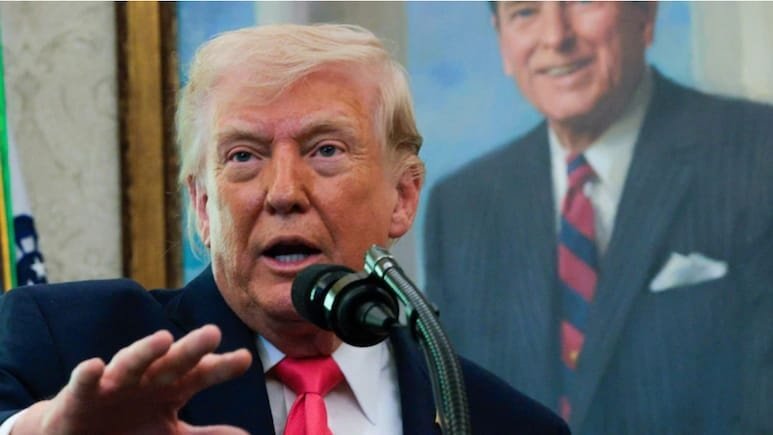
WASHINGTON, D.C. – U.S. President Donald Trump is facing intense bipartisan backlash and renewed calls for his removal from office following a series of provocative social media posts on Easter Sunday. The President threatened massive strikes against Iranian infrastructure, including power plants and bridges, escalating an already volatile global conflict.
The “unhinged” nature of the threats has prompted high-ranking lawmakers to publicly discuss invoking the 25th Amendment to the U.S. Constitution.
Key Developments in the Crisis:
-
The “Tuesday” Threat: Writing on Truth Social, President Trump warned Tehran to reopen the Strait of Hormuz or face catastrophic strikes, stating: “Tuesday will be Power Plant Day, and Bridge Day, all wrapped up in one, in Iran.”
-
Bipartisan Alarm: Democratic Senator Chris Murphy urged the Cabinet to intervene, while former Trump loyalist Marjorie Taylor Greene stated the President has “gone insane,” calling on administration officials to act.
-
Legal Concerns: Former White House Counsel Ty Cobb criticized the Cabinet’s hesitation, warning that unlike his first term, there are currently no senior officials acting as “guardrails” to restrain the President’s impulses.
Understanding the 25th Amendment
Ratified in 1967, the 25th Amendment provides a legal framework for the transfer of presidential power in cases of incapacity.
-
Section 4: This specific provision allows the Vice President and a majority of the Cabinet to formally declare the President “unable to discharge the powers and duties of his office.”
-
Historical Precedent: While used briefly for medical procedures in the past, Section 4 has never been invoked to remove a sitting president in American history.
-
Congressional Role: If invoked and contested by the President, a two-thirds majority in both the House and Senate would be required to make the removal permanent.
Geopolitical & Economic Context
The threats come in the wake of the February 28 joint U.S.-Israel strike that killed Iran’s Supreme Leader. In retaliation, Iran has effectively choked off the Strait of Hormuz, a narrow waterway responsible for one-fifth of the world’s oil supply.
Despite the President’s aggressive stance, public sentiment remains wary; recent polling indicates only 14% of Americans support sending ground troops to Iran, while 62% are firmly opposed to further military escalation.