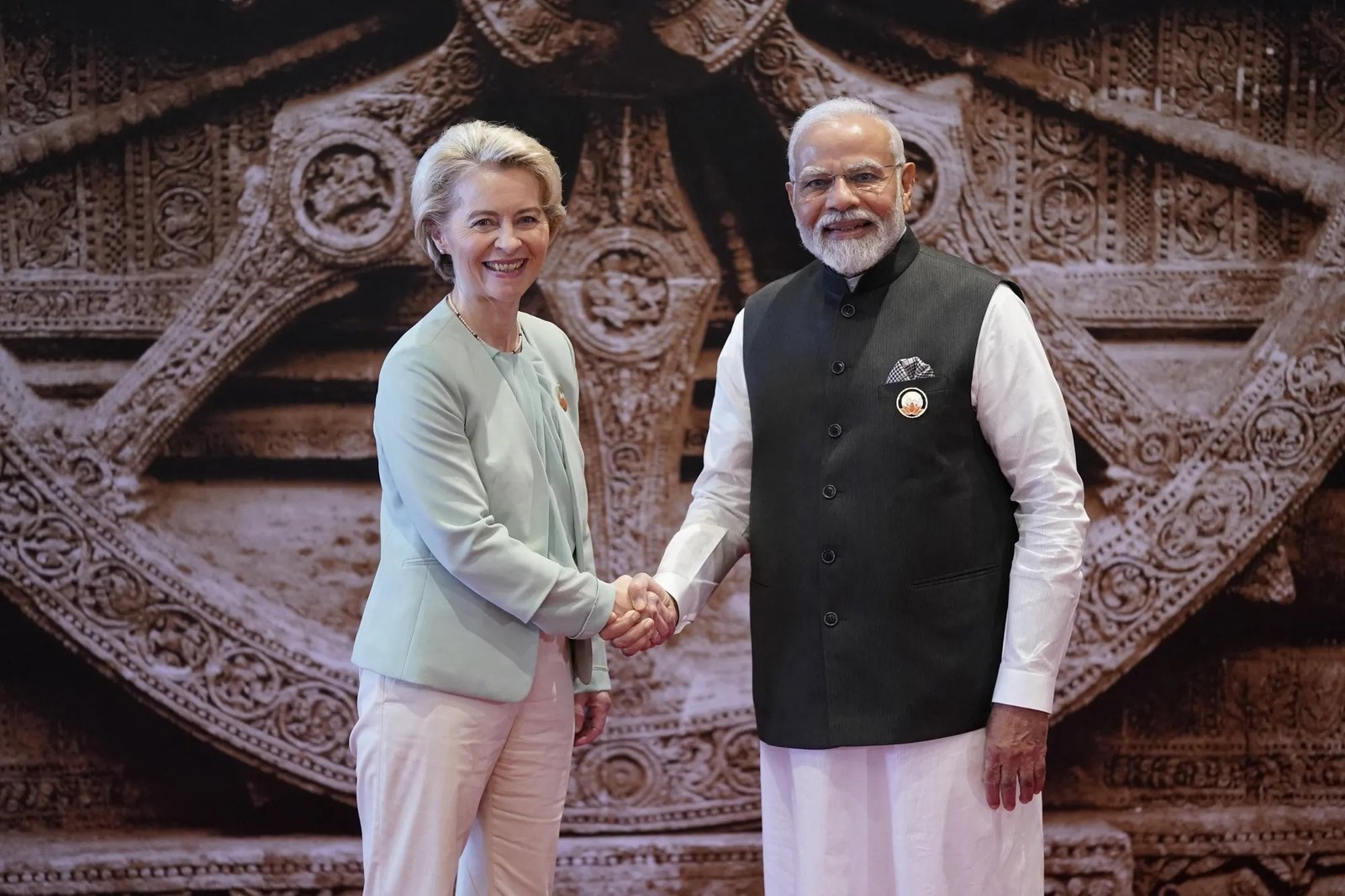


In a historic breakthrough following nearly two decades of negotiations, India and the European Union (EU) have finalized a landmark Free Trade Agreement (FTA). Hailed by Prime Minister Narendra Modi as the “Mother of All Deals,” the pact encompasses economies representing 25% of global GDP and one-third of global trade. Announced during the visit of European Commission President Ursula von der Leyen—the Chief Guest for India’s 77th Republic Day—the agreement aims to transform the manufacturing and services sectors. The deal is seen as a strategic response to shifting global alignments, promising to lower tariffs on consumer and industrial goods while reinforcing a shared commitment to democracy and the rule of law.
The FTA is designed to create a “win-win” scenario for two of the world’s largest economic blocs:
Feature Impact & Details Economic Scale Covers ~25% of global GDP and ~33% of global trade. Tariff Reductions Significant lowering of tariffs on most consumer and industrial goods. Sectoral Boost High growth expected in India’s Textiles, Gems & Jewellery, and Leather sectors. Market Access EU gains enhanced access for car exports (subject to a cap); India gains service sector mobility. Strategic Timing Concluded amid global shifts and complements the recent India-UK trade deal. Strategic Pillars: Manufacturing & Services
Prime Minister Modi emphasized that the deal would act as a catalyst for India’s “Make in India” initiative:
Manufacturing Surge: By reducing input costs and opening European markets, the FTA is expected to turn India into a primary manufacturing hub for EU-bound goods.
Service Sector Integration: The agreement facilitates easier movement for professionals, benefiting India’s IT, healthcare, and engineering services.
Democracy & Rule of Law: Beyond economics, the pact is a geopolitical statement, aligning two major democratic powers in a fractured global landscape.
The Long Road to “Conclusion”
The journey to this agreement has been one of the most complex in modern trade history:
Timeline: Negotiations originally commenced in 2007 and faced multiple pauses due to disagreements over intellectual property, dairy, and spirits.
The “Trump Factor”: Rapidly shifting global trade dynamics under the Trump administration in the U.S. accelerated the resolve of both Brussels and New Delhi to diversify their economic partnerships.
Diplomatic Milestone: The presence of President Ursula von der Leyen at the Kartavya Path for Republic Day served as the final diplomatic catalyst to seal the deal.
As of early 2026, the India-EU FTA is being viewed as a cornerstone of the “new global alignment.” For the EU, it provides a massive, stable market of 1.4 billion people to offset dependencies elsewhere. For India, it secures a high-standard trade partner that values environmental and labor standards, helping Indian industries upgrade to global benchmarks. While some sensitive agricultural products remain excluded, the overall deal is described as “balanced and forward-looking.”
Trending
- Chief Growth Officer Amber Faulkner Joins Droga5 London
- Minister Laljit Singh Bhullar Resigns from Punjab Cabinet Following Official’s Suicide
- Sagarsoft (India) Appoints Finance Veteran Kanakadhara Srinivasan to its Board
- IAS Pramod Kumar Meherda Assigned Additional Charge as CEO, NRAA
- RTI Reveals PM Modi’s ‘Mann Ki Baat’ Generated ₹38.49 Crore in Revenue
- Iranian FM Araghchi Rejects Ceasefire, Demands “Definitive” End to War
- Railway Board’s Rahul Agarwal Appointed to CONCOR Board
- CRPF ADG Rajesh Kumar Secures One-Year Tenure Extension