



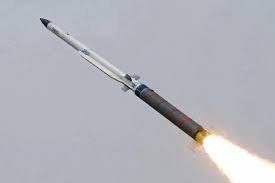
CHANDIPUR, ODISHA – In a massive leap for national defense, India successfully flight-tested its Solid Fuel Ducted Ramjet (SFDR) technology today, February 3, 2026. Conducted at the Integrated Test Range (ITR) off the coast of Odisha, the demonstration marks India’s entry into an exclusive global club of nations—including the USA, Russia, China, and France—possessing this high-velocity propulsion capability.
The test, overseen by the Defence Research and Development Organisation (DRDO), is the “engine” behind India’s future long-range air-to-air dominance, specifically for the upcoming Astra Mark-3 (Gandiva) missile system.
The Science of Speed: What is SFDR?
Traditional missiles carry heavy internal oxygen (oxidizers) to burn fuel. In contrast, a Ramjet “breathes” air from the atmosphere, scooping up oxygen as it flies. This makes the missile lighter, faster, and capable of maintaining supersonic speeds for much longer durations.
Key Technical Milestones from Today’s Test:
-
Nozzle-less Booster: Successfully launched the missile to the required Mach number.
-
Fuel Flow Controller: Demonstrated precise “throttle” control, allowing the missile to maintain sustained thrust.
-
Sustained Mach 3+: The system validated stable combustion at extreme supersonic speeds.
Tactical Edge: The “No-Escape Zone”
By using SFDR technology, India’s next-generation missiles will have a projected strike range of 350 km. More importantly, because the engine doesn’t “burn out” quickly like traditional rockets, the missile retains high energy during its final attack phase—creating a “no-escape zone” for even the most agile enemy fighter jets.
| Feature | Standard Rocket Missile | SFDR-Powered Missile |
| Weight | Heavy (carries oxidizer) | Ultra-light (breathes air) |
| Speed | Initial burst, then slows | Sustained supersonic cruise |
| Range | Limited (~100–150 km) | Extended (350+ km) |
| Terminal Energy | Low (gliding toward target) | High (thrusting until impact) |
A Milestone for ‘Aatmanirbhar Bharat’
Defence Minister Rajnath Singh lauded the DRDO and domestic industry partners, noting that this technology provides a “decisive tactical edge” over adversaries. DRDO Chairman Dr. Samir V. Kamat echoed the sentiment, praising the collaborative effort between the Defence Research & Development Laboratory (DRDL) and other specialized labs in Pune and Hyderabad.
This successful test ensures that the Indian Air Force (IAF) will soon be equipped with indigenous missiles that can outrange and outpace most contemporary threats in the region.