



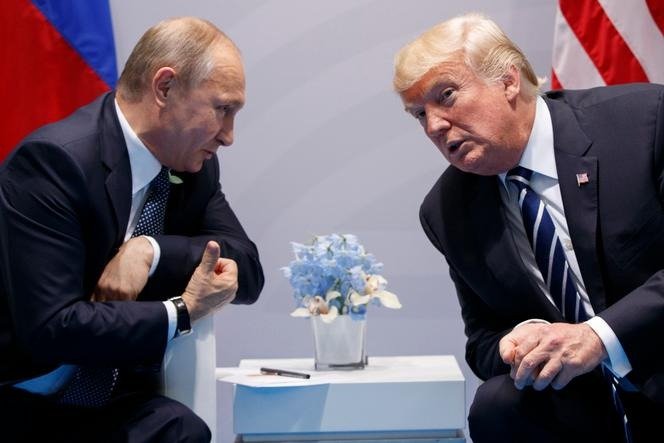
NEW DELHI (Feb 9, 2026) – The world entered a new and dangerous nuclear era last week as the New Strategic Arms Reduction Treaty (New START) officially expired on February 5. For the first time in over half a century, the two largest nuclear powers—the United States and Russia—are no longer bound by any legal limits on their strategic nuclear arsenals.
The lapse of the treaty, which limited both sides to 1,550 deployed warheads, has sent shockwaves through global capitals, particularly in New Delhi, where policymakers fear a “tri-polar” arms race involving a rapidly modernizing China.
The End of an Era
The treaty’s expiration follows years of fraying relations. While extended in 2021 for five years, Russia suspended participation in 2023 following the invasion of Ukraine. In a final attempt at stability, President Vladimir Putin offered a one-year voluntary extension in late 2025, provided the U.S. halted its “Golden Dome” missile defense expansion. However, the Trump administration allowed the deadline to pass, stating it would seek a “better agreement” that must include China.
India Sandwiched in a New Arms Race
For India, the vacuum left by New START is not a distant diplomatic issue but a direct threat to regional stability.
-
The China Factor: A Pentagon report from December 2025 confirms China has surged past 600 nuclear warheads, nearly tripling its stockpile since 2020. Without U.S.-Russia caps to serve as a benchmark, Beijing is on a “high-speed” track to reach 1,000 warheads by 2030.
-
The Pakistan Overhang: On India’s western front, tensions remain at historic highs following Operation Sindoor in May 2025—India’s largest tri-services response to the Pahalgam terror attack. Pakistan continues to expand its fissile material production, capable of adding 14 warheads annually to its estimated stockpile of 170.
-
Deterrence Under Pressure: Strategy experts in Delhi warn that India’s “Credible Minimum Deterrence” doctrine is under its greatest strain since 1998. The lack of global transparency means India may have to accelerate its own nuclear triad—specifically its Agni-VI ICBM and Arighat-class submarine programs—to ensure second-strike survivability.
The “Three-Body” Problem
Analysts at the Manohar Parrikar Institute for Defence Studies and Analyses (MP-IDSA) suggest that the world has moved from a bilateral Cold War standoff to a “Three-Body Problem.” The U.S. is now tasked with deterring both Russia and China simultaneously, a shift that invariably forces India to recalculate its own security margins.
“The expiry of New START is the final nail in the coffin of 20th-century arms control,” said a senior defense official. “We are now in an era of ‘deterrence without transparency,’ where miscalculation is the greatest threat to humanity.”