



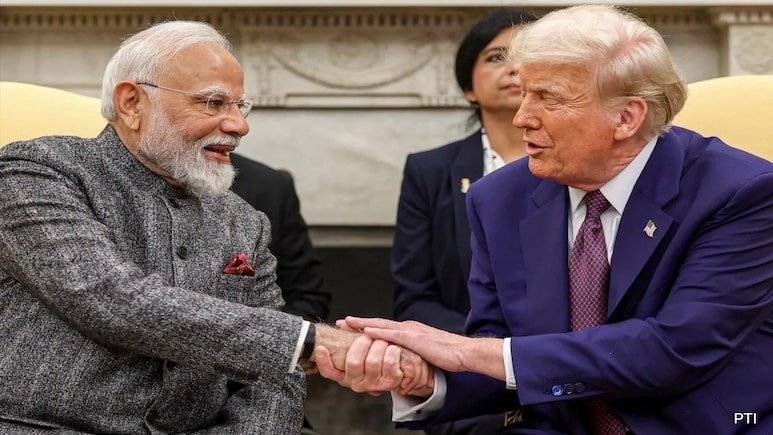
WASHINGTON/NEW DELHI (Feb 10, 2026) – The White House has released a detailed fact sheet on the “Historic Trade Deal (Interim Agreement)” between the United States and India, following a landmark call between President Donald Trump and Prime Minister Narendra Modi.
The framework sets the stage for a comprehensive Bilateral Trade Agreement (BTA) and addresses long-standing disputes regarding energy, technology, and reciprocal tariffs.
Key Terms of the Interim Agreement
The deal focuses on “reciprocal trade,” aimed at balancing the economic relationship between the two nations.
-
Tariff Rollbacks: President Trump signed an Executive Order to remove the 25% penalty tariff previously imposed on Indian goods due to its purchase of Russian oil. Additionally, the standard “Reciprocal Tariff” on Indian exports has been lowered from 25% to 18%.
-
Market Access for US Goods: India will eliminate or reduce tariffs on all US industrial goods and a variety of agricultural products, including tree nuts, fresh fruits, soybean oil, wine, and spirits.
-
The $500 Billion Commitment: India has pledged to purchase over $500 billion worth of American products over the next five years. This includes:
-
Energy: US crude oil, LNG, and coking coal.
-
Technology: High-end ICT products, including GPUs (Nvidia chips) for data centers.
-
Aviation: Significant orders for aircraft (Boeing) and aircraft engines.
-
-
Digital Trade: India has committed to removing its Digital Services Taxes and will negotiate new bilateral rules for digital trade, including the prohibition of customs duties on electronic transmissions.
Strategic & National Security Alignment
The agreement marks a significant geopolitical shift in India’s energy sourcing.
-
Russian Oil Exit: The removal of the 25% penalty tariff is explicitly tied to India’s commitment to stop purchasing oil from the Russian Federation.
-
Supply Chain Resilience: Both nations will coordinate on inbound and outbound investment reviews and export controls to counter “non-market policies of third parties.”
-
Preferential Quotas: India will receive a preferential tariff rate quota for automotive parts and generic pharmaceuticals, subject to ongoing US national security investigations.
Trade Policy Comparison: US Reciprocal Tariffs (2026)
The new 18% rate places India in a more competitive position compared to other major trading partners:
| Country | Reciprocal Tariff Rate |
| India | 18% (Reduced from 50% total) |
| Thailand / Vietnam | 19% – 20% |
| Bangladesh | 20% |
| China | 35% |