



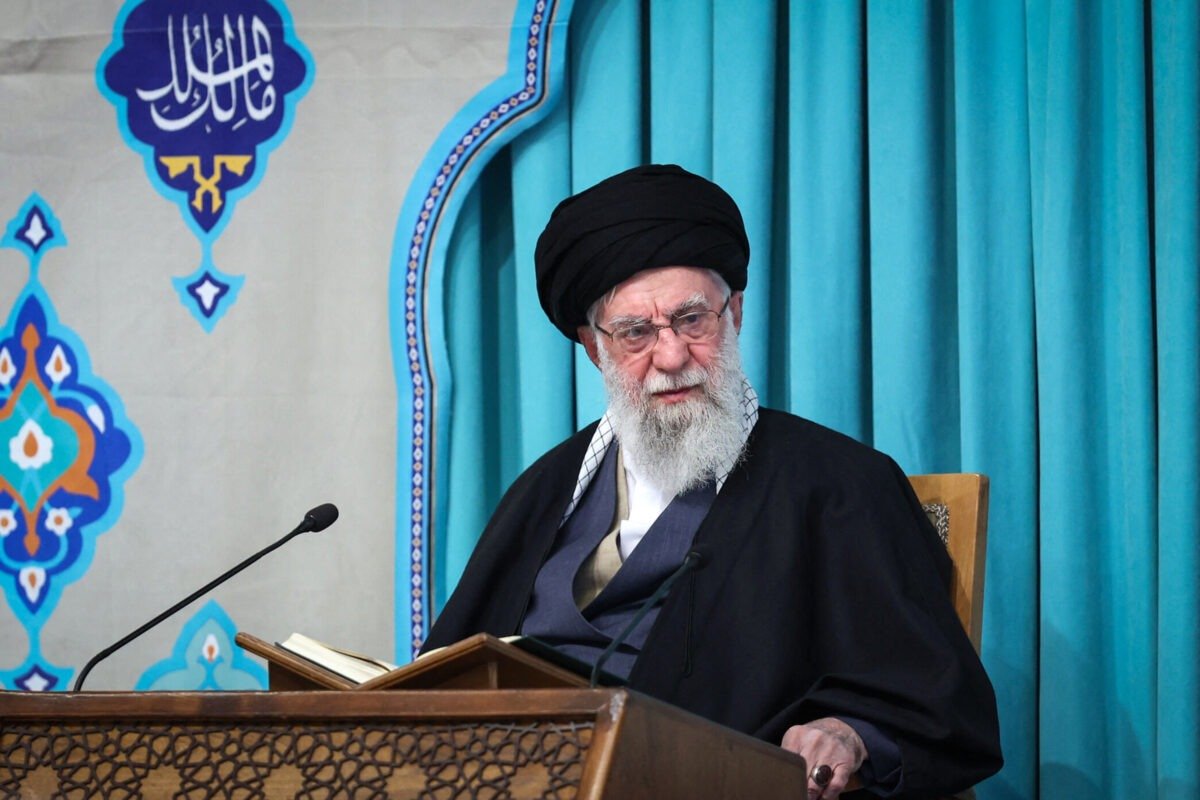
BARABANKI (Mar 1, 2026) — Amidst the global turmoil following the assassination of Iran’s Supreme Leader Ayatollah Ali Khamenei, the small village of Kintoor in Uttar Pradesh has re-emerged as a focal point of the Iranian regime’s deep-seated Indian heritage.
The “Hindi” Ancestry of the Revolution
Kintoor, located in the Barabanki district, serves as the ancestral home of the family of Ayatollah Ruhollah Khomeini, the founding father of the Islamic Republic.
-
Syed Ahmed Musavi: Khomeini’s grandfather was born in Kintoor in the early 19th century. He was a product of the village’s renowned Shia scholarship before migrating to Najaf, Iraq, and eventually settling in Khomein, Iran, in 1834.
-
A Lasting Identity: In Iranian historical archives, Musavi is frequently identified by the title “Hindi”, a permanent nod to his Indian origins that helped shape the spiritual lineage of the Khomeini family.
A Regime at a Crossroads
The death of Khamenei, who succeeded Khomeini in 1989, marks the end of the longest-running leadership in modern Iranian history. While his predecessor built the theocratic foundation, Khamenei militarized the state through the Revolutionary Guard.
Current Power Dynamics:
-
Succession Crisis: The 88-seat Assembly of Experts is now tasked with finding a replacement, but the lack of a clear heir has created a dangerous power vacuum.
-
International Pressure: Following the joint US-Israeli operation, President Donald Trump has called on the Iranian populace to “take over” their government, framing this moment as a rare window for political transformation.
As Tehran braces for a transition, the quiet village of Kintoor remains a historical testament to the unlikely geographical beginnings of one of the world’s most influential theocratic movements.