



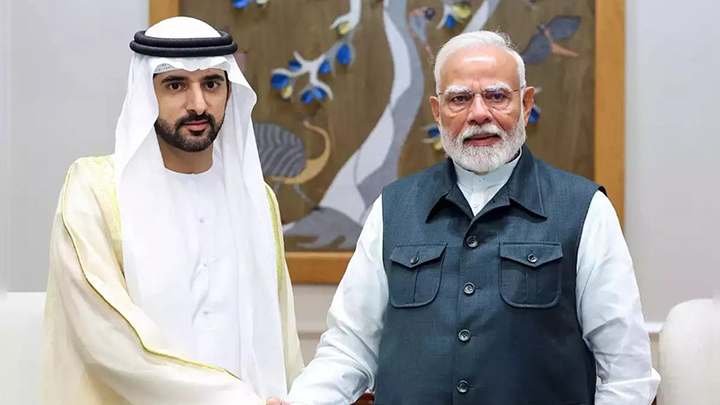
NEW DELHI — Prime Minister Narendra Modi held a critical telephonic conversation with UAE President Sheikh Mohamed bin Zayed Al Nahyan on Tuesday to discuss the escalating security crisis in West Asia. The leaders reached a significant consensus on the need to maintain “safe and free navigation” through the Strait of Hormuz, a vital global energy corridor currently under threat.
Condemnation of Attacks on UAE
During the call, Prime Minister Modi issued a strong condemnation of recent drone and missile strikes targeting the UAE, which have resulted in the loss of innocent lives and damage to civilian infrastructure.
-
Solidarity: Modi reiterated that India stands in firm solidarity with its “brother” nation during these turbulent times.
-
Casualties: Reports confirm that several foreign nationals, including an Indian citizen, have been among those injured in recent strikes originating from Iran following the regional escalation that began in late February.
-
Eid Greetings: Despite the somber context, the Prime Minister also took the opportunity to convey advance Eid-ul-Fitr greetings to the UAE President and the people of the Emirates.
The Hormuz Security Mandate
With nearly 90% of India’s LPG imports and a significant portion of its crude oil transiting through the Strait of Hormuz, the maritime security agreement is of paramount strategic importance:
-
Energy Security: The leaders emphasized that uninterrupted flow through the chokepoint is essential for global energy price stability.
-
Regional Diplomacy: This was the second time both leaders have spoken since the US-Israel strikes on Iran on February 28. India has been actively engaging with leaders across Saudi Arabia, Jordan, and Iran to push for de-escalation.
-
Expat Safety: Modi also thanked the UAE President for ensuring the safety of the four million-strong Indian diaspora residing in the Gulf country amid the ongoing military tensions.
The two leaders concluded by reaffirming their commitment to work together for the “early restoration of peace, security, and stability” in the region.