



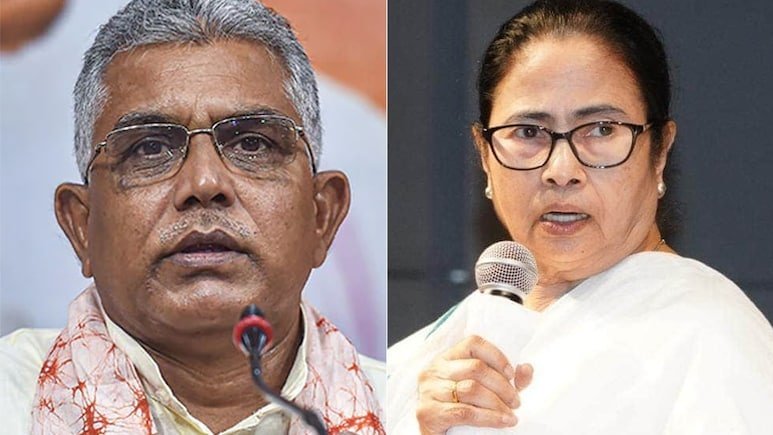
KOLKATA — Senior BJP leader Dilip Ghosh has sparked a political firestorm by claiming that a BJP-led government in West Bengal would adopt “Uttar Pradesh-style encounters” to tackle criminals and mafias.
Campaigning in his stronghold of Kharagpur, the former BJP state president alleged that the current West Bengal police function as “chamchas” (henchmen) of the ruling Trinamool Congress (TMC). He promised a radical transformation of the force after the election results on May 4.
A Pitch for “Encounter Culture”
Ghosh, known for his combative rhetoric, specifically invoked the controversial policing model often associated with the Yogi Adityanath-led government in Uttar Pradesh.
-
The Vow: Ghosh stated that police who currently “sip tea with mafias” would be empowered to conduct encounters and put criminals behind bars under BJP rule.
-
Direct Challenge: He dismissed allegations of intimidation, stating that if his opponents are scared of his “tough” brand of politics, they should face him directly rather than relying on police protection.
-
Election Focus: Representing Kharagpur Sadar, Ghosh aims to reclaim the seat that served as an early gateway for the BJP’s expansion in West Bengal.
Trinamool and Administration Response
The ruling TMC was quick to condemn the remarks, accusing the BJP of openly endorsing extra-judicial violence and attempting to import “encounter raj” into the state.
-
Firhad Hakim’s Rebuttal: Kolkata Mayor Firhad Hakim stated that “encounter culture” has no place in Bengal and urged the Election Commission (EC) to take note of the speech.
-
Bias Allegations: Ghosh countered by accusing the state administration of bias, alleging that police are too “scared” to remove Chief Minister Mamata Banerjee’s cutouts despite EC complaints.
-
CEC Intervention: The BJP has reportedly approached the Election Commission to ensure a fair poll, citing the partisan behavior of local law enforcement.
Strategic Context
The remarks come as the BJP sharpens its campaign focus on law and order, a central pillar of its pitch to voters. By highlighting the “UP model,” the party is attempting to contrast its “strongman” governance style with the TMC’s alleged patronization of criminal networks, while the TMC frames the narrative as a threat to democratic norms.