



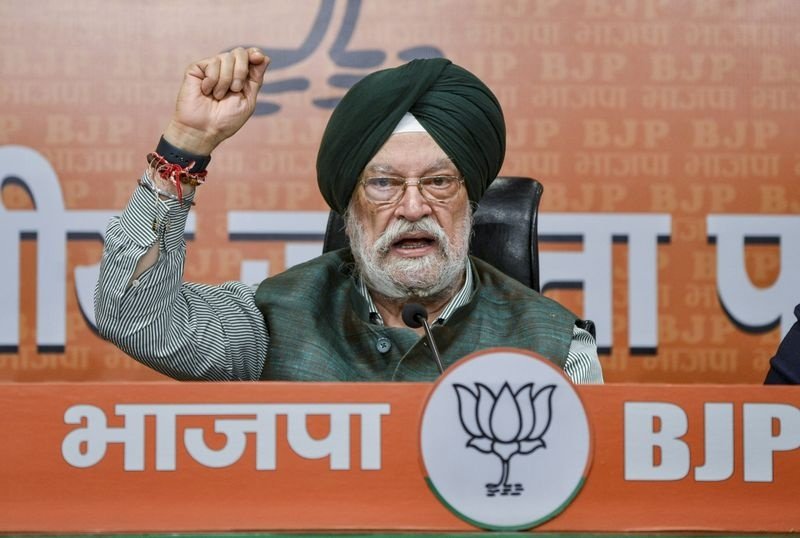
NEW DELHI — Union Petroleum and Natural Gas Minister Hardeep Singh Puri is set to visit Qatar on April 9 and 10 to address critical liquefied natural gas (LNG) supply concerns. The visit follows a period of significant volatility in the Gulf, where infrastructure damage caused by recent regional conflict has severely impacted global energy markets.
India, which is heavily reliant on Qatari gas for both industrial use and household supply, is moving to ensure energy security as the region enters a fragile recovery phase.
Infrastructure Crisis in Qatar
The energy landscape was recently shaken by strikes on Qatar’s primary export facilities, leading to a declaration of force majeure by state-run QatarEnergy.
-
Capacity Loss: Nearly 17% of Qatar’s LNG export capacity—approximately 12.8 million tonnes per year—has been taken offline.
-
Damaged Assets: Two out of Qatar’s 14 LNG trains and a major gas-to-liquids (GTL) facility sustained damage.
-
Recovery Timeline: QatarEnergy CEO Saad al-Kaabi has estimated that full repairs could take between three to five years, resulting in an annual revenue loss of roughly $20 billion for the Gulf nation.
The Indian Context
While India was not explicitly named in the initial force majeure statement, it remains one of Qatar’s largest buyers. The disruption has already led to gas rationing in parts of India to prioritize household needs over industrial demand.
To mitigate the shortage, Indian firms have proactively diversified their sourcing, turning to alternate suppliers in:
-
The United States
-
Australia
-
Russia
Diplomatic and Geopolitical Shifts
The visit comes on the heels of a double-sided ceasefire announced by US President Donald Trump, following a Pakistan-brokered arrangement with Tehran. Central to this truce is the reopening of the Strait of Hormuz, a vital artery for global energy transit.
Earlier, Prime Minister Narendra Modi spoke with Qatar’s Emir, Sheikh Tamim bin Hamad Al Thani, to condemn the attacks on energy infrastructure and reaffirm a shared commitment to free navigation.
Looking Toward 2030
Despite the current setbacks, the Indian government remains committed to its long-term goal of increasing the share of natural gas in the country’s primary energy mix to 15% by 2030. Minister Puri’s discussions in Doha will be pivotal in securing the long-term contracts necessary to meet this target and stabilizing domestic prices in the face of global uncertainty.