



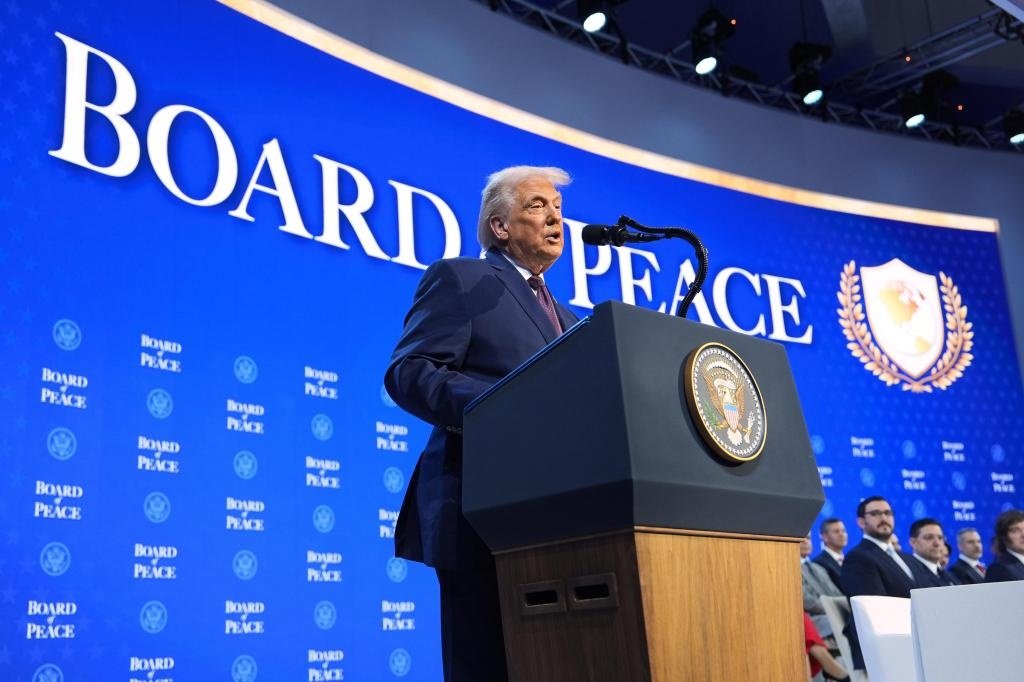
Washington/Gaza | April 11, 2026 — President Donald Trump’s ambitious post-war vision for Gaza is facing a critical “cash crunch,” with reports suggesting that only a fraction of the pledged $17 billion has been delivered. The financial bottleneck, exacerbated by the ongoing US-Iran conflict, has effectively halted the deployment of a new governing body for the enclave.
The “Board of Peace” Vision
The plan, finalized in Washington just ten days before the outbreak of the US-Iran war, centers on the National Committee for the Administration of Gaza (NCAG)—a US-backed group of Palestinian technocrats led by Ali Shaath.
-
The Goal: Disarmament of Hamas, a full Israeli military withdrawal, and a $70 billion long-term reconstruction effort.
-
The Reality: The NCAG remains stranded in Cairo hotels, unable to enter Gaza due to a lack of both funds and security guarantees.
Financial Deadlock
Despite high-profile pledges from Gulf nations, sources indicate a severe gap in contributions:
-
Missing Billions: Of the ten nations that pledged support, only the U.S., UAE, and Morocco have reportedly transferred funds, totaling less than $1 billion.
-
The “Iran Factor”: Analysts suggest the regional war with Iran has diverted the attention and resources of Middle Eastern donors, stalling the Gaza initiative.
-
Official Denial: The Board of Peace issued a statement on Friday calling itself a “lean, execution-focused organization,” insisting that all funding requests have been met in full.
Diplomatic Stalemate
While a fragile ceasefire remains in place, Gaza’s future hangs in the balance:
-
Disarmament vs. Withdrawal: Israel demands Hamas lay down its arms before a troop exit; Hamas refuses to disarm without a guaranteed Israeli withdrawal.
-
Ongoing Violence: Despite the truce, localized clashes have killed over 700 people in Gaza since October, keeping the region on the brink of renewed full-scale war.
As Egypt hosts further disarmament talks this Saturday, the stuttering “Board of Peace” plan highlights the immense difficulty of balancing Palestinian governance with the volatile geopolitical landscape of 2026.