



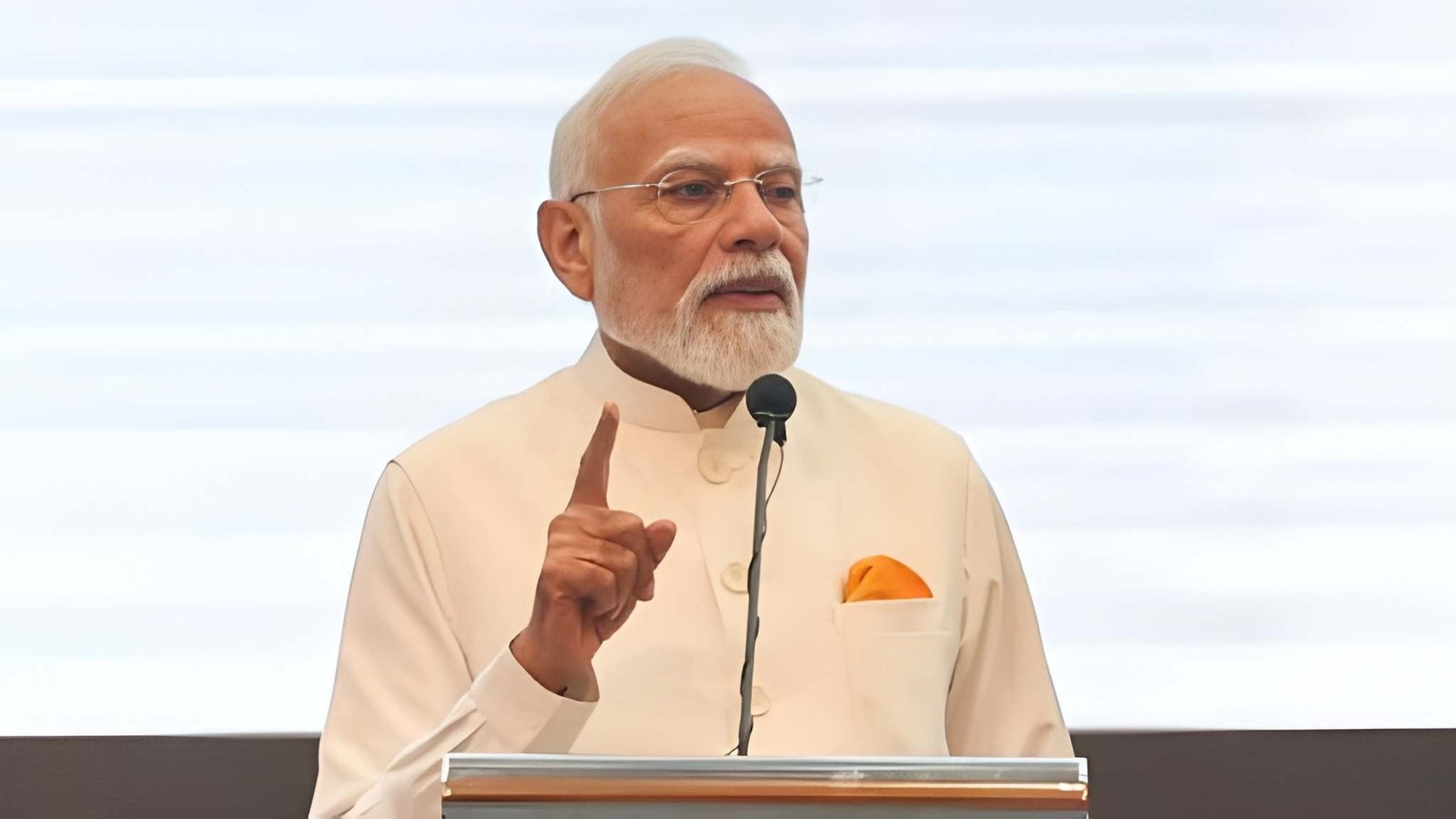
MELBOURNE / NEW DELHI — Highlighting India’s proactive national security paradigm and digital governance milestones, Prime Minister Narendra Modi addressed a large gathering of the Indian diaspora in Melbourne, Australia.
During his speech, the Prime Minister detailed the global impact of Operation Sindoor—the decisive air strikes executed against terrorist hideouts in Pakistan and Pakistan-Occupied Kashmir (PoK) following the Pahalgam terror attack.
1. Counter-Terrorism Operations and Global Impact
The Prime Minister emphasized that India’s defense maneuvers have structurally altered the global perception of its strategic capabilities:
-
Operation Sindoor: Characterized as a decisive strike that systematically dismantled cross-border terrorist infrastructure.
-
Defense Capability: The Prime Minister highlighted that the precision of the strikes demonstrated the “capability and credibility of India’s defense platforms” on an international stage.
-
Geopolitical Signal: “Those explosions have resonated across the world,” PM Modi stated, noting that the operations sent an unmistakable signal regarding India’s zero-tolerance policy toward cross-border terrorism.
2. Shift in Governance: Nagarik Devo Bhava
Pivoting from external security to internal administrative reforms, the Prime Minister introduced a modern adaptation of the traditional Sanskrit adage Atithi Devo Bhava (The Guest is God), rephrasing it as “Nagarik Devo Bhava” (The Citizen is God) to define his administration’s governance philosophy.
Key Citizen-Centric Milestones Highlighted:
-
Digital Health Infrastructure: The institutionalization of digitized healthcare systems ensuring secure, accessible medical records.
-
DigiLocker Integration: The mass adoption of paperless document verification platforms to minimize bureaucratic bottlenecks.
-
Consular Efficiency: Structural overhauls in the passport issuance system, drastically reducing processing timelines for citizens at home and expats abroad.