



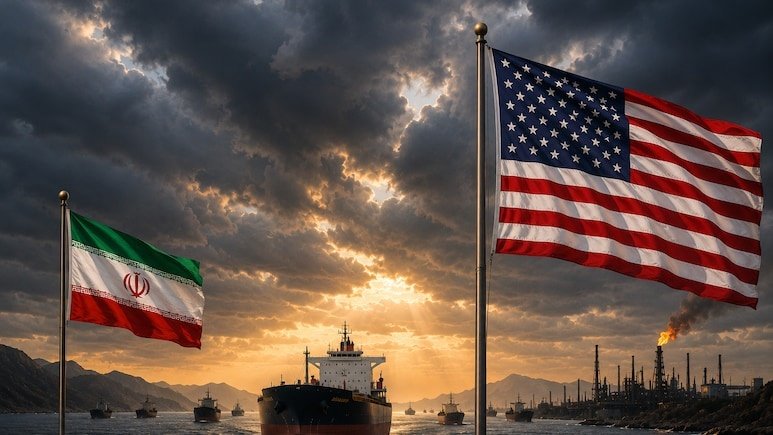
TEHRAN — The fragile diplomatic framework engineered to prevent a wider conflict in the Persian Gulf has collapsed into a severe “crisis phase.” Iran announced on Monday that it will freeze all its obligations under the recently signed, Pakistan-mediated memorandum of understanding (MoU) with the United States, citing repeated violations by Washington.
The declaration by the Iranian Foreign Ministry follows days of direct, tit-for-tat military strikes between U.S. forces and Iranian assets, effectively ending the short-lived June 17 de-escalation agreement.
Tehran Enforces ‘Commitment for Commitment’ Policy
Speaking at a press conference in Tehran, Iranian Foreign Ministry spokesperson Esmaeil Baqaei rejected any narrative framing Iran as the party responsible for undermining the diplomatic breakthrough.
“We have said from the beginning that it is a matter of ‘commitment in exchange for commitment.’ If the other party adheres to its commitments, we will also fulfil our commitments… As long as the other party continues to violate its commitments, the Islamic Republic of Iran will, in turn, refrain from fulfilling the obligations it has undertaken.” — Esmaeil Baqaei, Iranian Foreign Ministry Spokesperson
Baqaei stated that Tehran’s compliance remains strictly conditional, accusing Washington of executing bad-faith maneuvers and violating various clauses of the memorandum “under different pretexts.” He maintained that Iran’s record of adhering to documented international provisions remains verifiable.
Military Escalation in the Strait of Hormuz
The diplomatic breakdown mirrors a rapid and dangerous escalation of hostilities on the ground and at sea:
-
U.S. Kinetic Actions: The U.S. military recently executed targeted airstrikes against Iranian military installations and command infrastructure. Washington categorized these actions as a direct response to persistent attacks on commercial shipping vessels navigating the strategic Strait of Hormuz.
-
Iranian Counter-Strikes: In retaliation, Iran launched synchronized missile and drone salvos targeting U.S. forward military facilities across the region. Tehran maintains these counter-measures were provoked by America’s structural breach of the June 17 agreement.
-
The U.S. Posture: Following the exchange of strikes, U.S. President Donald Trump publicly declared the bilateral memorandum “over,” signaling a return to a policy of maximum kinetic deterrence.
The Impact on Global Energy Transit
The unravelling of the Pakistan-brokered pact has sent shockwaves through global energy markets. Originally designed to establish a verified de-escalation corridor and guarantee unhindered maritime traffic through the world’s most critical oil chokepoint, the collapse of the agreement has achieved the exact opposite.
Commercial maritime traffic through the Strait of Hormuz has plummeted to a five-week low, as international shipping syndicates reroute vessels or stall transits due to prohibitive war-risk insurance premiums and the immediate threat of cross-Gulf missile exchanges.