



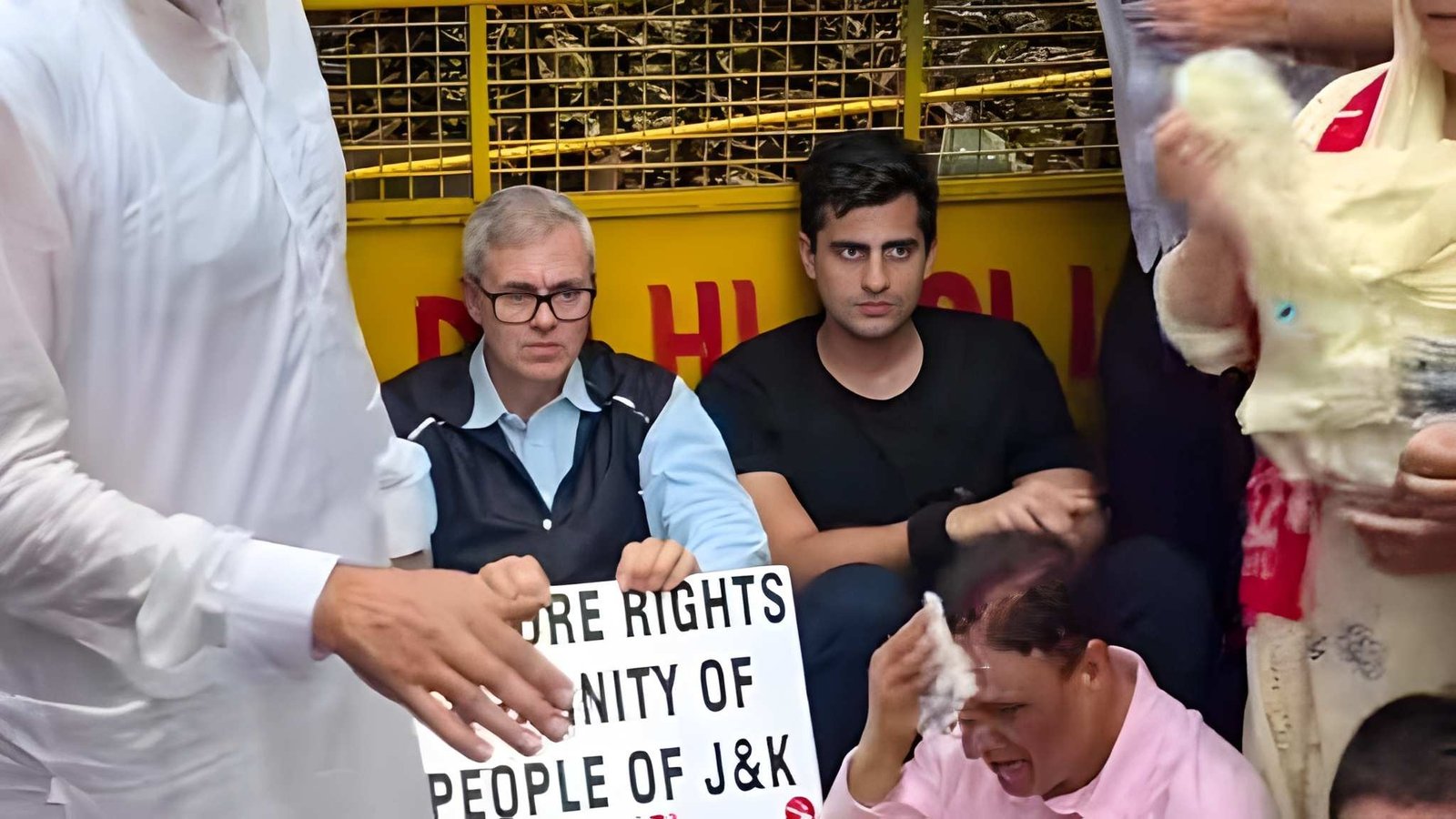
NEW DELHI — In a historic political shift, Jammu and Kashmir Chief Minister Shri Omar Abdullah led a high-profile demonstration at Delhi’s Jantar Mantar today, marking the first time a serving J&K Chief Minister has taken to the streets to demand the restoration of statehood. Joined by an official delegation of state ministers and MLAs, the protest coincided with the opening day of the Parliamentary Monsoon Session.
Escalation of the Statehood Campaign
The Jantar Mantar demonstration represents a direct, physical push against the territorial changes enacted seven years ago:
-
The Protest Mandate: Carrying banners demanding the restoration of the “rights and dignity of the people of J&K,” Abdullah framed the rally as the beginning of a prolonged, nationwide struggle to upgrade the Union Territory back into a full state.
-
Security Restrictions: The Chief Minister stated that the J&K delegation faced severe movement restrictions and tear gas shelling by security forces while trying to reach the site. “We were stopped from getting to Jantar Mantar… but we were not silenced,” Abdullah posted on X.
-
Transit Detour: Highlighting the volatile conditions in Central Delhi, Abdullah noted that he had to separate from the main crowd and catch a local auto-rickshaw to avoid his exit turning into another unauthorized procession.
Intergenerational Display of Leadership
The rally highlighted strong intergenerational participation, which Abdullah used to send a clear message to political rivals:
-
Farooq Abdullah at the Forefront: National Conference patron and former Chief Minister Dr. Farooq Abdullah actively participated in the march. At 89 years old, the veteran leader walked the entire route alongside protesters with the help of a walking stick.
-
Jibe at Political Rivals: Omar Abdullah used his father’s active presence to criticize opposition leaders back home who skipped the rally. “Here is a 90-year-old man leading from the front for J&K’s rights and dignity while some others sit at home posting tweets,” he noted.
Context: The Post-2019 Legal Framework
The core grievance stems from the structural changes made to the region’s governance:
-
Reorganization: In August 2019, the Union government revoked J&K’s special status under Article 370 and bifurcated the former state into the Union Territories of Jammu & Kashmir and Ladakh.
-
The Legislative Push: Although J&K has since transitioned back to an elected local assembly, the ruling administration maintains that complete legislative independence and administrative dignity can only be achieved when full statehood is formally reinstated by Parliament.