



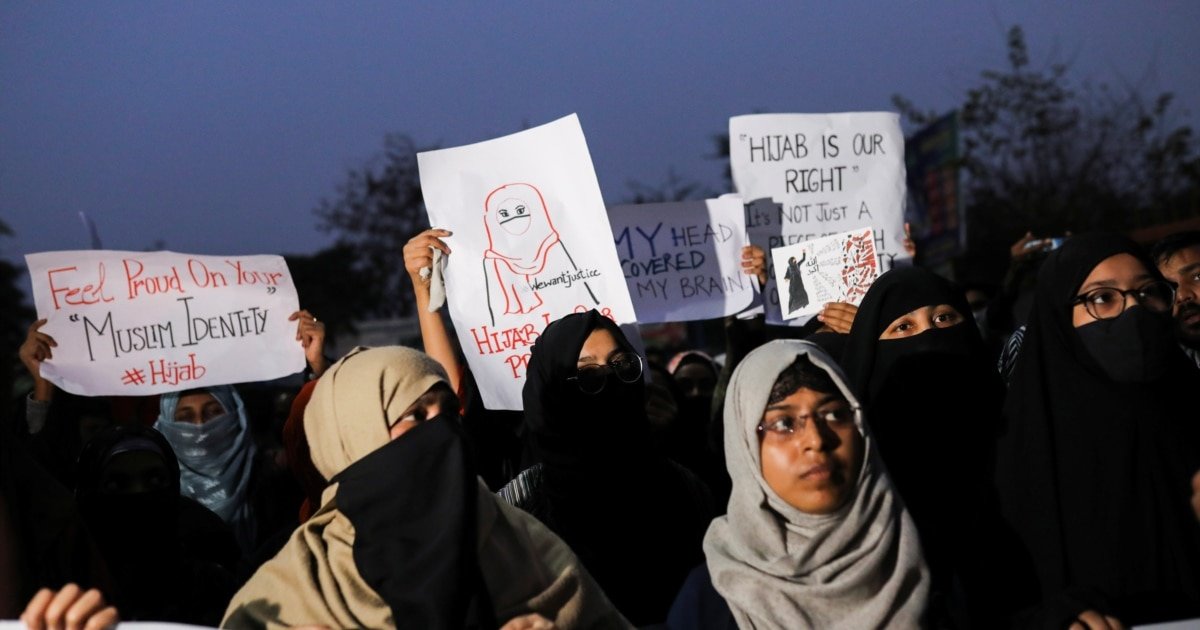
PRAYAGRAJ — The Allahabad High Court has ruled that individual students do not hold a legal right to modify prescribed institutional uniforms according to personal preference. The decision came as the court dismissed a petition filed by a female student requesting permission to wear a hijab alongside her school uniform.
A division bench of Justice J.J. Munir and Justice Indrajit Shukla determined that wearing a headscarf does not constitute an essential practice within Islam, upholding the administrative right of private educational institutions to implement and enforce campus-wide uniform policies.
Key Highlights of the Judgment
The case was brought by a minor student through her mother after seeking Class XI admission at a self-financed private institution in Prayagraj. The petitioner maintained that she had worn a headscarf in prior school years and claimed it was an integral aspect of her religious identity.
The bench rejected the plea, citing essential principles of school governance and administrative discipline:
-
Institutional Authority: Self-financed and unaided educational institutions possess full autonomy to establish non-discriminatory dress codes to foster equal treatment and internal discipline.
-
Essential Practice Test: The court noted that asserting the headscarf as an essential religious requirement was an unsubstantiated claim, referencing previous judicial precedents across High Courts.
-
Preserving Institutional Equality: Allowing individual modifications to a uniform code undermines the core purpose of a standardized dress code, transferring disciplinary control from the institution to individual choices.
“Wherever this issue has arisen, the high courts have been unanimous in opinion that wearing a headscarf is not an essential part of the Islamic faith for a woman to don in the absence of which faith would be jeopardised,” the bench stated during the proceedings.
Arguments and Institutional Stance
Upon reviewing photographic evidence from the school’s classrooms, the court noted that no other female students—including those from the same religious background—wore a headscarf with the prescribed uniform.
Legal representatives for the school argued that granting special exemptions to individual students would compromise the institution’s uniform policy and disrupt campus-wide equality. Both the Central Board of Secondary Education (CBSE) and the Uttar Pradesh State Government opposed the petition, supporting the uniform application of school rules to all enrolled students.