



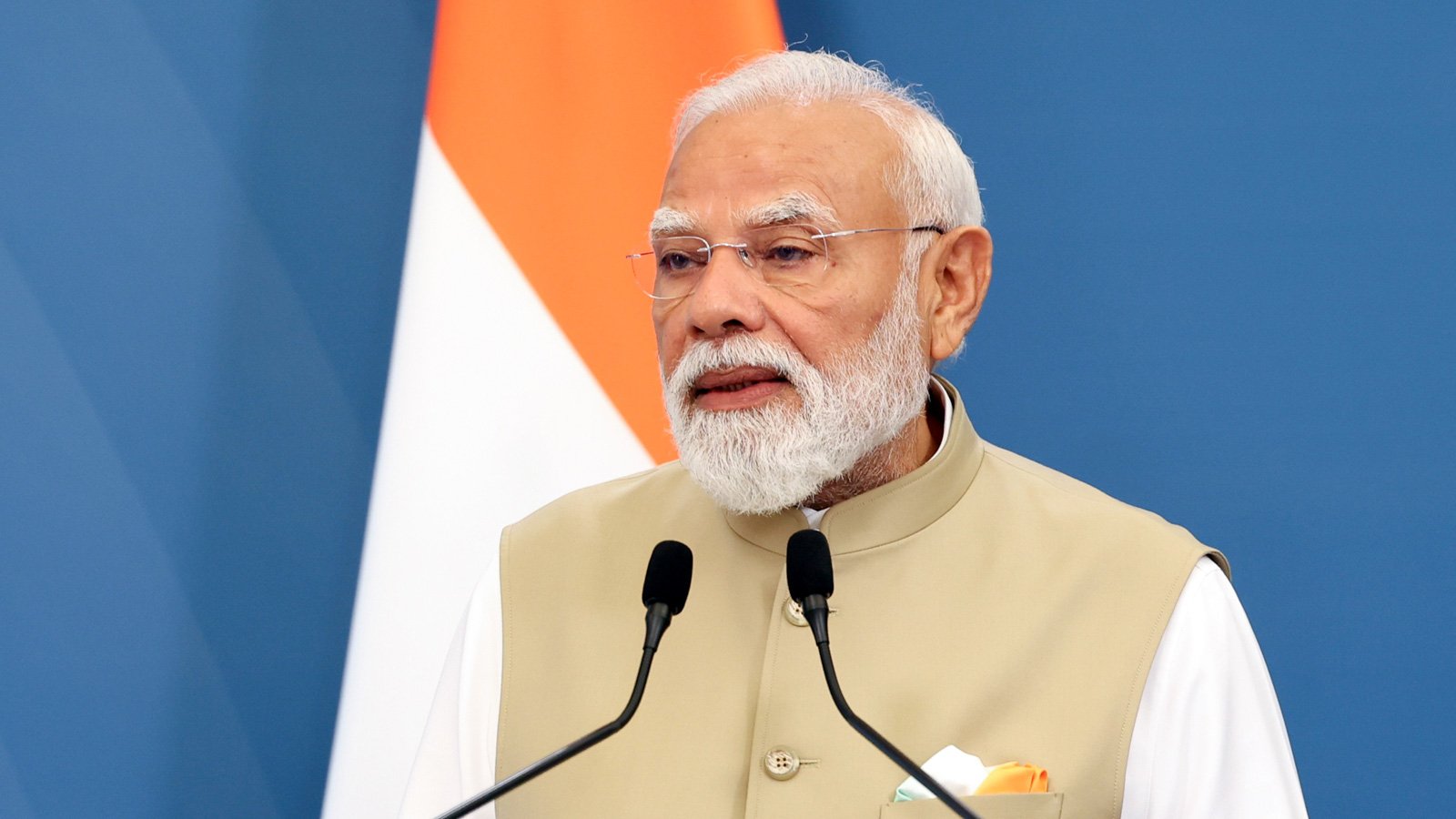
NEW DELHI — Addressing the valedictory session of the inaugural National Departmental Summit on Water organized by the Ministry of Jal Shakti, Prime Minister Narendra Modi called for a data-driven, community-led transformation of India’s water management architecture.
Emphasizing that water security must evolve beyond government-centric delivery into a sustained national movement (Jan Bhagidari), the Prime Minister outlined a multi-pronged framework centered on Artificial Intelligence (AI), cross-state operational exchange, and strict rainwater conservation targets.
Strategic Pillars & Key Directives
The two-day inter-state conference brought together Union Jal Shakti Minister C R Patil, state water ministers, and senior administrative leadership to institutionalize a cooperative federalism (“Team India”) approach toward water governance.
-
“Jal Utsav” Public Engagement: Proposed establishing “Jal Utsav” awareness campaigns to embed water conservation within public culture, driving ground-level participation across rural and urban civic bodies.
-
AI-Driven Data Governance: Directed the adoption of uniform data formats and AI-assisted analytics for predictive water mapping, anticipatory scarcity planning, and real-time monitoring of groundwater assets.
-
Structured Cross-State Exchanges: Encouraged formal study tours comprising elected representatives, civil servants, and local farmers to replicate successful state-level interventions (such as Chhattisgarh’s water conservation model) tailored to local geographies.
-
Decentralized Rainwater Harvesting: Reaffirmed the national campaign framework—“Jal jahan gire, wahin sanchit karein” (catch the rain where it falls)—setting a firm target to construct 2 crore new water conservation structures by May 31, 2027.
Action Plan & Sector Priorities
The Ministry of Jal Shakti outlined four primary time-bound deliverables emerging from the summit’s operational framework:
-
Infrastructure Acceleration: Expediting time-bound execution of critical water supply and reservoir projects.
-
Jal Sanchay Expansion: Deepening rainwater harvesting and groundwater recharge networks.
-
Jal Jeevan Mission 2.0: Ensuring long-term source sustainability and robust Operation & Maintenance (O&M) protocols for rural drinking water distribution.
-
Circular Water Economy: Promoting expanded use of treated wastewater for industrial and agricultural applications, alongside standardized de-silting SOPs and monsoon dam safety protocols.
Institutional Perspective
The National Departmental Summit on Water marks the first in a series of sector-specific central-state ministerial forums envisioned by the Prime Minister. By combining high-tech data governance with grassroots mobilization and inter-state knowledge sharing, the administration seeks to move away from fragmented regional responses toward an integrated, long-term national water security roadmap.