



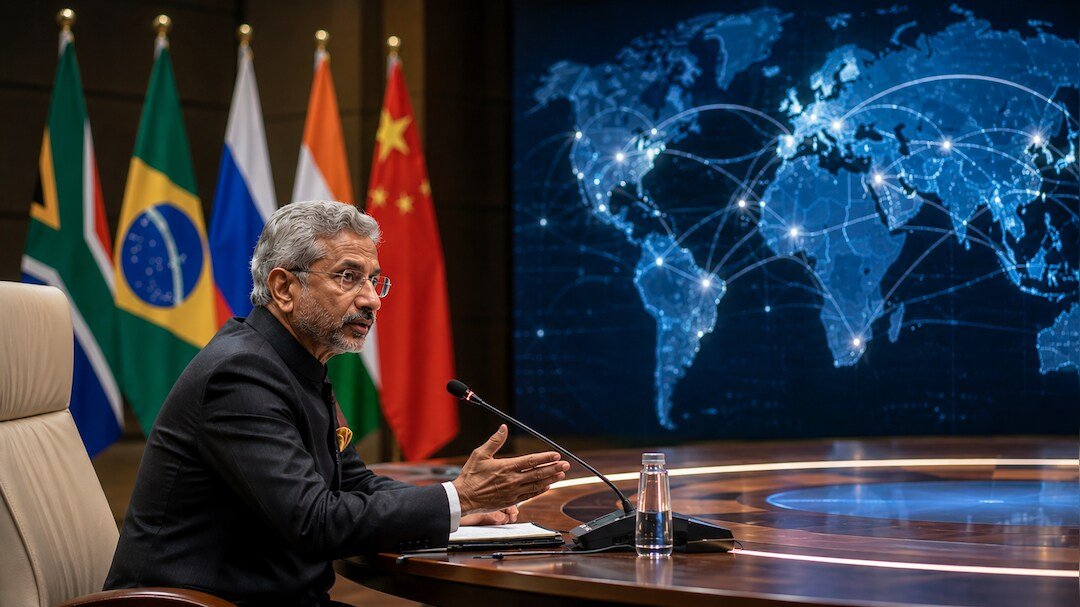
NEW DELHI — External Affairs Minister S. Jaishankar addressed the BRICS Business Forum today, calling on member states to build more predictable business environments, diversify commercial relationships, and insulate cross-border trade networks against ongoing global disruptions.
Speaking ahead of the 18th BRICS Summit in the capital, Jaishankar emphasized that the economic resilience of the expanded 11-member bloc will depend on its ability to navigate a volatile geopolitical landscape marked by supply chain vulnerabilities, climate events, and conflict.
Key Strategic Priorities for BRICS Economic Cooperation
Outlining India’s vision as BRICS Chair, Jaishankar urged the business community to move beyond traditional transactional commerce and focus on structural economic security:
-
Supply Chain Resilience: Establishing dependable logistics networks, diversified trade corridors, and transparent investment policies to absorb global supply shocks without resorting to inward-looking protectionism.
-
Key Growth Sectors: Priority integration across micro, small, and medium enterprises (MSMEs), agriculture, digital delivery systems, fintech, and women-led entrepreneurship.
-
Technology & Digital Infrastructure: Harnessing Digital Public Infrastructure (DPI), artificial intelligence, and advanced manufacturing while ensuring strict standards regarding data security, access, and trust.
Innovation Frameworks & India’s Contribution
Jaishankar highlighted institutional mechanisms launched under India’s chairship to drive cross-border collaboration and startup growth:
-
BRICS Startup Innovation Fund: Formed to capitalize high-growth entrepreneurial ventures across member states.
-
BRICS Incubator Network: Scaling technical exchange and commercial partnerships among emerging tech hubs.
The minister reaffirmed that India’s expanding manufacturing base, deep talent pool, and scalable digital infrastructure position the country as a primary engine for the next phase of BRICS economic integration.