



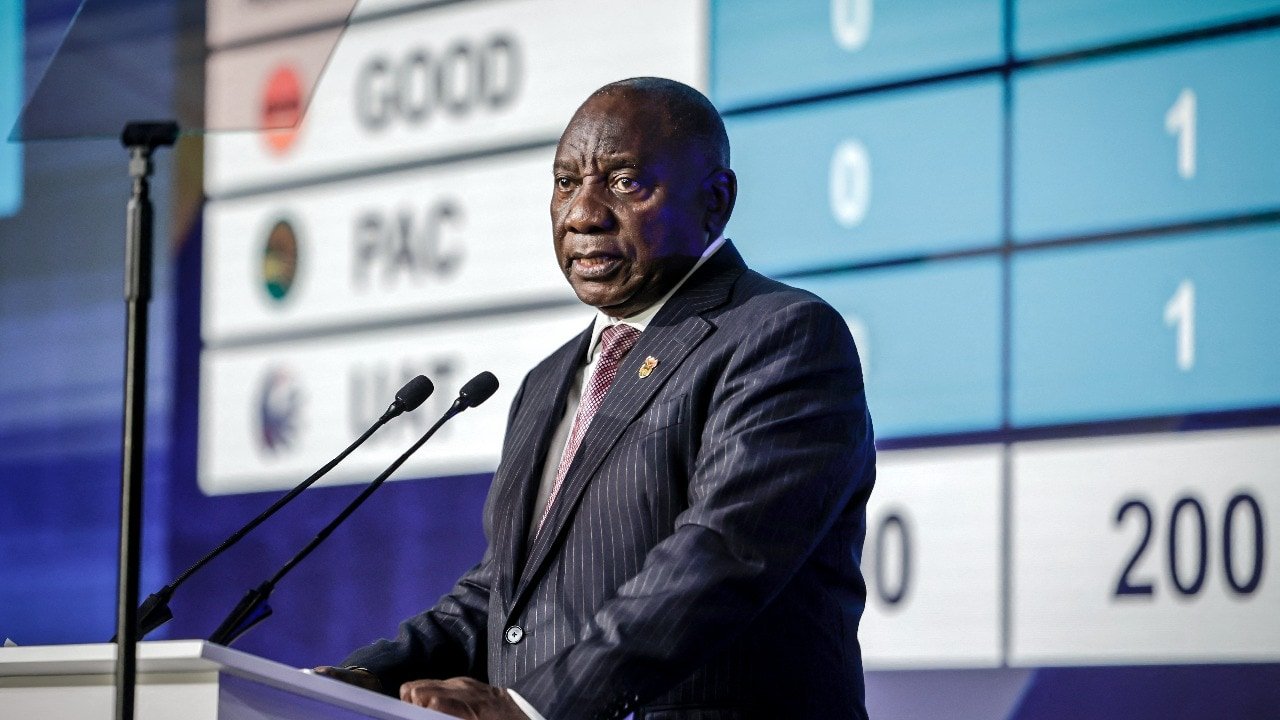
NEW DELHI — Warning against the unchecked acceleration of artificial intelligence, South African President Cyril Ramaphosa urged world leaders at the BRICS Summit to establish robust global regulatory frameworks, cautioning that advanced technology must not be allowed to run “out of control.”
Addressing reporters following the summit’s conclusion in New Delhi, the South African head of state advocated for a balanced approach to emerging technologies—one that embraces innovation while enforcing strict human oversight.
“We should therefore neither fear AI nor approach it recklessly. Our responsibility is to ensure that human governance advances as rapidly as artificial intelligence itself,” Ramaphosa stated, highlighting the urgent need for political leadership to comprehend and actively regulate complex systems.
Global Tech Risk and Frontier AI Safety
Ramaphosa’s intervention comes as international debate intensifies over the safety trajectory of frontier AI development. Tech leaders—including Anthropic CEO Dario Amodei, OpenAI CEO Sam Altman, and xAI chief Elon Musk—have voiced similar calls for standardized safety protocols, independent third-party evaluations, and cross-border regulatory alignment.
With autonomous AI capabilities expanding rapidly, concerns have heightened regarding potential risks in cybersecurity, unsupervised automated decision-making, and recursive self-improvement. In response, South Africa proposed the creation of an international mechanism for the independent scientific evaluation of AI, ensuring that developing nations participate equally in setting global standards.
The proposal aligns with broader calls from member states, including Chinese President Xi Jinping, who urged deeper cooperation on technology and innovation governance across the bloc.
Landmark Accord: The New Delhi Declaration
The summit closed with the formal adoption of the New Delhi Declaration, establishing a unified BRICS position on artificial intelligence. The accord calls for an inclusive, safe, secure, and reliable AI framework, seeking to bridge the technological divide between developed and developing nations while mitigating existential and operational risks.
Praising India’s diplomacy, Ramaphosa commended Prime Minister Narendra Modi for steering the expanded multi-nation bloc to a unified position.
“At this BRICS Summit, we were able to adopt a declaration when many thought that we would not succeed… We did indeed succeed,” Ramaphosa noted, stating that India served as the central “focal point” in driving consensus across an expanded membership that brings added “political flavor and depth.”
Bilateral Ties and Long-Term Engagement
Characterizing his bilateral session with PM Modi as “practical and forward-looking,” Ramaphosa outlined strategic progress in trade, investment, space exploration, and the Mandela-Gandhi scholarship program.
As both nations prepare to commemorate 30 years of their strategic partnership, Ramaphosa formally invited PM Modi to visit South Africa next year on Nelson Mandela’s birthday. China will assume the BRICS chairship next year, with South Africa scheduled to host the summit in 2028.