



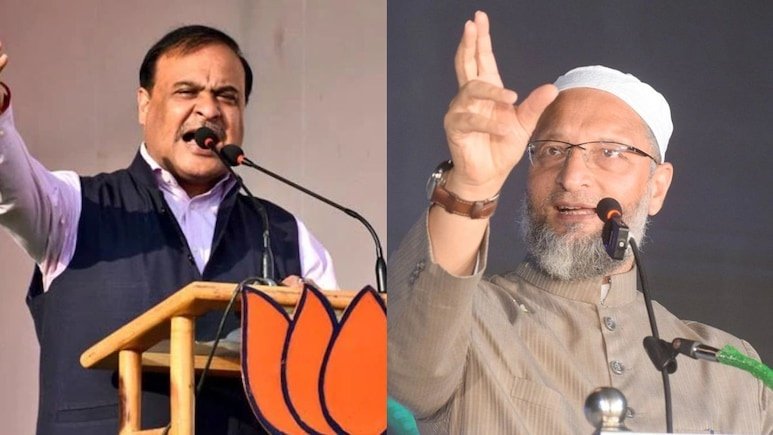
GUWAHATI – Intensifying the political heat ahead of the Assam Assembly elections, AIMIM chief Asaduddin Owaisi launched a scathing attack on Chief Minister Himanta Biswa Sarma, calling for a democratic mandate against what he termed “regressive and oppressive” governance.
Speaking at a packed election rally in Guwahati on Thursday, Mr. Owaisi urged voters to strengthen the leadership of the All India United Democratic Front (AIUDF) to counter the current administration’s policies, specifically citing controversial “bulldozer actions” as a sign of deteriorating conditions in the state.
Key Highlights from the Rally
-
Call for Political Unity: Mr. Owaisi emphasized that slogans alone are insufficient in a democracy. He called on the Muslim community to consolidate their political awareness and use their votes to send a “clear message” to the Chief Minister.
-
Support for AIUDF: Dismissing claims of a BJP advantage, the AIMIM leader stated his primary goal in Assam is to ensure a maximum number of AIUDF candidates reach the Assembly to act as a voice for the marginalized.
-
The “Conscience” Vote: “Your vote is a powerful weapon—use your conscience,” Owaisi told the crowd, framing the upcoming election as a critical junction for protecting community interests and stopping perceived administrative “atrocities.”
Rousing Welcome in Guwahati
Mr. Owaisi arrived in Assam on Wednesday to a massive reception from AIUDF supporters. Upon his arrival at the airport, he was felicitated with traditional Assamese ‘gamosas’ amid high-decibel slogans, signaling a high-stakes collaboration between the AIMIM and Badruddin Ajmal’s AIUDF for the 2026 polls.
Strategic Context
The partnership between Owaisi and Ajmal marks a significant shift in the electoral arithmetic of Assam. By framing the contest as a battle against “regressive politics,” the alliance seeks to mobilize the minority vote bank against the BJP’s development-cum-identity narrative. As the state moves closer to the polling dates, this high-profile campaigning is expected to sharpen the communal and political polarization in the Brahmaputra Valley.