



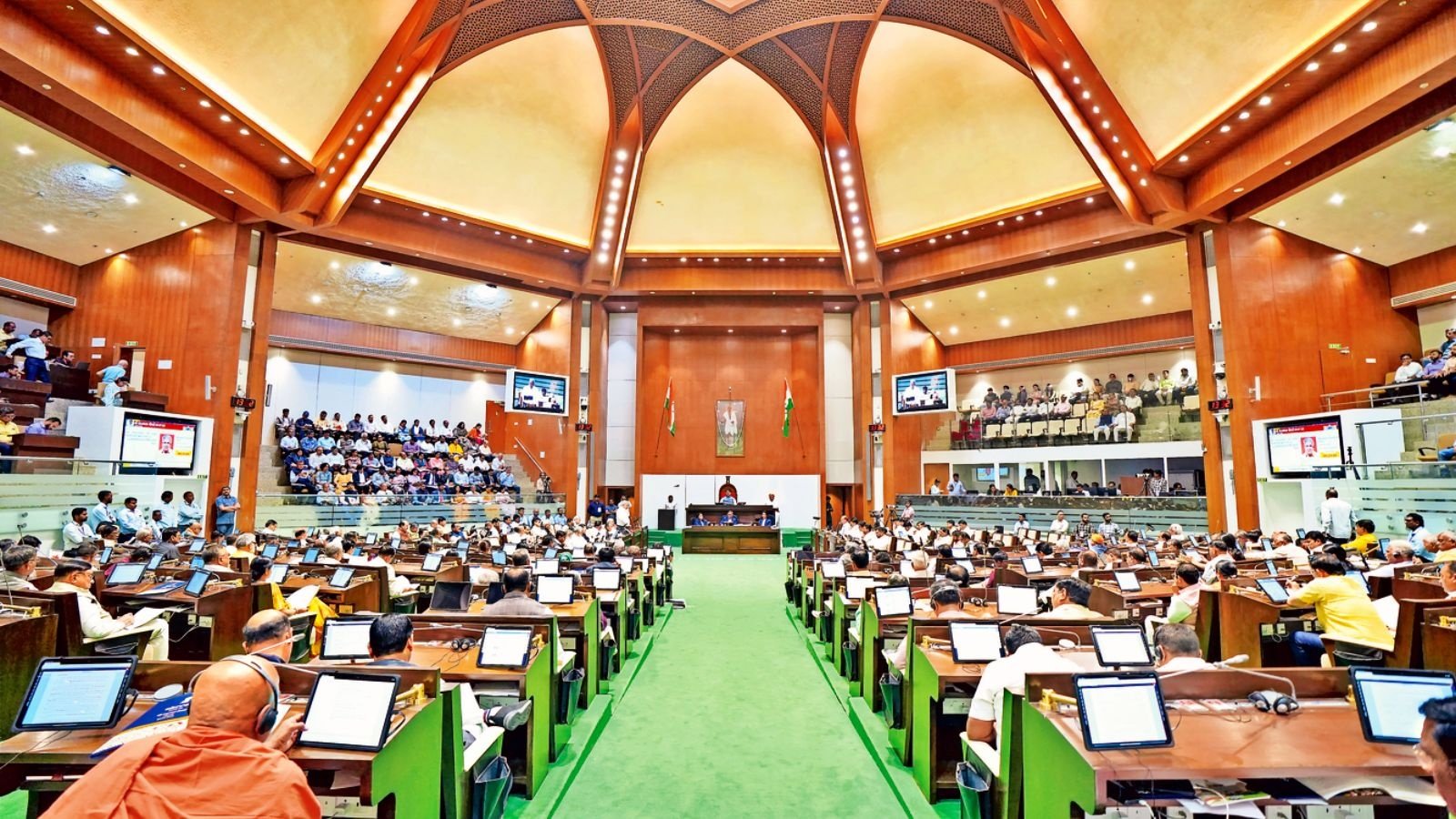
GANDHINAGAR — In a historic legislative move, Chief Minister Bhupendra Patel has successfully led the passage of the Gujarat Uniform Civil Code (UCC) Bill, 2026. Following a seven-hour marathon debate, Gujarat has officially become the second state in India, after Uttarakhand, to adopt a common legal framework for personal matters.
The bill replaces diverse religious personal laws with a unified code governing marriage, divorce, succession, and live-in relationships. While the ruling BJP hailed the move as a step toward constitutional equality under Article 44, opposition parties including the Congress and AAP opposed the bill, citing concerns over fundamental rights.
Key Features of the Gujarat UCC Bill
-
Universal Application: Applies to all residents of Gujarat, including those living outside state limits, excluding Scheduled Tribes (STs).
-
Marriage & Bigamy: Strictly prohibits bigamy; marriages are only valid if neither party has a living spouse.
-
Live-in Relationships: Mandates the formal registration and termination of live-in relationships.
-
Equality Mandate: Aims to ensure “equal justice” irrespective of religion or caste, as per Article 14 of the Constitution.
Political Stance
Tabling the bill, CM Bhupendra Patel emphasized that a unified nation requires a unified legal framework, stating, “If the truth is one, then even if religions are many, justice must be one.” Conversely, Congress leaders labeled the timing of the bill—ahead of the 2027 assembly elections—as “hasty” and requested it be sent to a select committee for further review.