



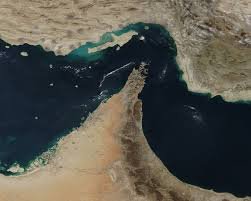
TEHRAN — Amid an intensifying conflict in the Middle East, Iran has designated India as one of the few “friendly nations” permitted safe transit through the strategically vital Strait of Hormuz.
The announcement, made by Iranian Foreign Minister Abbas Araghchi, provides a critical lifeline for Indian maritime trade as Tehran maintains a military chokehold on the waterway, which typically handles 20% of the world’s oil supply.
A Selective “Open Door” Policy
In a statement to Iranian State TV, Araghchi clarified that while Western reports suggested a total closure, the Strait remains navigable for specific partners who coordinate directly with Tehran.
-
The “Friendly” List: India, China, Russia, Pakistan, Iraq, and Bangladesh have been identified as nations granted clearance.
-
Active Coordination: Araghchi confirmed that two Indian vessels successfully transited the Strait earlier this week under the protection or authorization of Iranian armed forces.
-
The Conflict Zone: Iran asserts that because the region is currently a “war zone” following hostilities with the U.S. and Israel, it has a sovereign right to filter maritime traffic.
“No Entry” for Adversaries
The Foreign Minister was explicit regarding the exclusion of hostile entities. Vessels linked to the following will be denied passage:
-
The United States and Israel.
-
Specific Gulf nations deemed to be playing a role in the ongoing military crisis.
This “no-entry” policy was recently enforced when the SELEN, a container ship traveling from the UAE to Pakistan, was forced to reverse course by the Islamic Revolutionary Guard Corps (IRGC) for lacking proper transit authorization.
Global Economic Fallout
The restrictions have triggered a massive disruption in global energy markets. Data from Lloyd’s List and Kpler reveal a staggering decline in maritime activity:
| Metric | Pre-Conflict Average | March 1 – March 25, 2026 |
| Daily Transits | ~120 vessels | ~6 vessels (Avg) |
| Total Crossings | ~3,000 (Est. Monthly) | 155 total |
| Percentage Drop | — | 95% Decrease |
Market Impact: The effective closure for non-friendly nations has led to worldwide fuel shortages, soaring logistics costs, and supply chain disruptions reminiscent of the COVID-19 pandemic.
Strategic Context
Tehran’s decision to keep the channel open for India underscores the deep-rooted diplomatic and energy ties between the two nations. As a major consumer of energy and a key regional player, India’s inclusion in the “friendly” list ensures that its essential commodities continue to move despite the regional volatility.