



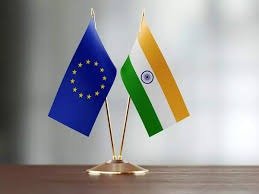
NEW DELHI (Feb 28, 2026) — In a historic leap for global trade, India and the European Union have released the draft text of their Free Trade Agreement (FTA), revealing a mutual pledge to grant each other “Most Favoured Nation” (MFN) status for an initial period of five years.
What ‘Most Favoured Nation’ (MFN) Status Means
While the name sounds like exclusive favoritism, it is actually a cornerstone of the World Trade Organization (WTO) that ensures non-discrimination.
-
The “Lock-In” Clause: For the next five years, neither India nor the EU can offer better tariff deals to any other country without automatically extending those same benefits to each other.
-
Predictability: It effectively “locks in” the preferential access both sides have fought for during nearly two decades of negotiations, preventing future deals with third parties from diluting this partnership.
The “Mother of All Deals” at a Glance
The FTA, concluded on January 27, 2026, aims to create a free trade zone of 2 billion people. Here are the high-impact highlights:
| Sector | Impact for India | Impact for the EU |
| General Goods | 93% of exports will enter the EU duty-free. | Tariffs on 96.6% of exports to India will be cut or removed. |
| Luxury Items | Indian gems, jewelry, and leather gain immediate zero-duty access. | Duties on luxury cars (BMW, Ferrari) will drop from 110% to 10% over 5 years. |
| Wines & Spirits | Indian wines gain zero-duty access to Europe. | India will slash duties on EU wines from 150% down to 20–40%. |
| Agriculture | Excluded: Sensitive items like dairy, rice, sugar, and beef remain protected. | Excluded: Sensitive sectors are ring-fenced to protect local farmers. |
Beyond Tariffs: Digital & Dispute Resolution
-
Digital Trade: Both sides have committed to reducing barriers to e-commerce while recognizing privacy as a fundamental right.
-
Mediation Framework: A new “model mediation procedure” has been introduced to resolve trade disputes within 60 days, offering a faster alternative to formal legal battles.
-
Green Transition: The EU will mobilize finance to help India cut greenhouse gas emissions as part of the pact’s sustainability chapter.
What’s Next?
The agreement is currently undergoing “legal scrubbing” and must be ratified by the European Parliament and the Indian Government. Officials expect the deal to be fully operational by early 2027, potentially doubling EU exports to India by 2032.