



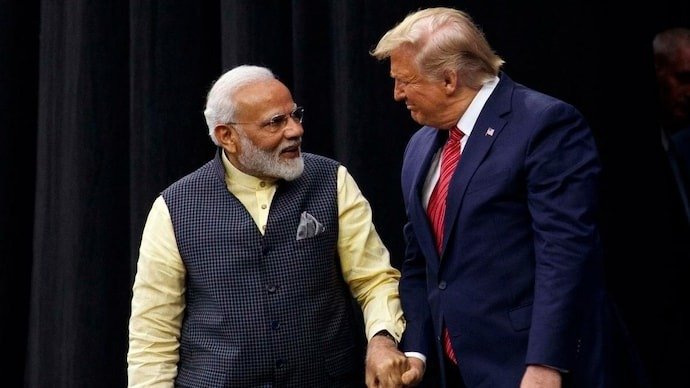
NEW DELHI/WASHINGTON – In a seismic shift for global trade, the United States and India have finalized a landmark agreement that slashes US tariffs on Indian goods from a staggering 50% to just 18%.
Announced by President Donald Trump on February 2, 2026, following a decisive call with Prime Minister Narendra Modi, the deal is being hailed as a “geopolitical masterstroke.” Speaking exclusively to NDTV, Mukesh Aghi, President and CEO of the US-India Strategic Partnership Forum (USISPF), described the pact as a “win-win” that effectively positions India as the preferred alternative to China in the global supply chain.
The “India Edge”: Beating the Competition
The new 18% tariff rate doesn’t just lower costs; it gives “Made in India” products a massive competitive advantage over other Asian manufacturing hubs.
| Nation | 2026 US Tariff Rate |
| China | 34% |
| Vietnam | 20% |
| Bangladesh | 20% |
| Indonesia | 19% |
| India | 18% (New Rate) |
“This sends a clear message: for President Trump, India is very important,” Aghi told NDTV. “For companies pursuing a ‘China-plus-one’ strategy, the math now heavily favors India.”
The Strategic Trade-Off: Energy & Russia
The deal comes with significant geopolitical strings. To secure the rollback of the 25% “punitive” duty (previously linked to India’s Russian oil purchases), New Delhi has committed to a major pivot in its energy policy:
-
Halt on Russian Oil: India has agreed to cease (not just reduce) purchases of Russian crude.
-
Buy American: A massive commitment to purchase $500 billion in US energy (oil, LNG, coal), technology, and agricultural products over the next several years.
-
Zero-Tariff Goal: India will move toward reducing its own tariffs and non-tariff barriers on US goods to zero.
Industry Impact: Winners and Losers
The immediate reduction in tariffs has already triggered a rally in Indian markets, with Sensex and Nifty surging as sectors with high US exposure anticipate a profit boom.
Primary Beneficiaries:
-
Textiles & Apparel: Expected to see double-digit growth as US retailers shift orders from Vietnam and China.
-
Gems & Jewellery: A sector previously crippled by 50% duties is now poised for a resurgence.
-
Marine Products: Seafood exporters from coastal regions like Andhra Pradesh gain easier access to US dinner tables.
-
MSMEs: Labor-intensive sectors are expected to see immediate relief and job creation.
A $500 Billion Ambition
While critics in India have raised concerns over “strategic autonomy” and the impact on farmers, the administration is focusing on the $500 billion trade target. With Apple already recording $9 billion in domestic revenue in India and shifting a massive chunk of iPhone production to the country, industry leaders see this deal as the catalyst for India’s transition from a regional player to a global manufacturing superpower.
“India has a friend in the US, and the US needs India as a friend,” Aghi concluded. “This is the story of making India for the world.”