



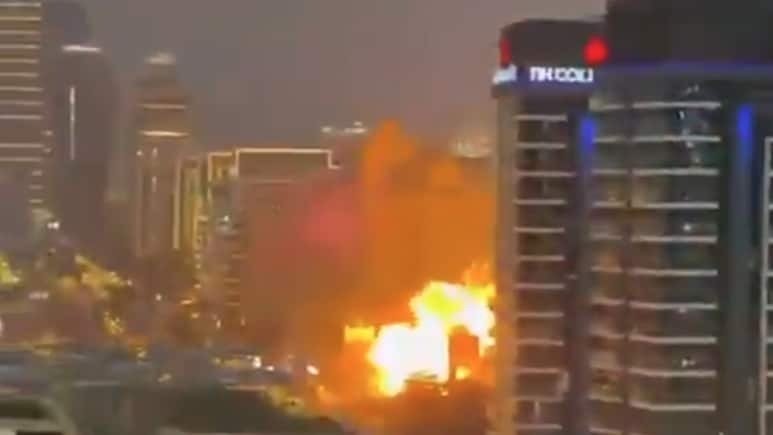
DUBAI (Feb 28, 2026) — In a significant and terrifying escalation of regional hostilities, several Iranian-made Shahed drones struck high-profile targets across Dubai on Saturday. The attacks follow a wave of US-Israel strikes on Iran and Tehran’s subsequent vow of retaliation against Western-aligned assets in the Middle East.
Targets in the Heart of the City
Verified footage and reports from the ground indicate that the “City of Gold” was hit in multiple strategic and tourist-heavy locations:
-
Palm Jumeirah: An explosion rocked the iconic man-made island, specifically affecting a residential building. The Dubai Media Office confirmed that emergency teams were deployed and four people were injured.
-
Downtown Dubai: Footage shared by Nexta captured a drone plummeting between skyscrapers in a densely populated area.
-
Burj Khalifa Vicinity: A second strike was recorded in the immediate shadow of the world’s tallest building, though no direct structural damage to the tower has been reported.
The Weapon: Shahed “Suicide” Drones
The Shahed loitering munition has become a centerpiece of Iranian asymmetric warfare. These “suicide drones” are designed to crash into targets and detonate on impact.
Technical Profile:
-
Range: Up to 2,500 km, allowing launches from deep within Iran or via regional proxies.
-
Payload: Carries a 30–50 kg explosive warhead.
-
Cost-Effectiveness: Priced between $20,000 and $50,000, they are often significantly cheaper than the sophisticated air-defense missiles (like the Patriot system) required to intercept them.
-
Operational History: Previously utilized by Hezbollah, Houthi rebels, and extensively in the Russia-Ukraine conflict.
Official Response
The Dubai Civil Defence has since secured the affected sites, stating that resulting fires are under control. While the UAE has traditionally maintained a neutral diplomatic stance to protect its status as a global business hub, these direct strikes on its soil represent a precarious shift in the Middle Eastern security landscape.
Current Status: Airports in the region are on high alert, and several international carriers have begun rerouting flights away from Gulf airspace.