



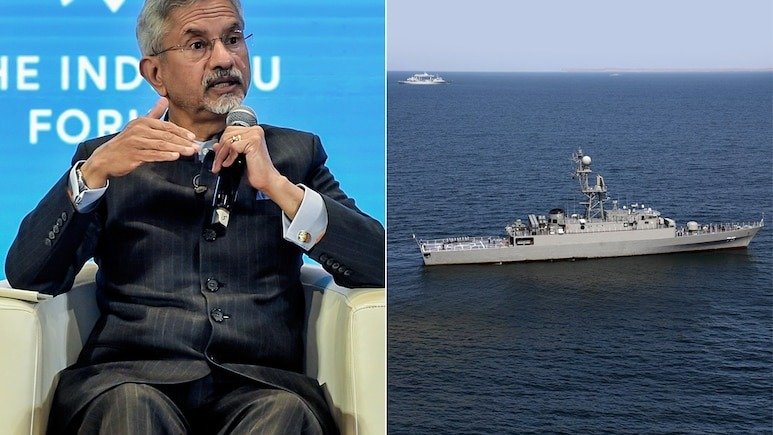
NEW DELHI – Addressing the 2026 Raisina Dialogue, External Affairs Minister S. Jaishankar provided a candid breakdown of India’s decision to permit an Iranian naval ship to dock in Kochi, framed against the backdrop of a dramatic US torpedo strike that sank another Iranian vessel nearby.
Speaking on the sidelines of the escalating maritime tensions between the US and Iran, Jaishankar emphasized that India’s actions were guided by “humanity” rather than geopolitical posturing.
The “Reality of the Indian Ocean”
Responding to intense social media debate regarding India’s neutrality, Jaishankar pointed to the long-standing militarization of the region as a historical “reality.” He cited several key strategic hubs to provide context for the current friction:
-
Diego Garcia: A joint UK-US military base active since the 1970s.
-
Djibouti: Home to various foreign military facilities since the early 2000s.
-
Hambantota: A significant port development in Sri Lanka with deep geopolitical implications.
“Please understand the reality of the Indian Ocean,” Jaishankar stated. “We approached the situation from the point of view of humanity… and I think we did the right thing.”
A Tale of Three Ships
The Minister outlined the differing fates of three Iranian vessels that had recently participated in the MILAN 2026 exercises in Visakhapatnam:
| Vessel | Status | Location/Outcome |
| IRIS Lavan | Docked | Received emergency docking in Kochi on March 4 due to technical issues. |
| IRIS Dena | Sunk | Struck by a US torpedo 40nm off Sri Lanka; 87 confirmed dead. |
| IRIS Bushehr | In Custody | Reported engine trouble; currently held by Sri Lanka. |
“A Quiet Death”
The sinking of the IRIS Dena marks a historic shift in naval warfare. US Defense Secretary Pete Hegseth confirmed the strike, noting it was the first time since World War II that the United States has used a torpedo to sink an enemy ship.
While the US characterized the strike as a “quiet death” for a vessel that believed it was safe in international waters, India has focused on the “young cadets” aboard these ships who were caught on the “wrong side of events” after a routine diplomatic fleet review.
As the IRIS Lavan remains anchored in Kochi for technical assessments, India continues to balance its strategic partnership with the US against its regional role as a provider of humanitarian assistance.