



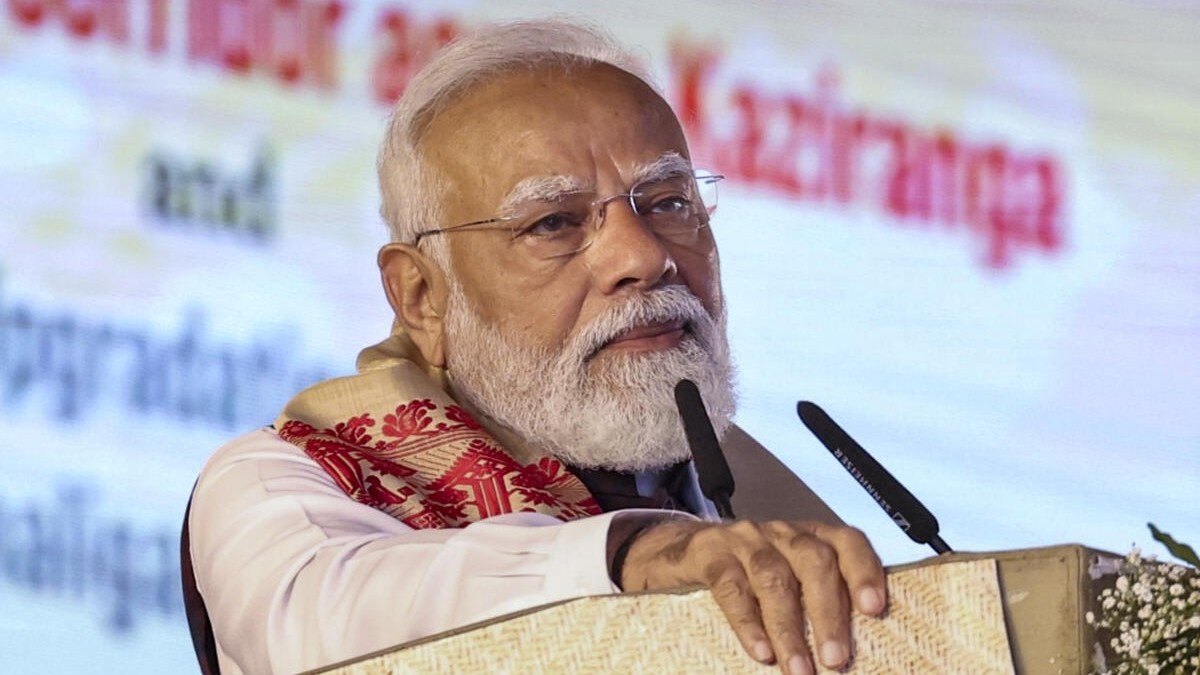
SILIGURI – In a high-decibel campaign rally in North Bengal, Prime Minister Narendra Modi centered his address on national security, accusing the ruling Trinamool Congress (TMC) of compromising India’s integrity by patronizing what he termed the “Tukde-tukde gang.”
Speaking on Sunday in Siliguri, the Prime Minister highlighted the strategic vulnerability of the region, specifically referencing the Siliguri Corridor—the narrow strip of land often called the “Chicken’s Neck” that connects mainland India to the North-Eastern states.
The “Chicken’s Neck” Sovereignty
The Prime Minister emphasized that Siliguri is not merely a geographic location but a vital gateway for national defense. Sitting near the borders of Bangladesh, Nepal, Bhutan, and China, the corridor is roughly 22 km wide at its narrowest point.
“The Siliguri corridor is not just a word; it is the arm of Mother India,” PM Modi stated. He further alleged that the TMC, driven by “appeasement” and “vote bank politics,” had extended support to secessionist elements who once threatened to sever the North-East from the rest of the country.
Political Backlash
While the Prime Minister did not name specific individuals or groups in this instance, he claimed the TMC had provided a platform for these elements “from the street to the Parliament.”
The TMC was quick to dismiss the allegations. West Bengal Minister and party candidate Bratya Basu countered the Prime Minister’s rhetoric, stating that the BJP routinely labels any political opposition as the “tukde-tukde gang.”
Context of the Conflict
The term “tukde-tukde gang” has been a recurring theme in the BJP’s political lexicon since 2016, originally targeted at Left-leaning student activists before being expanded to include various opposition leaders. As the state moves further into the election cycle, the focus on the Siliguri Corridor underscores the BJP’s strategy to make border security and territorial integrity a central polling issue in Bengal.