



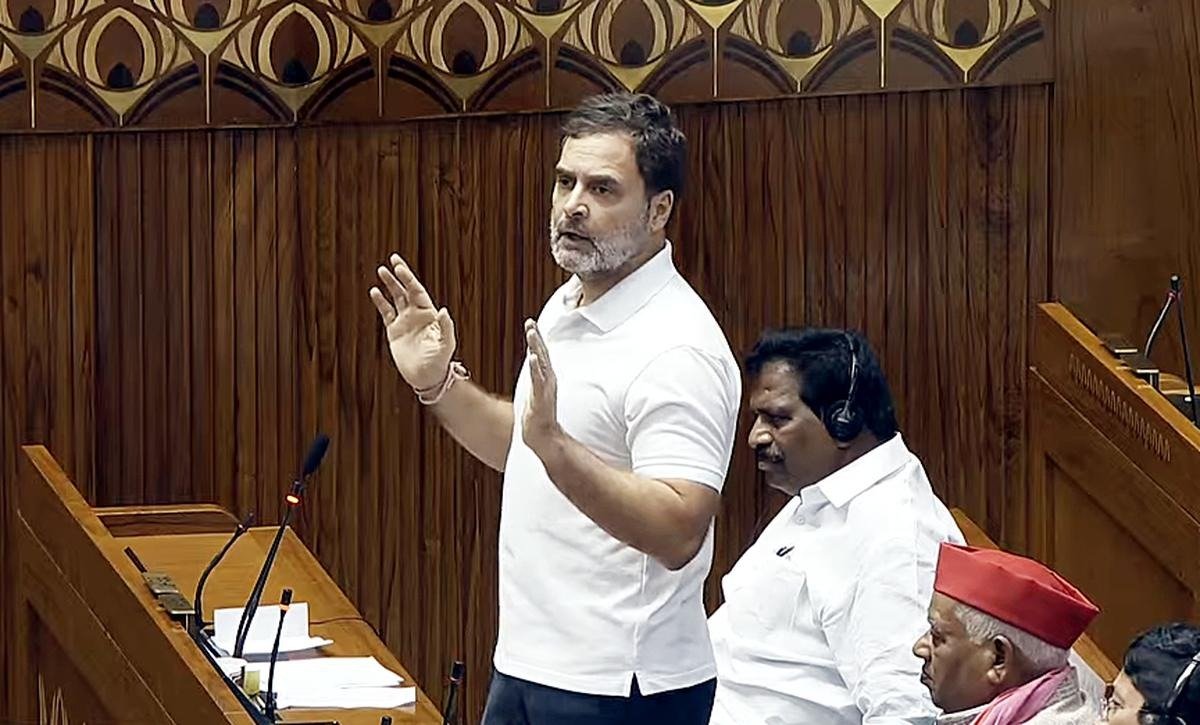
NEW DELHI (Feb 11, 2026) – Leader of Opposition Rahul Gandhi launched a sharp critique of the Union Government’s recent trade negotiations with US President Donald Trump, accusing the Centre of negotiating from a position of weakness. Speaking in the Lok Sabha, Gandhi outlined how the INDIA bloc would have handled the “predictably unpredictable” US President.
The debate follows controversy over a White House fact sheet that initially claimed India “committed” to buying $500 billion in US goods—a term later softened to “intends” after backlash.
The Three-Point Counter-Strategy
Gandhi proposed a “negotiation between equals,” emphasizing that India should use its unique leverage rather than “acting like servants”:
-
Data Sovereignty: Gandhi argued that India’s massive data pool is the ultimate asset for protecting the stability of the US Dollar. “If you want access to this data, you talk to us as an equal,” he asserted.
-
Energy Independence: He maintained that India must protect its energy security regardless of US pressure, a reference to ongoing friction over India’s oil imports from Russia.
-
Farmer Protection: Addressing Trump’s agricultural voter base, Gandhi insisted that Indian farmers’ interests must be non-negotiable. “We would not be made equal to Pakistan in this discussion,” he added.
The “Pulse” Controversy
The Congress party, led by Shashi Tharoor, has labeled the deal a “pre-committed purchase” rather than a Free Trade Agreement (FTA).
-
Fact Sheet Revision: After the initial announcement, the White House removed “pulses” from the list of products for tariff reduction and changed “committed” to “intends.”
-
Reciprocity Concerns: The Opposition alleges that India has surrendered trade leverage without securing reciprocal benefits for Indian service sectors or textile exports.
Parliamentary Timeline
| Phase | Date |
| Recess Begins | February 13, 2026 |
| Resumption | March 9, 2026 |
| Budget Session Ends | April 2, 2026 |