



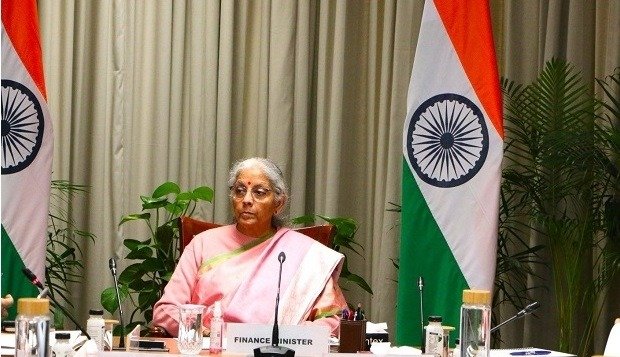
NEW DELHI – Finance Minister Nirmala Sitharaman has come down heavily on the “speculative frenzy” in India’s equity markets, asserting that the recent hike in Securities Transaction Tax (STT) on Futures and Options (F&O) is a deliberate move to curb gambling-like behavior, rather than a strategy to fill government coffers.
In an exclusive interview with PTI on February 3, 2026, Sitharaman used the Hindi term “satta” to describe the current state of derivative trading, warning that small retail investors are being wiped out by high-risk bets.
The “90% Loss” Reality Check
The Finance Minister’s stance is backed by a sobering SEBI study revealing that the F&O market has become a graveyard for retail capital.
-
Massive Losses: Individual investors incurred a staggering net loss of ₹1,05,603 crore in FY25.
-
Failure Rate: More than 90% of retail participants entering the F&O segment end up losing significant money.
-
Shrinking Participation: The number of unique individual F&O traders has already started to cool, dropping from 1.06 crore in FY25 to roughly 75.43 lakh by late 2025.
“The government has kept the larger public interest in mind. We have been receiving calls from scores of people seeking intervention to deter small investors from losing their life savings,” the FM stated.
Budget FY27: The New Cost of Trading
To act as a “deterrent,” the government has proposed a significant jump in STT rates starting this fiscal year:
| Instrument | Old Rate | New Rate (FY27) |
| Futures Contracts | 0.02% | 0.05% |
| Options Premium | 0.1% | 0.15% |
| Exercise of Options | 0.125% | 0.15% |
A “Good Augury”: Reaction to Trump’s Tariff Slash
Switching to international trade, Sitharaman hailed US President Donald Trump’s decision to slash tariffs on Indian goods from 50% to 18% as a major win for the Indian economy.
Last year’s 50% “punitive” tariffs had crippled Indian exporters in sectors like steel, textiles, and engineering. The FM noted that this reduction—exchanged for India’s pivot from Russian to American oil—would significantly boost export competitiveness, bringing India at par with other major Asian manufacturing hubs.
The Regulatory Crackdown
The STT hike is part of a broader “stability” pincer movement by the government and SEBI. Other recent measures to cool the market include:
-
Rationalization of weekly derivatives to prevent expiry-day volatility.
-
Increased contract sizes to keep low-capital retail players out of high-stakes rooms.
-
Upfront collection of option premiums.
“When the government does something, it does so keeping the larger number of public in mind, not the exceptions,” Sitharaman concluded, signaling that the era of “easy-entry” speculative trading in India is coming to an end.