



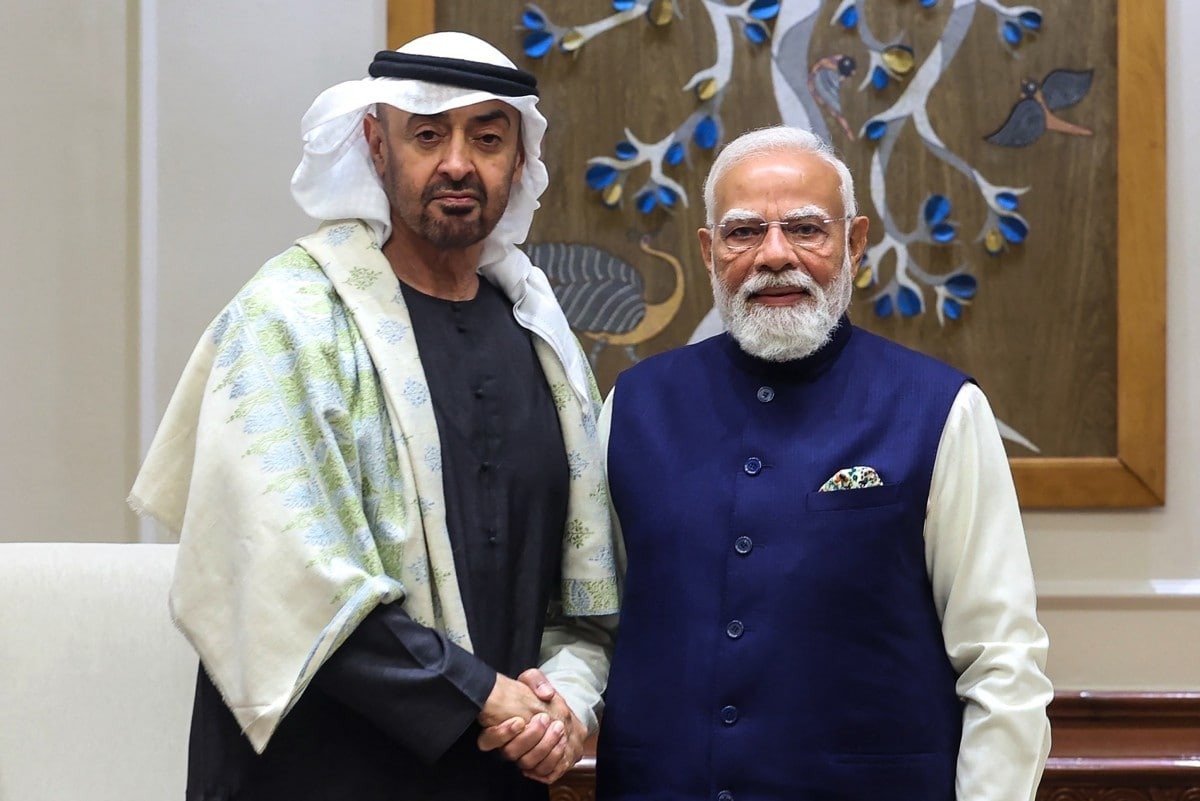
A whirlwind three-hour visit to India by UAE President Sheikh Mohammed bin Zayed Al Nahyan has sent shockwaves through South Asian geopolitics, signaling a major realignment of Gulf interests. In a swift development following the Delhi summit, Abu Dhabi officially scrapped its long-negotiated plan to operate Islamabad International Airport—a deal in the works since August 2025. While the UAE and India have escalated their ties to a “Full-fledged Strategic Defence Partnership,” Pakistan faces a visible erosion of confidence from its traditional Gulf ally. This shift comes amid a widening rift between the UAE and Saudi Arabia, with Islamabad increasingly aligning with Riyadh’s “Islamic NATO” vision, while Abu Dhabi strengthens its “Strategic Arc” with New Delhi.
The Pakistan Setback: Airport Deal Collapse
The decision to shelve the Islamabad International Airport project underscores a cooling of economic ties between the UAE and Pakistan:
| Feature | Details of the Collapse |
| The Project | Outsourcing of Islamabad International Airport operations to UAE-based entities. |
| Reason Cited | Lack of interest and failure to secure a local partner (Source: The Express Tribune). |
| Economic Context | Follows the distress sale of Pakistan International Airlines (PIA) and concerns over poor governance. |
| Strategic Signal | Reflects a “clear erosion of confidence” despite UAE’s experience in managing airports in volatile regions like Afghanistan. |
The India-UAE Surge: A New Strategic Arc
In stark contrast, the relationship between Prime Minister Modi and President Sheikh Mohammed bin Zayed has entered a “multidimensional phase”:
-
Strategic Defence Partnership: A Letter of Intent was signed to create a Framework Agreement on Defence Cooperation, moving beyond mere trade to high-level military synergy.
-
Humanitarian Gesture: The UAE leader approved the release of 900 Indian prisoners, a major diplomatic goodwill gesture following the Delhi talks.
-
Economic Alignment: The joint statement serves as a blueprint for long-term geo-economic integration, focusing on technology, energy security, and food corridors.
The Gulf Rivalry: Riyadh vs. Abu Dhabi
The changing equations are heavily influenced by the public confrontation between the two Gulf giants:
The “Islamic NATO” Factor: Pakistan is deepening its military ties with Saudi Arabia and Turkey, leaning on its military expertise to support Riyadh’s regional ambitions.
The India-UAE Pivot: The UAE is increasingly looking at India as its primary strategic partner in the Indo-Pacific, diverging from Saudi Arabia’s traditional reliance on Pakistan for security human resources.
Historical Context & Future Outlook
For decades, the UAE was Pakistan’s leading trade partner and a vital source of remittances. However, aging infrastructure, licensing controversies, and political interference in state-owned enterprises (SOEs) have pushed Gulf investors toward safer, more lucrative markets like India. The transition from a “remittance-based relationship” with Pakistan to a “technology-and-defence-based partnership” with India marks one of the most significant shifts in Middle Eastern foreign policy in the 21st century.