



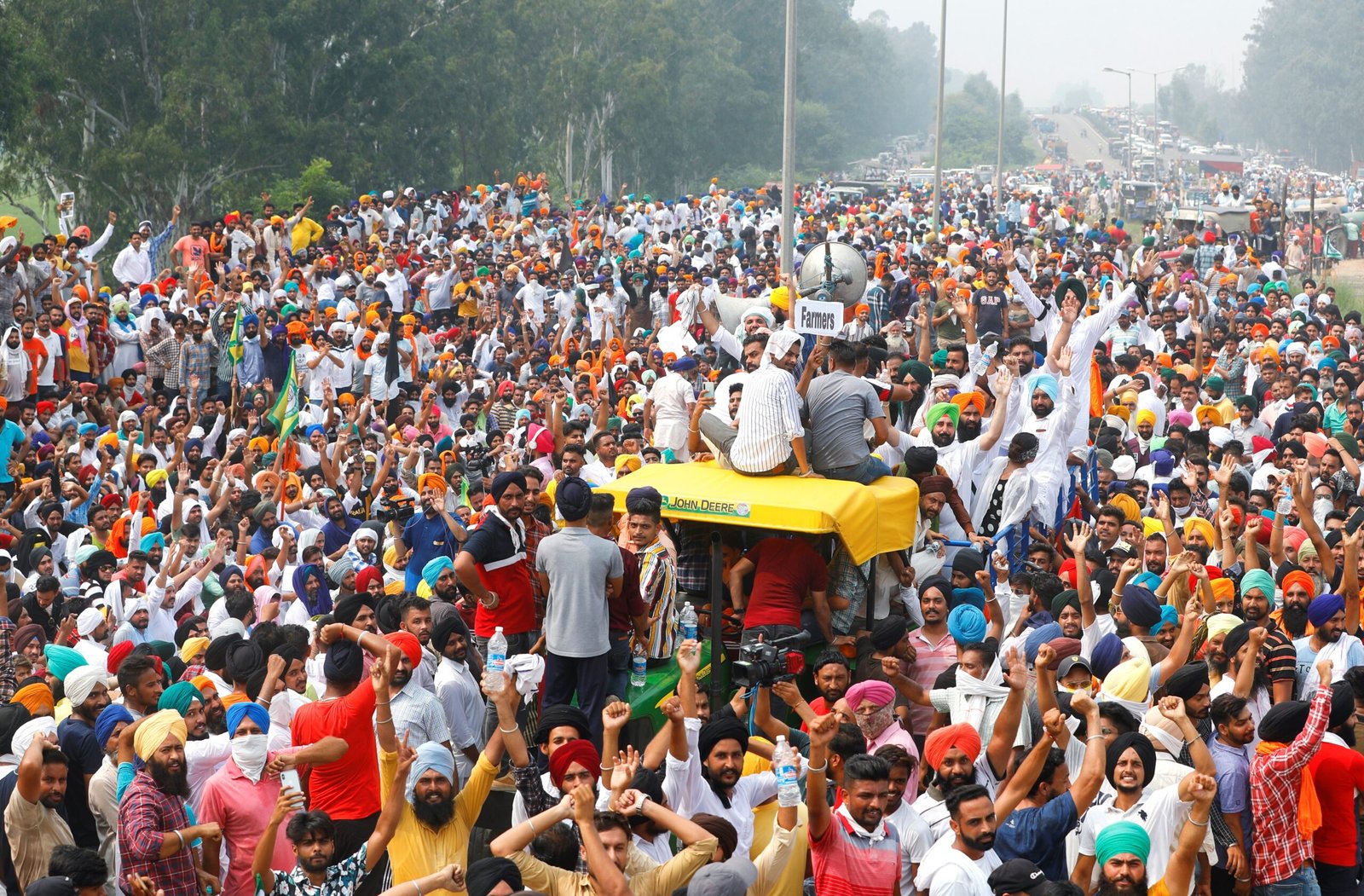
CHANDIGARH – Tensions are escalating across Punjab’s agricultural heartland as farmer unions announce a massive protest scheduled for February 5, 2026. The demonstrations will target the residences of the Chief Minister, cabinet ministers, and 21 MLAs, following reports of a new trade agreement between Prime Minister Narendra Modi and US President Donald Trump.
The unrest stems from conflicting narratives between Washington and New Delhi regarding the “zero tariff” status of American agricultural imports.
The Controversy: “Zero Tariff” vs. “Sensitive Protection”
Farmers are reacting to social media posts from US President Donald Trump and US Agriculture Secretary Brooke Rollins, which claim that American farm products will now enter the Indian market with zero duties.
-
The Farmer’s Fear: Leader Sarwan Singh Pandher alleged that the deal is a “stab in the back,” claiming India has removed a 17% tax on US products while Indian exports to the US face a newly hiked 18% tariff.
-
The Competition Gap: Jagjit Singh Dalewal questioned how unsubsidized Indian farmers can compete with heavily subsidized American counterparts if the market is flooded with cheap US crops.
-
The Government’s Stance: Union Commerce Minister Piyush Goyal has repeatedly assured Parliament that “sensitive sectors”—specifically dairy, poultry, soybean, and cereals—are “fully protected” and excluded from the zero-tariff regime.
What We Know About the Deal (as of Feb 4, 2026)
While full text of the agreement is pending, the following details have emerged from official statements:
-
US Concessions: The US has reduced the total effective tariff on Indian goods from 50% to 18% (scrapping a 25% “penalty” for India’s previous Russian oil purchases).
-
Indian Concessions: India will lower tariffs to zero on a “vast array” of goods. US Trade Representative Jamieson Greer confirmed this includes tree nuts, wine, spirits, fruits, and vegetables.
-
Protected Items: India has reportedly held firm on excluding genetically modified (GM) food, dairy, and core grains, though some “non-sensitive” agricultural items will see duty cuts.
Political Fallout: AAP and Opposition Under Fire
Farmer leaders have criticized the Aam Aadmi Party (AAP) for its silence on the issue, demanding a special session of the Punjab Legislative Assembly to pass a resolution against the deal.
The Samyukta Kisan Morcha (SKM) has also called for a general strike on February 12, warning that allowing subsidized US imports will “devastate the entire Indian peasantry.”
| Key Concern | Farmer Leader View | Government View |
| Tariff Balance | US gets 0% entry; India pays 18%. | 18% is lower than what Vietnam/China pay. |
| Market Access | US will “flood” Indian markets. | Only non-sensitive items allowed; Dairy is safe. |
| Sovereignty | Surrender to “US dictates.” | Strategic “reset” to boost Indian MSME exports. |