



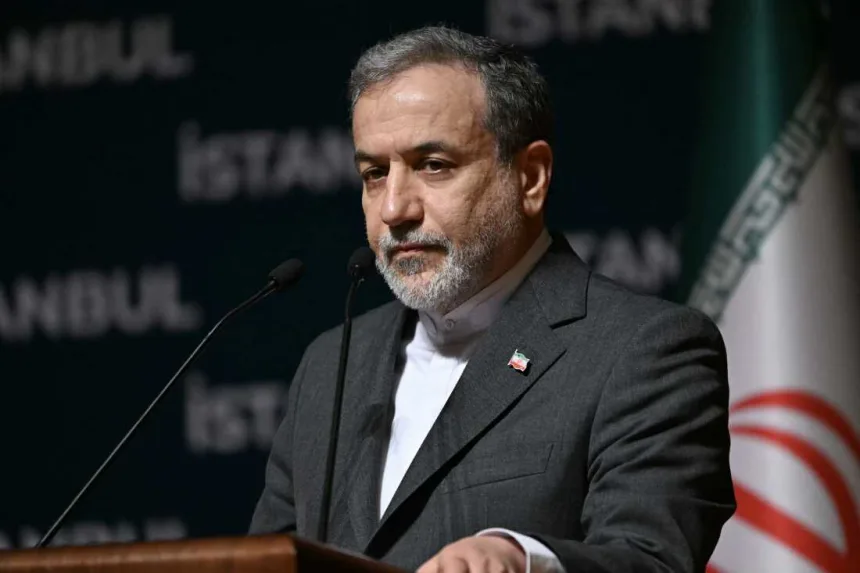
TEHRAN / WASHINGTON — Iranian Foreign Minister Abbas Araghchi declared on Monday that Tehran is prepared to take the ongoing Middle East conflict “as far as necessary.” His remarks follow a wave of Iranian strikes across the region and a functional blockade of the Strait of Hormuz, which has sent global oil prices soaring by 40% to 50%.
Regional Escalation & Infrastructure Strikes
The conflict, which entered a new phase following the February 28 killing of Iranian Supreme Leader Ayatollah Ali Khamenei, saw significant military action on March 16:
-
Gulf Targets: Iranian drones and missiles targeted military bases in the UAE and Bahrain. A drone strike sparked a fuel tank fire near Dubai International Airport, while a missile killed a civilian in Abu Dhabi.
-
Israel Front: The IRGC claimed to have targeted Tel Aviv and Ben Gurion Airport. In response, Israel announced “limited ground operations” against Hezbollah in southern Lebanon to establish a security buffer.
-
Retaliation Stats: The IRGC claims to have fired approximately 700 missiles and 3,600 drones at U.S. and Israeli targets since the war began.
The “Functional Blockade” of Hormuz
While Iranian officials claim the Strait of Hormuz is not officially “closed,” they admit traffic is moving under “special conditions” controlled by Iranian forces.
-
The Impact: Ship traffic has dropped by an estimated 70%, as insurance providers have withdrawn war risk coverage for the area.
-
Trump’s Response: President Donald Trump has demanded that world powers—including China, France, the UK, and Japan—send warships to police the strait, arguing they must “protect their own territory” as they are more reliant on Gulf oil than the U.S.
-
Allied Pushback: The UK, Germany, and France have largely distanced themselves from a joint mission, with many leaders expressing concern over the lack of a clear “strategic goal” or exit plan from the U.S. and Israel.
Diplomatic Stance
Araghchi explicitly rejected U.S. claims that Iran is seeking a ceasefire, calling such reports “delusional.” He stated that the war must end in a way that “enemies never think of repeating the attacks,” suggesting that Tehran is seeking a total shift in regional deterrence rather than a temporary truce.