



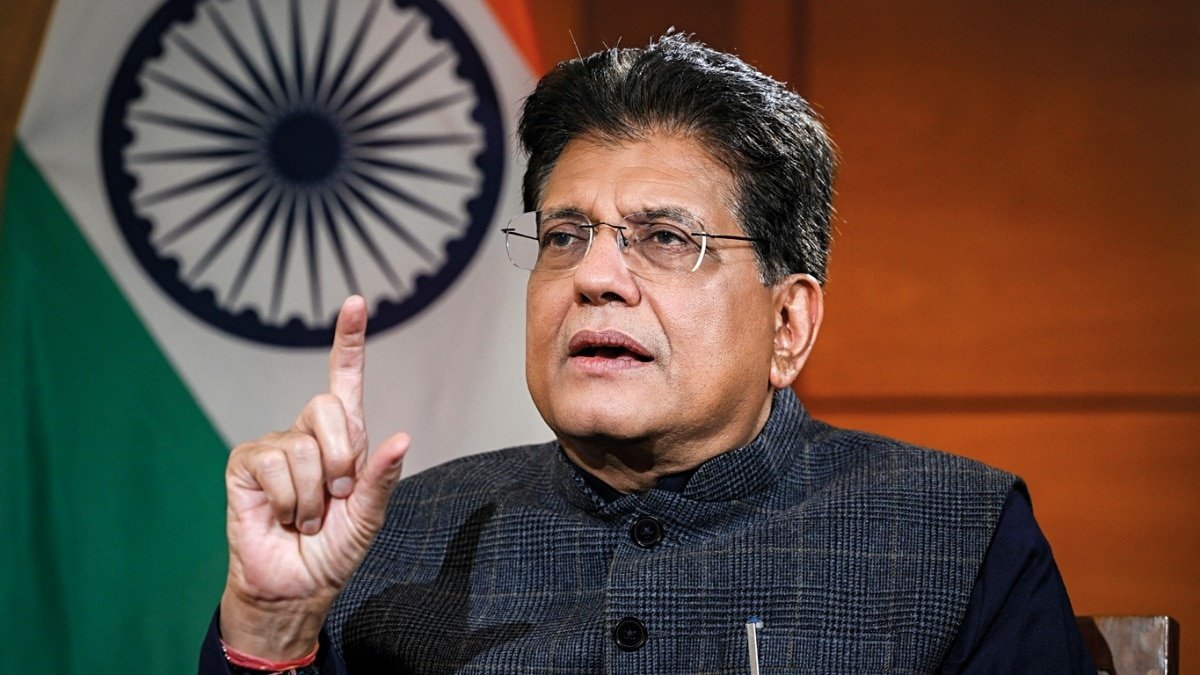
NEW DELHI: Affirming India’s commitment to a liberalized, market-determined exchange rate, Union Commerce and Industry Minister Piyush Goyal clarified that the central government maintains a strict hands-off approach regarding the valuation of the Indian Rupee (INR). Addressing the 19th Rozgar Mela, Goyal emphasized that the currency’s trajectory is shaped independently by free market dynamics and overarching global macroeconomic shifts.
The statement comes at a critical juncture for the domestic currency, which has faced persistent geopolitical crosswinds in West Asia and volatile energy pricing.
Key Takeaways
-
Non-Interventionist Stance: Goyal dismissed any notions of state-led currency manipulation, reiterating that the rupee finds its true valuation through open-market supply and demand. He noted that despite external pressures, the currency has recently shown periods of strong appreciation.
-
Sharp Exchange Rate Rebound: Demonstrating strong intraday resilience, the rupee rallied by 63 paise to close provisionally at 95.73 against the US Dollar. The rebound was heavily anchored by cooling global crude prices and anticipated tactical liquidity management by the Reserve Bank of India (RBI).
-
Buoyant Trade Velocity: The Minister highlighted that both imports and exports are expanding in tandem. This parallel growth reflects deep-seated, robust structural demand within the domestic industrial ecosystem, balancing out broader trade deficit pressures.
-
Managing the Current Account Deficit (CAD): While the administration has ruled out aggressive curbs on non-essential imports, Goyal confirmed that strategic fiscal policies are being continuously fine-tuned to keep the current account deficit within prudent thresholds.
The Insulation Blueprint: Boosting Local Production
To counter external supply chain vulnerabilities and structural trade deficits, the Ministry is accelerating long-term self-reliance initiatives:
-
Expanding Tech Infrastructure: Capitalizing on budgetary allocations, the government is fast-tracking investments into the national semiconductor mission and deploying new sectoral incentives to draw foreign capital into high-tech manufacturing.
-
Strategic Export Alignment: High-level engagements are underway with global manufacturers across the electronics, chemical, and heavy engineering industries to expand India’s export footprint and subvert localized geopolitical disruptions.
-
Public Trade Data Mapping: In a move to empower domestic enterprises, the government plans to release exhaustive data regarding top import categories. This will provide local manufacturers with a clear roadmap to substitute imports with indigenous products.
Geopolitical Watch: Maritime Chokepoints under Scrutiny
While internal economic indicators remain fundamentally sound, external risks continue to center around West Asian transit corridors. Trade monitors are keeping a close watch on key shipping chokepoints, including the Strait of Hormuz. Because any escalation along these channels can abruptly spike maritime insurance premiums and energy freight costs, the government’s focus remains on building domestic resilience rather than directly manipulating exchange rates.