



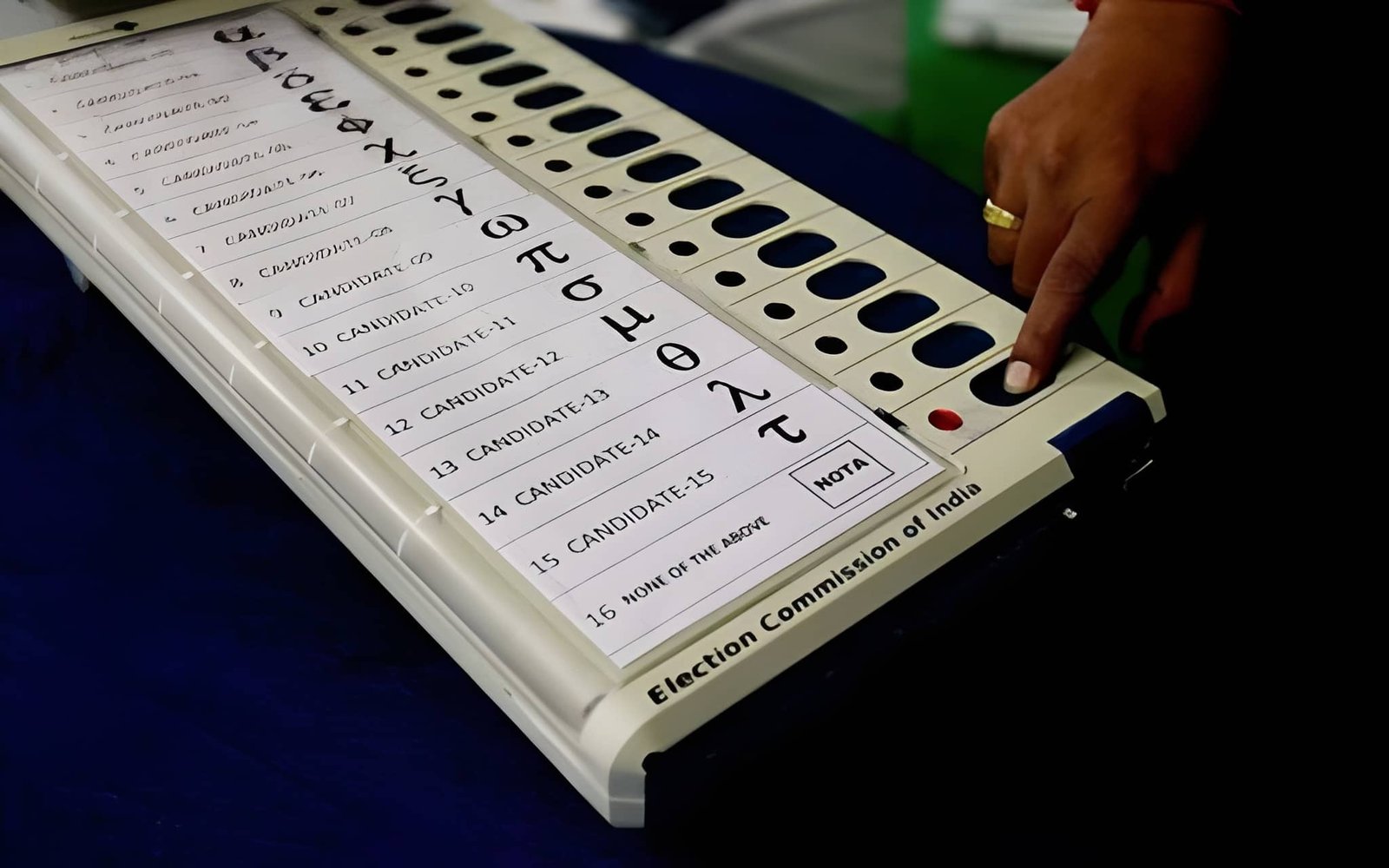
JAKARTA / NEW DELHI — As Prime Minister Narendra Modi continues his high-profile state visit to Jakarta, India’s democratic infrastructure has achieved a major international milestone. Breaking away from its traditional paper ballot system, Indonesia—the world’s third-largest democracy—is set to partner with India to co-develop and import customized Electronic Voting Machines (EVMs) ahead of its 2029 general elections.
The two nations are formalizing this transition through a comprehensive Memorandum of Understanding (MoU) focused on election technology and institutional capacity building.
Modernizing a 288-Million Strong Electorate
With a population of nearly 288 million people scattered across thousands of islands, Indonesia’s single-day elections are highly complex logistical undertakings. The shift toward digitized voting marks a historic turning point in its democratic framework:
-
Customised EVM Architecture: Under the bilateral agreement, India will support the technical development of Indonesia-specific EVMs, altering the physical and software design to fit Jakarta’s unique localized legislative structures.
-
Capacity Building and Human Resources: The framework establishes a strategic exchange program between the Election Commission of India (ECI) and Indonesia’s Komisi Pemilihan Umum (KPU), allowing officials to study Indian voter awareness campaigns, digital governance tools, and strongroom security measures.
-
Transition to 2029: Indonesia has relied exclusively on physical paper ballots, which require extensive printing, shipping, and manual counting. The country aims to fully implement India’s electronic voting model by the 2029 national polls to ensure cost sustainability and faster result processing.
“The process is highly inspiring. Everyone could see that the elections were free and fair. India is truly a land of democracy,” noted Indonesian Election Commissioner Idham Holik, who personally embedded with an international observer team during the 2025 Bihar Assembly elections to witness India’s tech implementation.
India’s Rising Electoral Export Footprint
While domestic opposition blocks frequently debate EVM architectures at home, India’s robust, standalone voting technology has consistently gained ground across developing democracies. Unlike Western PC-based terminal models, India’s low-cost ($200 per unit), non-networked, battery-operated EVMs are uniquely insulated against cyber tampering.
Indonesia joins a growing list of sovereign nations that have integrated Indian electoral technology into their sovereign systems:
| Nation | Integration Stage | Technical Scope |
| Bhutan | Full Adoption | First country to fully integrate customized Indian EVMs with end-to-end technical assistance. |
| Namibia | Full Commercial Sale | First commercial buyer; successfully deployed Indian-manufactured EVMs and later added VVPAT (Voter Verifiable Paper Audit Trail) units. |
| Nepal | Pilot Deployment | Deployed customized Indian units for pilot regional elections alongside institutional advisory support. |
| Indonesia | Bilateral MoU (2026) | Co-developing specialized, nation-specific EVMs for rollout in the 2029 general elections. |
Part of a Broader Defense and Tech Alignment
The electoral technology deal represents just one vertical of a larger strategic package being rolled out during PM Modi’s bilateral summit with President Prabowo Subianto.
Alongside the KPU-ECI election agreement, the two maritime neighbors are rapidly scaling up hardware ties, with Jakarta expanding its defense imports to buy India’s indigenous Astra air-to-air missiles and securing additional coastal batteries of the supersonic BrahMos cruise missile system.