



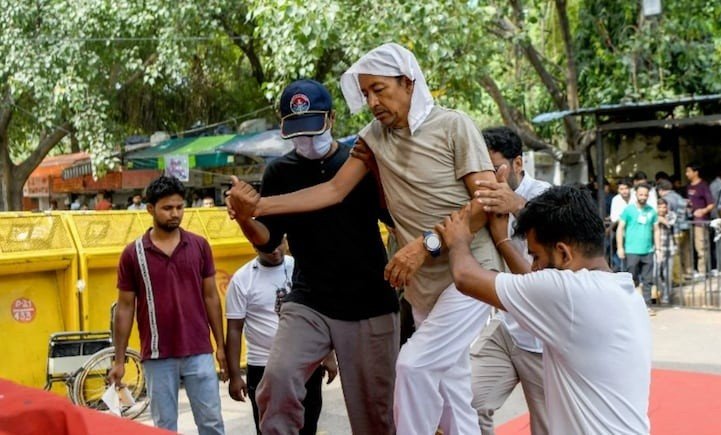
NEW DELHI — In an urgent legal development, a Public Interest Litigation (PIL) has been moved before the Delhi High Court seeking immediate intervention to save the life of climate activist Sonam Wangchuk, whose indefinite hunger strike has entered its 18th day.
The petitioner warned the court that the 59-year-old activist has lost approximately 8.5 kg and “will not be able to survive for more than two days” without medical intervention.
High Court Defers Hearing to Tomorrow
A division bench comprising Chief Justice D.K. Upadhyaya and Justice Tejas Karia took up the matter today but deferred the hearing until tomorrow, July 16, 2026.
-
Absence of Authorities: The bench noted that no legal representatives from the Union of India were present in the courtroom due to an ongoing work abstention called by the Delhi High Court Bar Association.
-
Urgent Instructions: Recognizing the critical nature of the plea, the bench stated: “We are entertaining the petition. We will post the matter tomorrow itself and require them to seek instructions. We will ask the registry to file the order to the authorities today itself.”
The Core Demands and Medical Concerns
The petition, filed by advocate Rakesh Kumar Saini, accuses the state of being insensitive and unconcerned about the deteriorating condition of a citizen protesting for a public cause.
-
The Protest Mandate: Sonam Wangchuk has been on a hunger strike since June 28, 2026, alongside the youth-centric Cockroach Janta Party, demanding the resignation of Union Education Minister Dharmendra Pradhan over alleged widespread irregularities in the NEET examination.
-
Pleas for Force-Feeding: The petitioner has requested the court to direct authorities to shift Wangchuk to a government hospital and administer essential nutrients, vitamins, and minerals intravenously or via a liquid diet.
-
Democratic Right vs. Right to Life: While the plea maintains that holding a peaceful protest is a fundamental democratic right, it argues that the judiciary cannot stand by and “allow a citizen to voluntarily die of hunger.”
The Legal Argument: The petition strongly criticizes the government’s approach, asserting that a failure to protect the activist’s life under these circumstances would “virtually amount to commission for abetment of suicide” by the state, adding that his demise would bring global shame to the country’s democratic framework.