



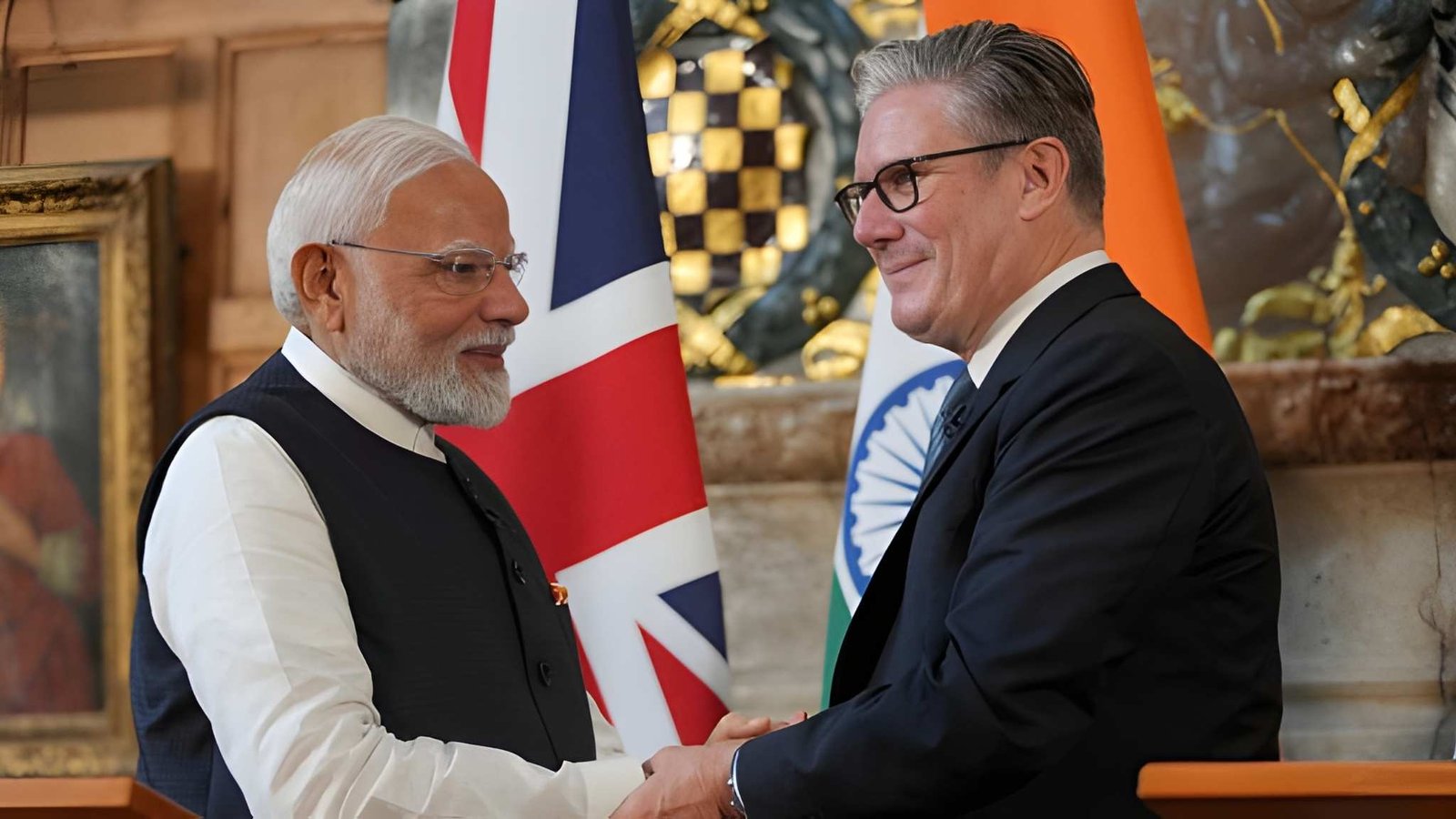
NEW DELHI — In a major milestone for bilateral relations, the Comprehensive Economic and Trade Agreement (CETA) between India and the United Kingdom officially came into force at midnight today, July 15, 2026.
The landmark deal, which was signed in London on July 24, 2025, in the presence of Prime Minister Narendra Modi and British Prime Minister Keir Starmer, establishes a modern economic architecture aimed at nearly doubling bilateral trade to $100 billion by 2030 from the current estimate of $55–$60 billion.
Zero-Duty Access for Indian Exports
Under the provisions that took effect today, key labor-intensive Indian manufacturing sectors are set to gain immediate duty-free access to the British market:
-
Zero-Duty Categories: Indian exports of textiles, leather and footwear, gems and jewelry, and plastics can now enter the UK with zero customs duties, down from previous tariffs that went up to 12%.
-
Agricultural Openings: Indian farmers will gain enhanced market entry into the United Kingdom’s massive $90 billion agricultural sector.
Strategic Safeguards and Tariffs
While the deal significantly opens up bilateral commerce, both nations have built in protections for sensitive domestic industries:
-
Protected Auto Industry: To protect domestic manufacturing scales, India has retained tariff protection on sensitive automotive segments, including small and mid-segment internal combustion engine (ICE) vehicles and affordable electric vehicles (EVs).
-
Precious Metals Dynamics: New Delhi has extended tariff concessions on the import of silver bars from the UK, which made up 45% ($5.2 billion) of India’s gold-silver imports in FY26. However, gold bars have been explicitly excluded from any tariff concessions under the pact.
Sops and Social Security Relief for Corporate India
One of the most anticipated highlights of the agreement is the Double Contribution Convention, which provides direct financial relief to Indian businesses operating in the UK.
The Social Security Waiver: Indian employees temporarily relocated to the UK for up to five years will no longer have to make contributions to the UK’s National Insurance System. Currently, these contributions amount to up to 23% of the total salary.
Industry estimates project this waiver will yield cumulative savings of $600 million for Indian firms.
“This is a defining moment in India’s trade history,” said Commerce Secretary Rajesh Agrawal. “This is one of the first FTAs of its kind… establishing a future-oriented economic architecture. It covers 30 chapters, including digital trade, innovation, labor, environment, and gender, making it a win-win proposition for both nations.”