



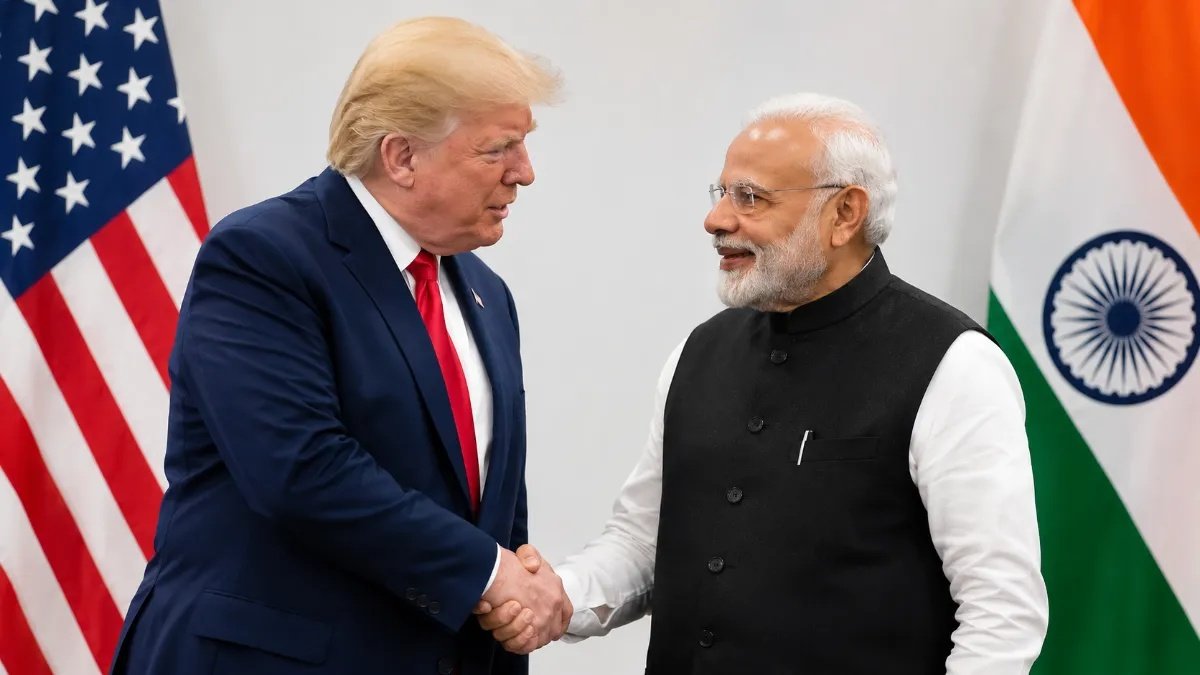
WASHINGTON — In a bid to overhaul United States voting laws, President Donald Trump referenced India’s election framework as a benchmark to urge Congress to pass the Safeguard American Voter Eligibility (SAVE) America Act.
In a post on Truth Social, Trump cited a recent interaction involving India’s Chief Election Commissioner, Gyanesh Kumar, who questioned the absence of mandatory voter photo identification requirements across American federal elections:
-
India’s Scale & Security: Trump pointed out that in India’s general election—where 646 million voters participated—fewer than 1% cast postal ballots, and every single voter was required to present a valid photo ID document.
-
Call for Legislative Action: Arguing that the U.S. election framework lags behind international standards in voter verification, Trump called for the immediate passage of the SAVE America Act to prevent potential voter fraud.
Core Provisions of the SAVE America Act
The proposed legislation aims to establish stringent nationwide requirements for participating in federal elections:
-
Mandatory Citizenship Verification: Requires individuals to provide physical proof of U.S. citizenship during the voter registration process.
-
Nationwide Photo ID Requirement: Mandates that voters show government-issued photo identification at polling places.
-
Restrictions on Mail-In Voting: Limits postal voting exclusively to specific exceptions, including military service, illness, physical disability, or travel.
-
Cleaning Voter Rolls: Instructs state election authorities to remove non-citizens from active voter registries.
A statement from the White House supported the bill, noting that democracies such as India and Brazil link voter identification to biometric data, whereas the U.S. primarily relies on self-attestation of citizenship.
Diplomatic Support and Capitol Hill Gridlock
U.S. Ambassador to India Sergio Gor publicly echoed Trump’s push on social media, describing India’s voter identification model as an example for secure voter authentication.
Despite the administration’s campaign, the legislation remains stalled in Congress due to sharp party division. The U.S. Senate adjourned for a five-week recess without taking action on the bill, leaving its legislative future uncertain.