



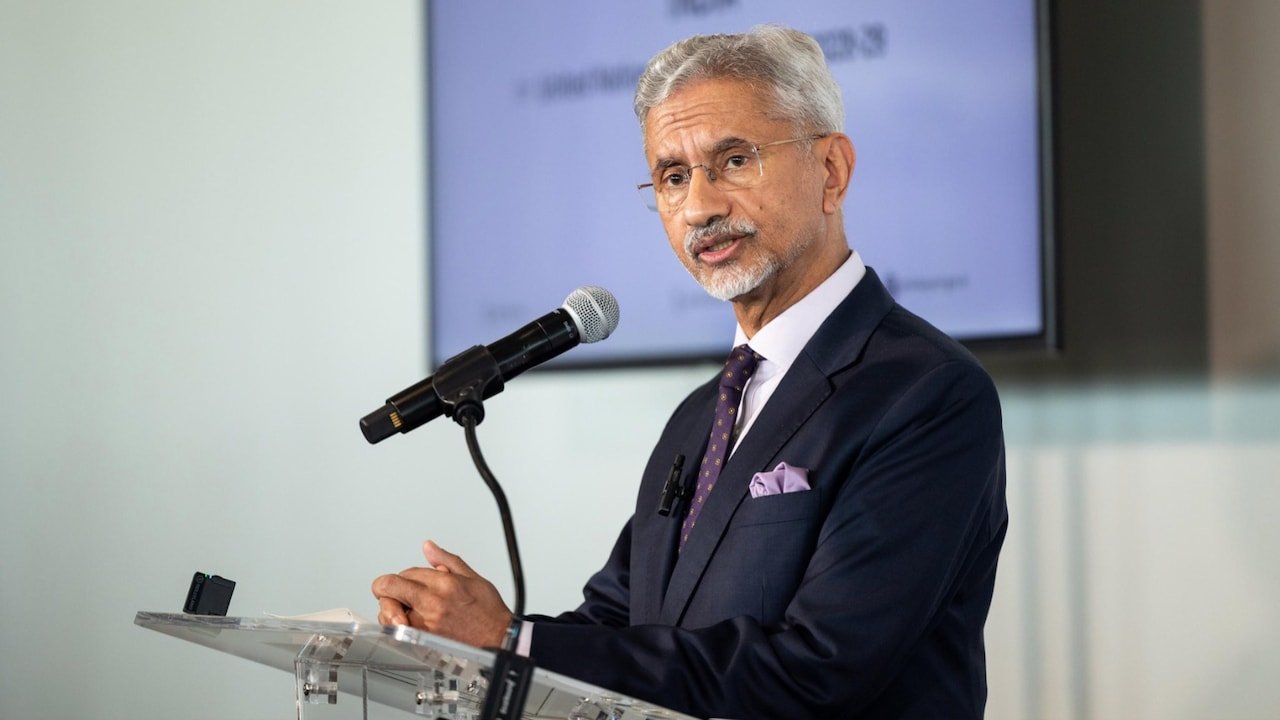
NEW DELHI — Marking a significant pivot in New Delhi’s diplomatic posture, External Affairs Minister S. Jaishankar officially acknowledged that India has stepped beyond mere advocacy to actively engage with both Moscow and Kyiv in search of a mutually acceptable solution to the lingering conflict in Ukraine.
Speaking at the Munich Leaders’ Meeting in New Delhi on Sunday, Jaishankar revealed that Indian diplomacy is currently focused on concrete operational concerns—including Black Sea shipping security, grain exports, energy supplies, and exploring non-attack possibilities.
“Our position on that conflict has been very clear, which is that we would like to see an end to this conflict,” Jaishankar noted. “We have been advocating it for many years, and in recent months we have got a little bit more involved beyond advocacy. We have conversations with both Russia and Ukraine in this regard.”
A Multi-Track Peace Effort Gains Momentum
The External Affairs Minister’s public disclosures come on the heels of high-level diplomatic signals from both warring capitals:
-
Moscow’s Endorsement: Russian President Vladimir Putin recently stated that Prime Minister Narendra Modi possesses “good ideas” to help resolve the conflict.
-
Kyiv’s Acknowledgment: Ukrainian Foreign Minister Andrii Sybiha confirmed that Kyiv received specific ceasefire proposals from India alongside three other nations.
-
The Bishkek Mandate: The diplomatic push builds on PM Modi’s direct talks with President Putin in Bishkek on August 31, where the Prime Minister emphasized that the “endless war must now give way to end of war.”
Historical Foundations & Economic Realities
Addressing India’s persistent ties with Russia, Jaishankar underscored a legacy of trust dating back to the 1950s, pointing out that the Soviet Union stood by India during critical national security threats when other global powers backed regional military regimes.
However, he emphasized that modern Indo-Russian relations have evolved beyond historical sentiment into a multifaceted strategic partnership spanning defense, nuclear energy, space, trade, and energy security.
| Pillar | Strategic Focus |
| Historical Trust | Decades of security partnership since the Soviet era. |
| Trade & Energy | Expanded bilateral trade, energy imports, and resource security. |
| Active Neutrality | Leveraging trusted relations with both Russia and Ukraine to mediate practical agreements. |
Navigating a Restructured Global Order
Jaishankar framed India’s peace initiatives within a rapidly shifting international environment characterized by two dominant trends:
-
US Repositioning: A strategic pivot by the United States into a posture of choice, turning it into a “lonelier power.”
-
The Rise of China: Sharp systemic competition alongside intense interdependence, leading to the weaponization of economic leverage.
To navigate this geopolitical friction, Jaishankar outlined what he termed a “Goldilocks scenario”—a state where middle and emerging powers maintain balanced, non-aligned relations with both Washington and Beijing.
He concluded that modern diplomacy no longer requires complete alignment of views. Instead, emerging powers are building a flexible architecture through de-risking, diversification, and agenda-based cooperation, using shared touchpoints to drive global stability.