



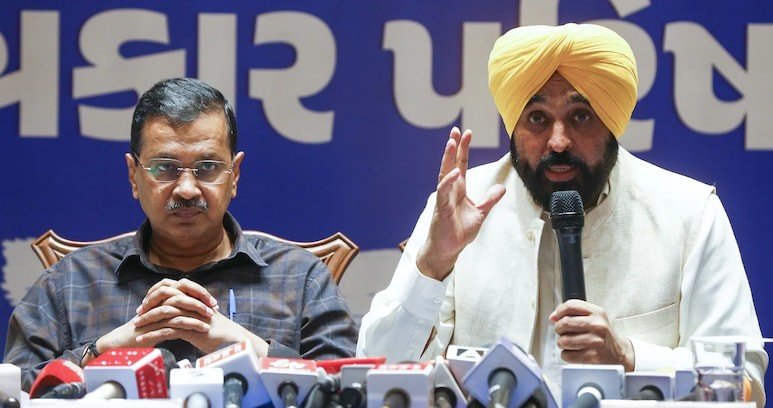
CHANDIGARH — The ruling Aam Aadmi Party (AAP) in Punjab finds itself navigating an intensifying political storm, with opposition parties launching a multi-pronged assault over government school infrastructure, the persistent drug crisis, financial corruption allegations, and law and order handling.
The pressure reached a boiling point after internal rebellion ruptured the party’s flagship “education revolution” narrative, triggering sharp rebukes from both the Congress and the Bharatiya Janata Party (BJP).
Education Sector Under Fire Following MLA’s Suspension
The most recent political flashpoint erupted from within AAP’s own ranks. Sukhveer Singh Maiserkhana, AAP MLA from Maur, publicly released a video highlighting severe teacher shortages across local government schools, including a premier School of Eminence. Rather than addressing the grievance publicly, the party leadership suspended Maiserkhana on grounds of indiscipline and anti-party activities.
The disciplinary action immediately provided political ammunition to rival parties:
-
Congress Attack: Punjab Congress President Pargat Singh condemned the move, stating the episode exposed “authoritarianism and the falsehood of AAP’s much-publicised education revolution.”
-
BJP Scrutiny: Senior BJP leader Ravneet Singh Bittu questioned Chief Minister Bhagwant Mann’s accessibility, arguing that if an elected legislator is silenced for voicing school shortages, ordinary citizens have little hope of being heard. BJP national general secretary Tarun Chugh added that systemic transformation requires “adequate teachers, better infrastructure, and dignity,” rather than mere slogans.
AAP leadership dismissed the MLA’s allegations as politically motivated, maintaining that the cited school remains adequately staffed against sanctioned positions.
Multi-Front Opposition Assault: Key Battlegrounds
Beyond education, the Mann administration is defending its record across three major governance pillars:
-
The Anti-Drug Campaign: The BJP has elevated drug eradication into a central campaign theme through its statewide ‘Nasha Mukt Punjab Yatra’. During a massive rally in Jalandhar, Union Home Minister Amit Shah pledged to make Punjab entirely drug-free by December 31, 2029, accusing the state government of systemic failure. In response, AAP leaders pointed to drug networks established under past SAD-BJP regimes and questioned central oversight on cross-border smuggling.
-
Financial Irregularities & ED Probes: Action by the Enforcement Directorate (ED) at the Greater Mohali Area Development Authority (GMADA) over land deals has fueled opposition charges of corruption. AAP has countered by alleging that the Centre is using central investigative agencies to destabilize the state government.
-
Law & Order and Protests: Opposition leaders have criticized the administration’s handling of peaceful demonstrations by teachers and public employees, alleging high-handedness and a disregard for democratic dissent.
Strategic Dilemma for AAP Leadership
For Chief Minister Bhagwant Mann and party national convenor Arvind Kejriwal, the simultaneous convergence of internal dissent and opposition campaigns strikes at the core of AAP’s governing identity. Having risen to power in Punjab on promises of governance reform, anti-corruption, and public sector modernization, the party now faces the complex task of protecting its core ideological brand against growing political resistance.