



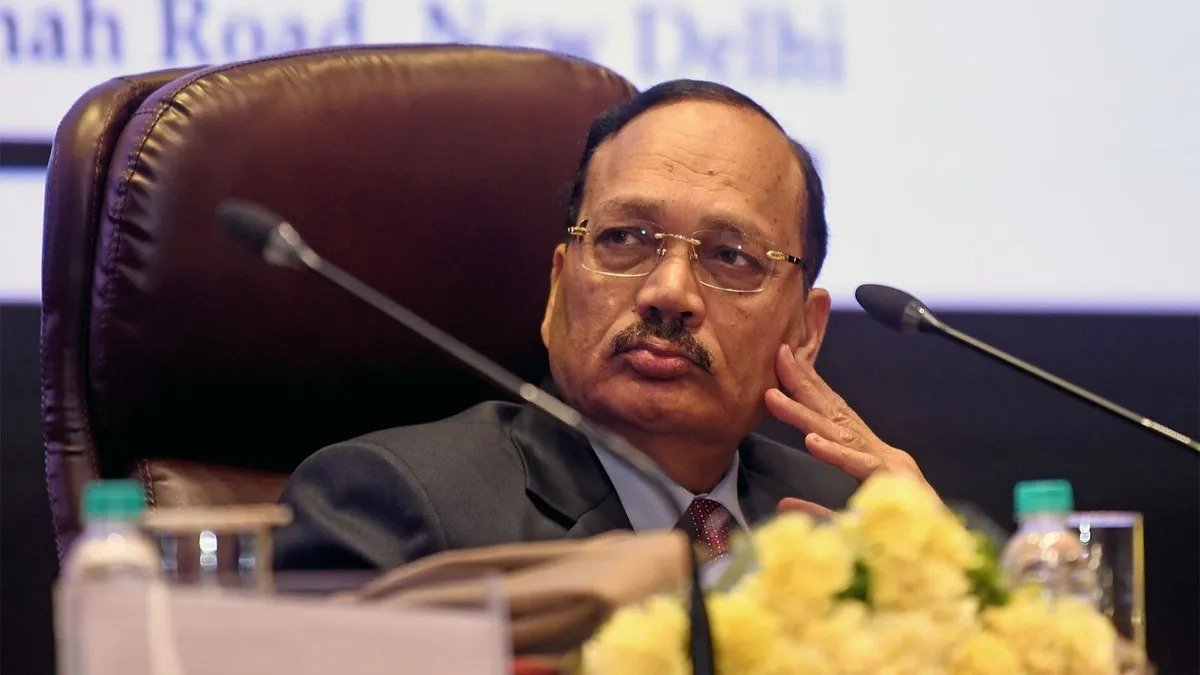
NEW DELHI — Speaking publicly on the sidelines of the National Human Rights Commission’s 33rd anniversary event in New Delhi, Chief Justice of India Surya Kant addressed the severe capital restrictions and ongoing street demonstrations, firmly stating that law enforcement and public order are “not his domain”.
The remarks follow days of intense political agitation across the national capital, centered on demands for the resignation of Chief Election Commissioner Gyanesh Kumar over alleged irregularities in voter roll revisions.
Key Takeaways
-
Law Enforcement Boundaries: Chief Justice Surya Kant drew a clear line regarding recent capital protests and transit restrictions, stating in Hindi: “Ye law and order ka mudda hai. Ye mera vishay nahin hai.”
-
Sub-Judice Status Cited: Reaffirming his written response to opposition leaders Mallikarjun Kharge and Rahul Gandhi, the CJI reiterated that holding administrative meetings on active litigation would violate the separation of powers.
-
Judicial Doors Open: Stressing that the apex court remains accessible to all citizens under Article 32, the Chief Justice noted that related petitions are scheduled for formal judicial hearings.
Institutional Protocol and Separation of Powers
The capital recently experienced massive security deployments, including over 20,000 security personnel, the closure of 45 metro stations, and thousands of preventive detentions during demonstrations led by the Cockroach Janta Party and the INDIA bloc.
While opposition figures sought to submit a memorandum regarding election oversight directly to the Chief Justice, the formal reply—subsequently released by the Congress party—clarified that the judiciary lacks administrative powers to address political grievances outside structured legal channels.
“At the very outset, it may be noted that the issues referred to are already sub judice before the Supreme Court of India. Therefore, convening a meeting to discuss pending cases would wholly contravene the principle of Separation of Powers,” the Chief Justice noted in his official letter.
Upcoming Judicial Hearings
Encouraging political leaders to channel their grievances through formal litigation rather than administrative memorandums, the CJI pointed out that similar matters are listed for bench consideration. The Supreme Court is slated to review a cluster of petitions addressing transit shutdowns, mass detentions, and voter roll revisions.