



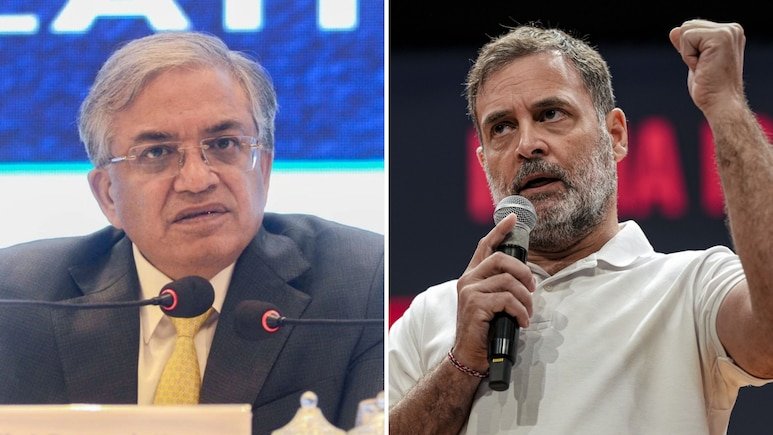
NEW DELHI — Converting a massive street demonstration into a direct legal battle, Lok Sabha Leader of the Opposition Rahul Gandhi has formally moved the Supreme Court against Chief Election Commissioner Gyanesh Kumar, citing serious irregularities in the Special Intensive Revision of electoral rolls.
The petition was submitted after Chief Justice of India Surya Kant declined an administrative meeting with an opposition delegation, explicitly advising political leaders that pending electoral grievances must be brought through judicial proceedings rather than political memorandums.
Key Takeaways
-
Court Filing via Legal Team: As public marches and security cordons prevented his arrival at the court premises prior to the 4:30 PM administrative deadline, Rahul Gandhi’s petition was formally submitted by advocate S. Prasanna.
-
Transition to Formal Litigation: Accompanied by Priyanka Gandhi Vadra and thousands of supporters during a march toward the top court, opposition leadership adapted their strategy to meet the judiciary’s requirement for formal litigation.
-
Registry Fast-Tracks Petition: The Supreme Court registry was directed to process the paperwork immediately and resolve technical defects to facilitate an urgent hearing before a bench led by the Chief Justice.
Opposition Shifts Strategy from Street Agitation to Courtroom
The petition represents the culmination of escalating tensions over election oversight, sparked by reports of internal dissent within the election body regarding voter revision protocols.
By filing a formal petition, the opposition seeks judicial review of the election management process while adhering to the constitutional separation of powers highlighted by the Chief Justice. The Supreme Court is expected to take up the matter alongside related petitions addressing capital-wide protest restrictions and electoral governance.