



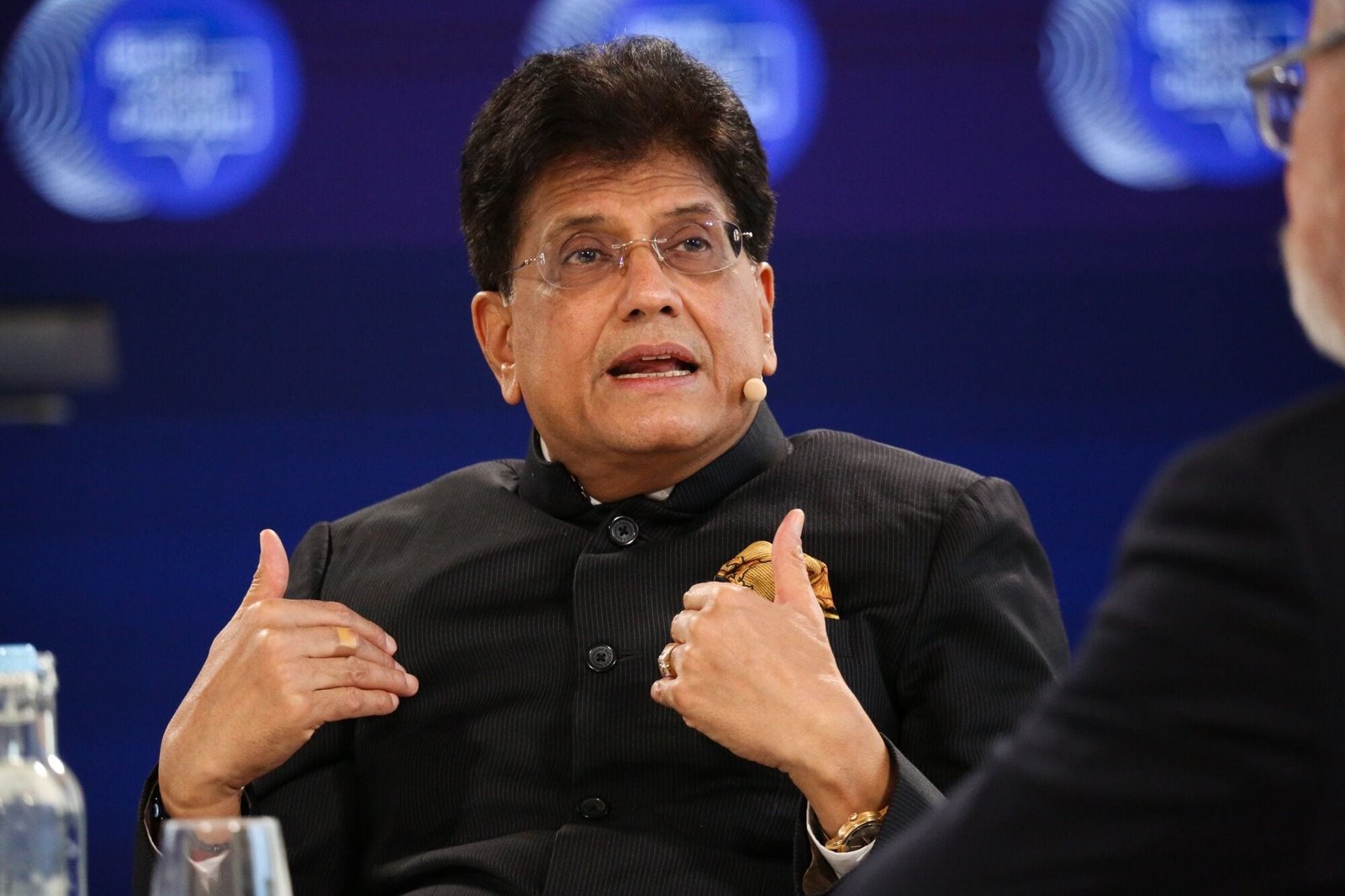
BERLIN — Union Minister of Commerce and Industry Piyush Goyal delivered a uncompromising address at the Berlin Global Dialogue, rebuking Western industrial powers and the European Union for defaulting on global climate finance pledges while imposing punitive trade tariffs under the guise of environmental regulation.
Addressing international delegates, the Minister underscored the deep asymmetry between the historical carbon footprint of developed economies and the economic penalties now being pushed onto the Global South.
Key Takeaways
-
Unfulfilled Financial Pledges: Minister Piyush Goyal observed that developing economies have received virtually none of the $100 billion annual climate finance promised by developed nations under international covenants.
-
Opposition to Carbon Tariffs: The Minister condemned unilateral trade instruments, specifically targeting the European Union’s Carbon Border Adjustment Mechanism (CBAM) as protectionist barriers that bypass genuine technology transfer.
-
Population Scale vs. Emission Culpability: Goyal highlighted that while India accommodates 17 percent of the global population, its cumulative contribution to historical carbon emissions remains under 3 percent.
-
Per Capita Emissions Gap: The Minister noted that European per capita environmental impact and carbon emissions continue to outpace India’s per capita output by seven to eight times.
Defaulted Pledges and Regulatory Barriers
Reflecting on multilateral pledges established during global climate summits in Copenhagen and Paris, Goyal recalled that advanced economies bound themselves to mobilizing $100 billion annually to fund green transitions across developing states and vulnerable island nations.
Highlighting the systemic failure to deliver on these pledges, the Minister criticized Western inaction:
“At the Paris climate conference in 2015… it was agreed that the developed countries, who have enjoyed the fruits of messing up the climate for so many decades, will pay a greater price, and will support the developing and less developed countries, as well as island nations… Just $100 billion a year. Eleven years later, we haven’t seen a nickel or a dime of that. It’s all promises.”
He further warned against converting environmental policy into economic protectionism, asserting that penalizing exports from developing nations through unilateral trade adjustments without providing the required financial capital or green technology undermines multilateral trust.
Per Capita Equity and Sovereign Development Demands
Differentiating Western consumption patterns from India’s sustainable resource management, Goyal stressed the necessity of energy equity for developing nations:
“Who’s responsible for this mess in the first place? Where did the ozone layer get damaged? Who sent all that carbon into the atmosphere? I represent 17% of the world’s population, but my contribution to global carbon emissions is less than 3%… Even today, Europe’s per capita contribution to carbon emissions—and its per capita environmental impact—is probably seven or eight times that of India.”
The Minister concluded by reaffirming that while India is aggressively expanding one of the world’s largest clean energy programs, its primary obligation remains securing affordable energy, food security, and economic mobility for its 1.4 billion citizens.