



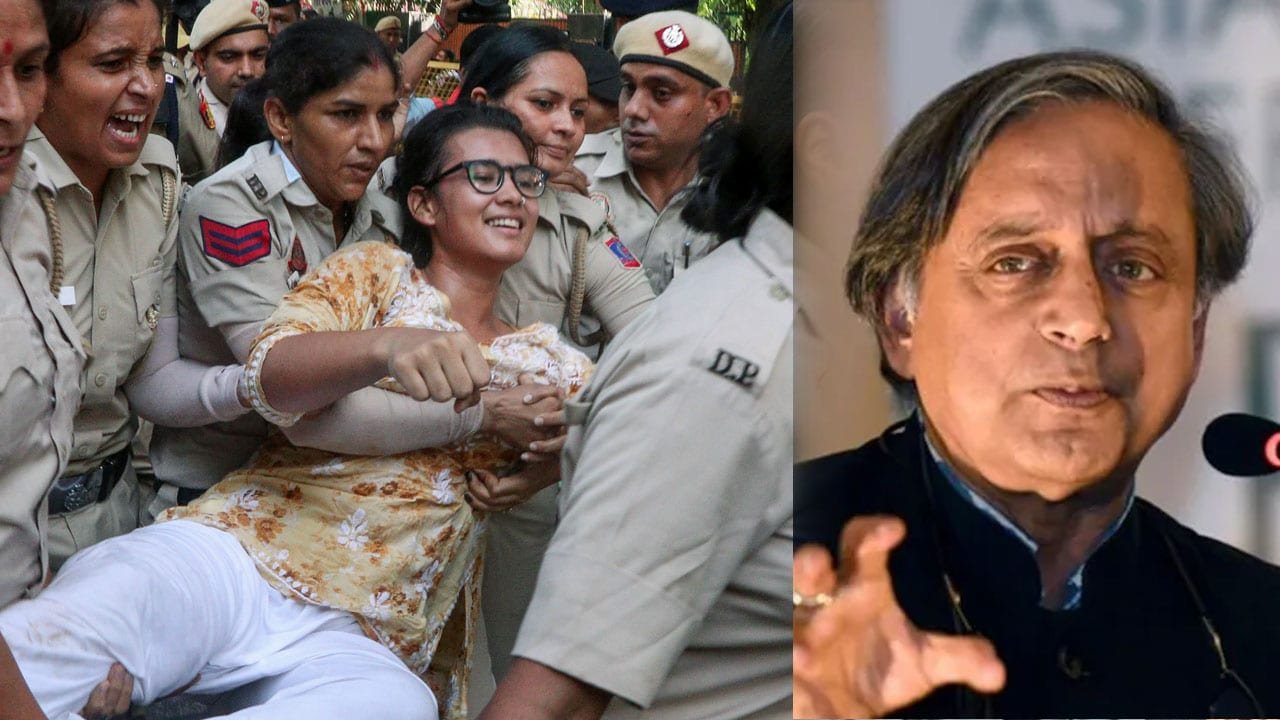
NEW DELHI — Senior parliamentary representative Shashi Tharoor defended his party’s moderate positioning and strategic cooperation with youth organizations and left-wing factions, characterising broad opposition alliances as a necessary democratic response to administrative errors in electoral registration.
Addressing the active participation of student leaders—such as student association head Neha Bora—alongside senior leadership during recent public demonstrations in New Delhi, the lawmaker emphasized that tactical cooperation across differing political philosophies is a long-standing feature of Indian democracy.
Key Takeaways
-
Centrist Alignment: Tharoor attributed the participation of diverse student leaders in opposition demonstrations to his party’s moderate political stance and open approach toward civic coalitions.
-
Historical Parallel: The representative cited the multi-party alliance of 1977—which brought together political conservatives, socialists, and leftists against executive overreach—to demonstrate that ideological opponents routinely unite around core democratic principles.
-
Issue-Specific Coordination: While noting deep economic and regional policy differences with left-wing movements, Tharoor underscored a shared commitment to challenging improper administrative procedures in the national capital.
-
Defense of Political Mobilization: Pushing back against executive criticism targeting opposition figures, the lawmaker asserted that Rahul Gandhi has generated substantial momentum and enthusiasm among younger voters.
Multi-Party Alliances and Civic Engagement
Commenting on the public visibility of youth activists during recent demonstrations focused on electoral roll integrity, Tharoor underscored the value of inclusive civic participation:
“Neha Bora wasn’t campaigning against us… She’s brought a lot of energy, colour, and life into the protest, the movement. But it’s about the Congress being a moderate party and about acceptance. Why does the Congress need the Left? It’s opposition unity.”
Tracing this approach back to key moments in Indian political history, Tharoor pointed out that cross-ideological unity has historically served as a vital balance against centralized executive authority:
“Look at 1977… Prime Minister Narendra Modi does keep talking about the Emergency and how the Emergency was overthrown. How was it overthrown? Through opposition, where the friends of the RSS and the BJP were merging with socialists and leftists… Why shouldn’t we make common cause with parties we disagree with? We don’t agree with the Left on economics; we don’t agree with the Left on Kerala politics, but we agree with the Left on some of the undemocratic methods being followed in Delhi that we believe need to be resisted.”
Non-Violent Assembly and Systemic Accountability
Reaffirming the clear line between lawful public expression and illegal unrest, Tharoor rejected comparisons between domestic demonstrations and violent riots abroad:
“Peaceful protest is the democratic right of every Indian citizen. Violence is not. What we’ve seen happening in France is not something that anybody in India’s political space would condone… We believe in peaceful, organised, and disciplined protest.”
He urged statutory bodies to provide complete transparency regarding the Special Intensive Revision (SIR) voter list process, maintaining that resolving administrative errors protects equal access to the ballot box and ensures political transitions occur strictly through transparent elections.