



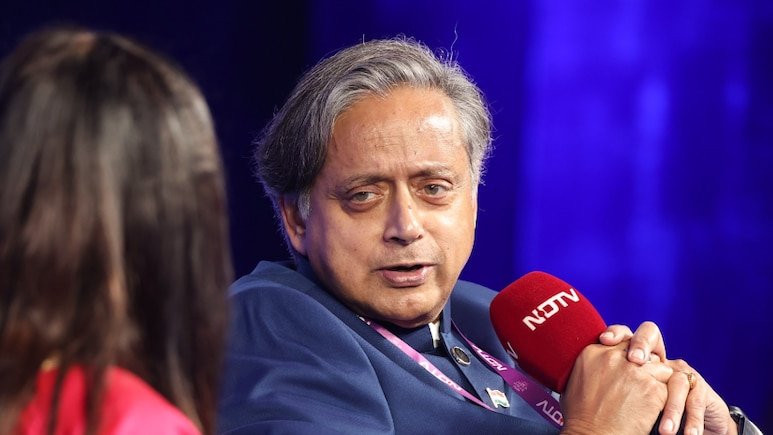
NEW DELHI — Senior parliamentary leader Shashi Tharoor invoked the political coalition of 1977 to counter assertions that ongoing opposition demonstrations questioning electoral roll revisions constitute a foreign-backed effort to destabilize the state.
Addressing delegates at a national political forum in New Delhi, the former minister drawn a clear distinction between constitutionally protected public assembly and unlawful unrest, emphasizing that structural political transitions in India occur strictly through transparent electoral outcomes.
Key Takeaways
-
Historical Alignment Cited: Tharoor pointed to the post-Emergency coalition of 1977—which united the Jana Sangh, socialist factions, and left-wing parties—as evidence that broad opposition coordination against executive authority is an established democratic norm.
-
Rejection of Civil Violence: The representative explicitly repudiated public violence, contrasting India’s constitutional protest mechanisms with violent civil unrest witnessed in overseas jurisdictions.
-
Institutional Audit Demands: The opposition campaign seeks formal accountability regarding administrative errors in the Special Intensive Revision (SIR) of voter registers to guarantee clean voter lists rather than unconstitutional power shifts.
-
Coalition Dynamics: Defending tactical alignments with diverse youth and left-leaning organizations, Tharoor defined the movement as a moderate, cross-ideological initiative focused on preserving fundamental voting rights.
Historical Precedent and Public Mobilization
Dismissing arguments that coordinated political rallies represent an anti-national narrative or an externally driven “regime change” agenda, Tharoor highlighted that unified opposition alliances have historically served as a check on executive power:
“Modi does keep talking about the Emergency and how the Emergency was overthrown. How was it overthrown? Through an Opposition, where the RSS and the BJP were merging with socialists and leftists. They all united in order to defeat the government that had declared the Emergency. That’s recent Indian political history, just half a century ago.”
He maintained that cross-ideological collaboration to challenge administrative policies remains a fundamental function of democratic governance rather than an extraordinary national security threat.
Constitutional Boundaries and Non-Violent Assembly
Clarifying the operational limits of civic agitation, Tharoor rejected comparisons between domestic demonstrations and destructive street protests occurring internationally:
“I think the line is very clearly drawn by our Constitution, by our laws. It is that peaceful protest is the democratic right of every Indian citizen; violence is not… What we’ve seen happening in France is not something that anybody in India’s political space would condone.”
He reaffirmed that legal political organizations remain committed to disciplined, lawful assembly designed to enforce institutional compliance with constitutional mandates.
Electoral Roll Verification and Democratic Mandates
Focusing on the core concerns surrounding the Special Intensive Revision (SIR) voter registration process, Tharoor called on statutory authorities and the election management body to address procedural irregularities:
“We believe in peaceful, organised, and disciplined protest. At the same time, we expect that if we can actually find the government, and the Election Commission as well, willing to be accountable for the deep irregularities [in] through the SIR process… then we believe there will once again be a clean system… In a free and fair election there will not be ‘regime change’; there will be government change.”
Addressing parliamentary cooperation with independent student organizations and regional political factions, Tharoor concluded that maintaining a broad opposition platform is essential for safeguarding universal franchise rights across the electorate.