



New Delhi | August 4, 2026
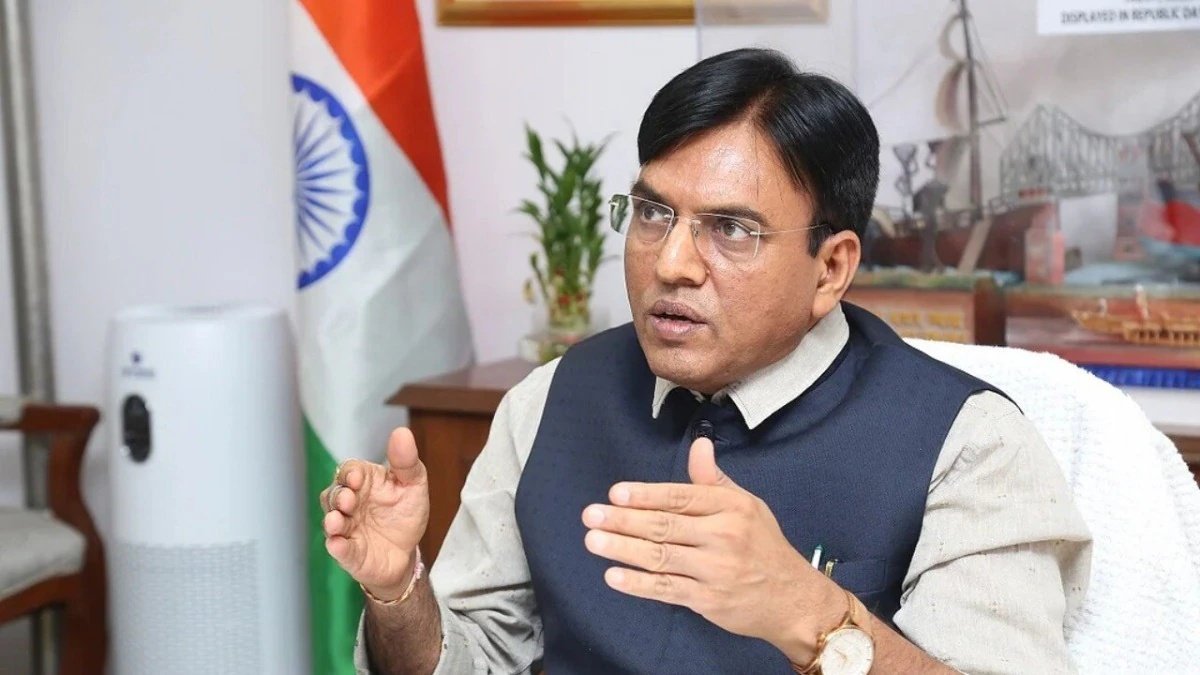
Addressing youth and Gen Z concerns regarding employment trends, Union Minister for Labour and Employment Mansukh Mandaviya presented a comprehensive ten-year report card on national job creation during a meeting of National Democratic Alliance (NDA) Members of Parliament on Tuesday.
Citing data from the Reserve Bank of India (RBI), the government stated that over 17 crore new employment opportunities were generated between 2014 and 2024, marking an average annual job creation rate of 1.7 crore. The presentation emphasized that job growth during this decade was nearly six times higher than the rate recorded under the UPA government between 2004 and 2014.
Key Macroeconomic & Employment Indicators
-
Total Jobs Generated (2014–2024): 17 Crore+ (RBI Data)
-
Annual Average Job Creation: ~1.7 Crore/year
-
Unemployment Rate (2025): 3.1% (Down from previous highs; lower than the global average of 4.8%, as per PLFS and World Bank data)
-
Youth Employment Rate: Risen to over 41.4%
-
Graduate Employability: Improved by 66%
-
Manufacturing Workforce Participation: 25.14%
Strategic Drivers & Key Interventions
The Minister highlighted a multi-pronged policy strategy driving employment, formal sector growth, and skill capacity building:
-
Infrastructure Capital Expenditure: Investments across railways, highways, metro systems, airports, energy, and urban development are projected to generate approximately 5.88 crore direct and indirect jobs.
-
Targeted Outlays & Welfare Schemes: A ₹2 lakh crore package targeting employment expansion, skill building, and formalization for over 4.1 crore youth.
-
Prime Minister Viksit Bharat Rozgar Yojana: Formulated with an operational target to create 3.5 crore jobs.
-
Entrepreneurship & Self-Employment: Accelerated through schemes such as Make in India, Start-Up India, Pradhan Mantri Mudra Yojana, PM Vishwakarma Scheme, and the Lakhpati Didi initiative.
-
Formalization: Sharp expansion in active registered establishments and enrolled members under the Employees’ Provident Fund Organisation (EPFO).
Socio-Economic Impact & Social Security Expansion
Connecting employment creation to poverty alleviation and social protection coverage:
-
Poverty Reduction: Citing NITI Aayog estimates, the report noted that nearly 25 crore people transitioned out of multidimensional poverty between 2014 and 2023, accompanied by a marked rise in real per-capita household consumption expenditure.
-
Social Security Net Expansion: Formal social security coverage grew from 25 crore people (19% of the population) in 2015 to over 101 crore people (68.4% of the population) by 2026.
Key Summary
-
Reporting Authority: Union Ministry of Labour and Employment
-
Primary Data Sources: Reserve Bank of India (RBI), PLFS, World Bank, NITI Aayog
-
Date of Presentation: August 4, 2026
-
Domain Focus: Macro Employment Metrics, Youth Employability, Capital Expenditure Job Creation & Social Security Expansion