



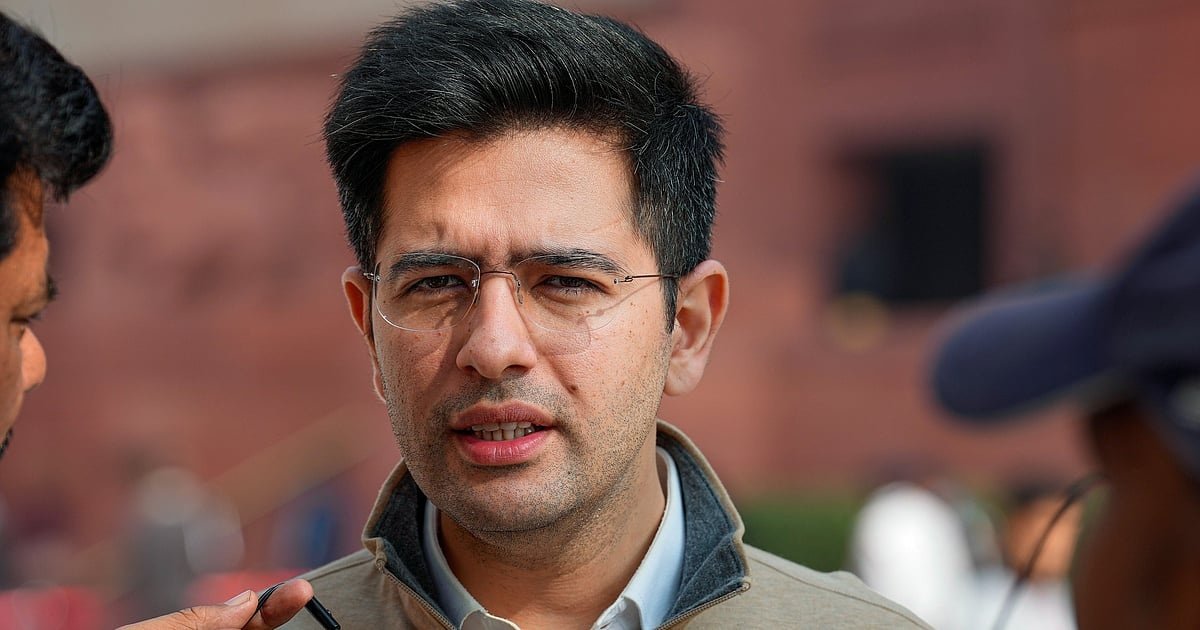
NEW DELHI — In a move that has sent shockwaves through India’s political landscape, Raghav Chadha led six fellow Aam Aadmi Party (AAP) Rajya Sabha MPs into the Bharatiya Janata Party (BJP) last week. While the defection has left Arvind Kejriwal’s party reeling, political analysts have pointed out a stinging irony: Chadha himself once authored the very legislation that could have prevented this “hammer blow.”
The split effectively strips the AAP of seven of its 10 Rajya Sabha members, meeting the current two-thirds threshold required to avoid disqualification under the anti-defection law (the Tenth Schedule).
The Irony of the Three-Fourths Amendment
In August 2022, shortly after becoming a Rajya Sabha MP, Chadha introduced a private member’s bill aimed at ending “nefarious floor crossing.” The proposed bill sought to tighten the strings of the anti-defection law in two major ways:
-
Raising the Bar: It proposed increasing the defection threshold from two-thirds to three-fourths.
-
Six-Year Ban: It suggested barring any defecting lawmaker from contesting elections for the next six years.
The Math of Betrayal: Under current laws, Chadha needed seven MPs (himself + six) to switch parties legally. Had his 2022 bill passed, the magic number would have risen to eight. With only seven MPs willing to jump ship, the group would have faced immediate disqualification and a lengthy electoral exile.
A “Blot on Democracy” Reclaimed
When presenting the bill four years ago, Chadha was a vocal critic of “horse-trading,” citing the exit of leaders like Jyotiraditya Scindia from the Congress as a “blot on our democracy.”
Today, the narrative has shifted. Following his removal as the AAP’s deputy leader in the Rajya Sabha on April 2, sources suggest Chadha felt the party was attempting to “silence him.” Now, instead of a six-year ban, rumors suggest Chadha may be rewarded with a Union Cabinet position in the BJP-led government.
The Road Ahead for AAP
The defection leaves the AAP, a party less than 15 years old, fighting for its political survival. The consequences are immediate:
-
Numbers Crisis: Total AAP Parliament strength has plummeted to just six members.
-
Legal Warfare: The AAP has vowed to seek disqualification, but with the Rajya Sabha Chairman expected to accept the merger, a protracted battle in the Supreme Court is likely.
-
Punjab Elections 2027: The split comes at a critical time as Chief Minister Bhagwant Mann prepares to seek a second term in Punjab—a state where Chadha was once a key strategist.
Kejriwal’s Reaction
Responding to the crisis, AAP convener Arvind Kejriwal offered a terse one-line statement on X (formerly Twitter):
“BJP has once again betrayed Punjabis.”
As the AAP prepares for potential further defections among Delhi MLAs, the party finds itself haunted by the ghost of its own reformist rhetoric. The bill that Chadha once claimed would save Indian democracy now serves as a blueprint for what might have been.