



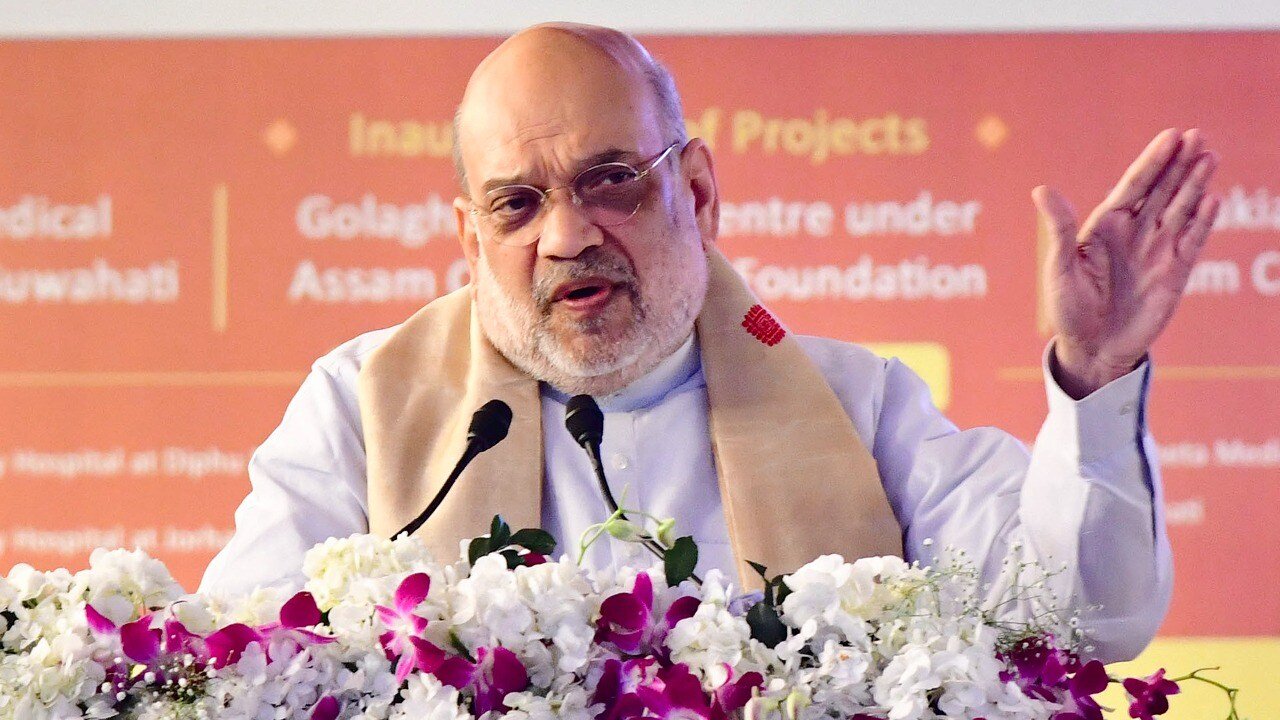
AHMEDABAD — Addressing the 72nd convocation of Gujarat Vidyapith in Ahmedabad, Union Home and Cooperation Minister Amit Shah asserted that Mahatma Gandhi’s philosophy remains timeless because it is deeply anchored in India’s civilizational values, native languages, and knowledge traditions.
Shah called upon graduating students to integrate Gandhian ethics into public and professional life, noting that the Mahatma’s vision went beyond anti-colonial politics to establish a model for sustainable, value-based national development.
Grassroots Pedagogy and Educational Philosophy
The Home Minister recalled the founding of Gujarat Vidyapith by Mahatma Gandhi on October 18, 1920, emphasizing its historical role as an experimental model for indigenous education:
-
Triple Coordination: True education requires the harmonious integration of the hand, heart, and mind—imparting practical skills to the hands, empathy to the heart, and wisdom to the mind.
-
Knowledge versus Wisdom: Academic learning without moral wisdom leads to intellectual arrogance, whereas knowledge tempered with wisdom produces humility and genuine scholarship.
-
Experiential Learning: The institution was designed to treat village assemblies, artisan workshops, and fields as active classrooms rather than confining education to traditional lecture halls.
Ethical Guardrails and Social Principles
Shah urged the youth to keep Gandhi’s foundational moral frameworks at the center of their decision-making:
-
Seven Social Sins: Students were advised to guard against key societal failures, including politics without principles, commerce without morality, wealth without work, education without character, and science without humanity.
-
The 11 Vows: The Minister reiterated the enduring value of Gandhi’s 11 core vows—such as Swadeshi (self-reliance), truth, non-violence, physical labor, fearlessness, and the removal of untouchability.
-
Language and Cultural Identity: While encouraging multi-linguistic learning, Shah cautioned against feeling inferior about native Indian languages, noting that mother tongues serve as the primary bridge to national heritage and history.
Economic Impact of Khadi and Village Industries
Highlighting the contemporary resurgence of Gandhian economic models:
-
Turnover Growth: The market turnover for Khadi and village industries expanded significantly from ₹31,000 crore in 2013–14 to ₹1.87 lakh crore in 2025–26.
-
Community Welfare: Khadi represents more than simple fabric production; it acts as a conscious economic choice to support rural artisans and promote village-level self-reliance (Gram Swaraj).