



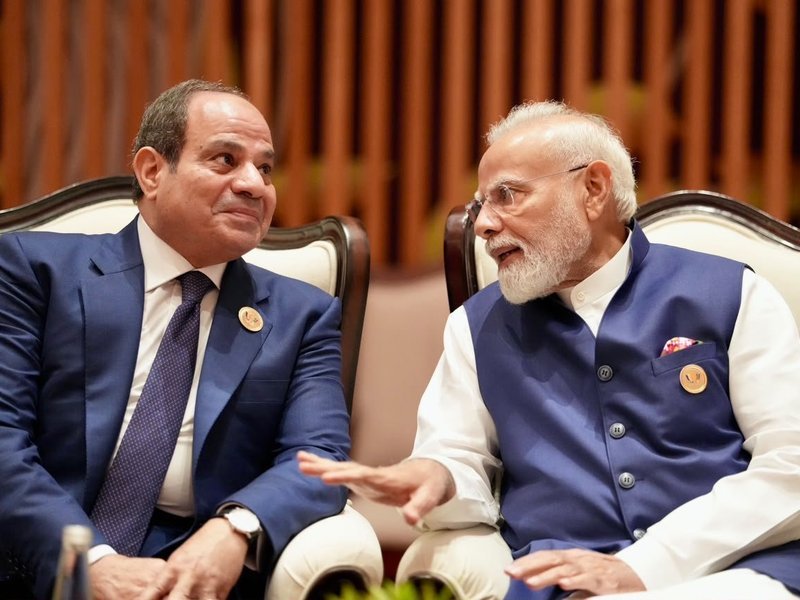
NEW DELHI — On the concluding day of the 18th BRICS Summit at Bharat Mandapam, Prime Minister Narendra Modi anchored a series of crucial bilateral meetings with leaders from South Africa, the Philippines, Egypt, and several partner nations. The engagements signaled New Delhi’s intention to translate multilateral summitry into tangible bilateral gains across trade corridors, critical minerals, defense cooperation, and technology transfer.
Official readouts confirmed that boosting trade and investment, defense and security, emerging technologies, and digital public infrastructure (DPI) remained the primary focus across all discussions.
Strategic Partnerships: Critical Minerals and Defense
Headline talks featured South African President Cyril Ramaphosa, where both sides reviewed the wide-ranging India-South Africa strategic partnership. High on the agenda were joint efforts in critical minerals, infrastructure, mining, food security, and DPI. Emphasizing the historical roots and future trajectory of the bilateral relationship, PM Modi reaffirmed a shared commitment to advancing the priorities of the Global South. Following the success of the cheetah translocation initiative, India officially invited South Africa to join the International Big Cat Alliance.
In a parallel meeting with Philippine President Ferdinand Marcos Jr., discussions centered on consolidating momentum in economic and security cooperation under the India-Philippines strategic framework. Key sectors highlighted included defense and security, space technology, fintech, railway infrastructure, and innovation, alongside broader efforts to enhance India-ASEAN engagement.
Regional Stability and Central Asian Trade
Expanding Middle Eastern ties, PM Modi held discussions with Egyptian President Abdel Fattah El-Sisi. The dialogue focused on the evolving India-Egypt friendship, mutual investment opportunities, and pressing regional security matters.
Simultaneously, talks with Kazakh President Kassym-Jomart Tokayev focused on injecting momentum into the India-Kazakhstan strategic partnership. Both leaders identified vast scope for expanded trade in energy, cross-border connectivity, technology, and critical supply chains.
Sustained Outreach Across Africa and Southeast Asia
Reinforcing New Delhi’s active policy of prioritizing African developmental goals—a trajectory set during India’s G20 presidency—PM Modi conducted targeted bilateral sessions with key African leaders:
-
Burundi: PM Modi extended congratulations to President Evariste Ndayishimiye on assuming the chairship of the African Union. The roadmap focused on youth skilling, capacity building, clean energy, and agricultural collaboration.
-
Nigeria: Meeting Vice President Kashim Shettima, discussions pivoted toward joint initiatives in fertilizers, clean energy, power infrastructure, health, and defense.
-
Uganda: Engagement with Vice President Jessica Alupo prioritized healthcare systems, agricultural technology, digital frameworks, and private-sector partnerships.
The Prime Minister also met with Indonesian President Prabowo Subianto, agreeing to steadily scale up cooperation across maritime security, economic integration, and regional stability.
The extensive bilateral exchanges highlight India’s strategy of utilizing high-level diplomatic venues to secure resilient supply chains, expand its technology footprint, and strengthen its role as a pivotal bridge between emerging economies.