



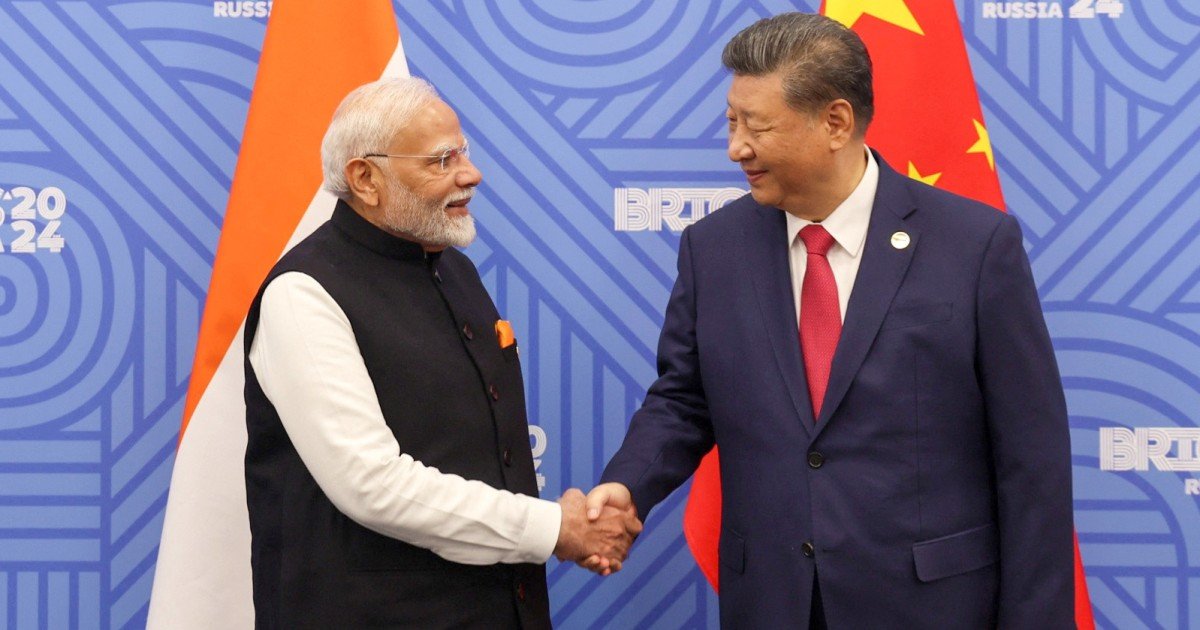
NEW DELHI — During their bilateral meeting on the sidelines of the 18th BRICS Summit, Indian Prime Minister Narendra Modi and Chinese President Xi Jinping reached a major strategic consensus that the two Asian nations should serve as mutual development partners rather than adversaries, according to Chinese Foreign Minister Wang Yi.
The bilateral dialogue—held during President Xi’s two-day visit to New Delhi—marks a significant step in stabilizing ties, moving from a diplomatic “restart” to a “renewed elevation” of bilateral relations.
Core Principles & Strategic Consensus
-
Partners, Not Rivals: Both leaders agreed that India and China represent shared economic opportunities for each other, pledging to deepen political mutual trust, manage differences constructively, and support each other’s respective economic development trajectories.
-
Two-Track Approach on Border Stability: Both sides committed to maintaining peace and tranquility along the border areas. President Xi called for pursuing parallel progress on bilateral cooperation and border issues so the two tracks reinforce each other, a stance warmly received by India.
-
Strategic Autonomy: Foreign Minister Wang Yi noted that PM Modi reiterated India’s independent approach to its relationship with China, free from third-party influence, while assuring that anti-China activities would not be permitted on Indian soil.
Key Tactical & Multilateral Agreement Areas
-
Direct Connectivity & Bilateral Ties: The two heads of state agreed to expand economic cooperation, broaden cultural exchanges, and work toward restoring direct air connectivity to strengthen public support for bilateral relations.
-
Multilateral & BRICS Cooperation: India and China pledged mutual support for each other’s rotating BRICS chairmanships while enhancing coordination across global forums, including the United Nations, Shanghai Cooperation Organisation (SCO), and the G20.
-
Global South Alignment: Chinese Foreign Ministry spokesperson Guo Jiakun reaffirmed that Beijing will work closely with New Delhi to expand the bilateral “cooperation list” and act as a stabilizing force for multipolar global governance.