



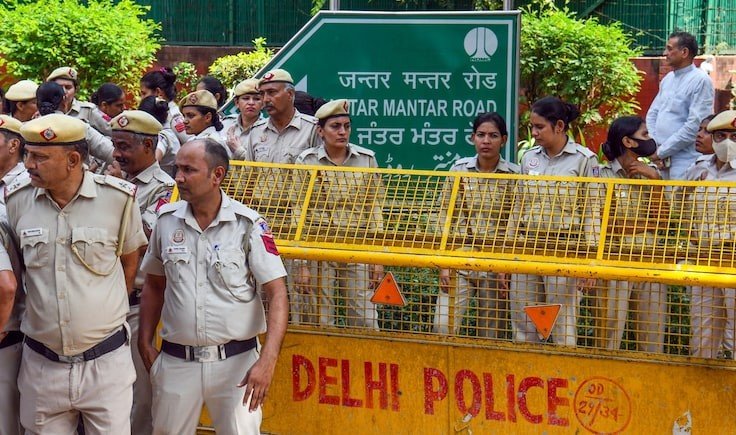
NEW DELHI — In a special Sunday session addressing widespread urban disruptions across the national capital, the Supreme Court of India instructed authorities to dismantle security barricades and restore normal civilian transit unless continued closures are strictly necessary.
Taking up a contempt petition challenging the blanket shutdown of Delhi Metro stations and regional rail corridors during the recent Cockroach Janata Party (CJP) protests, a bench comprising Justice Joymalya Bagchi and Justice V. Mohana stressed that public movement must be normalized without undue administrative delay.
Key Takeaways
-
Directive to Clear Barricades: The apex court mandated the immediate removal of urban barricades across Delhi unless their retention is demonstrably and “absolutely warranted” by public safety requirements.
-
Upholding Transit Rights: Reaffirming its prior October 9 rulings against total metro closures, the bench insisted that daily commuter networks function normally while allowing standard law enforcement regulation.
-
Balancing Protest and Public Order: The judges reiterated that while citizens retain a fundamental right to express dissent, all demonstrations must operate strictly within the boundaries of the Police Act.
Special Sunday Review of Weekend Lockdown
The Supreme Court’s intervention comes in the wake of an unprecedented security clampdown that paralyzed central Delhi over the weekend, resulting in closed transit hubs, canceled rail services, and massive barricading to thwart planned demonstrations against Chief Election Commissioner Gyanesh Kumar.
During Sunday’s proceedings, the bench evaluated the administration’s compliance with judicial guidelines governing public assemblies and essential services. While acknowledging the operational challenges confronting law enforcement, the court ruled that sweeping restrictions crippling public transit cannot be sustained indefinitely.
“Free movement of people should be normalised, subject to regulation in a public order situation,” the bench observed, emphasizing the legal framework governing demonstrations. “You have a right to protest, absolutely no quarrel on that, but the process in which you protest has to be within the Police Act.”
Following the court’s directives, municipal and security authorities have begun recalibrating security cordons and easing transit bottlenecks across major metropolitan corridors, even as baseline vigilance remains active across the capital.