



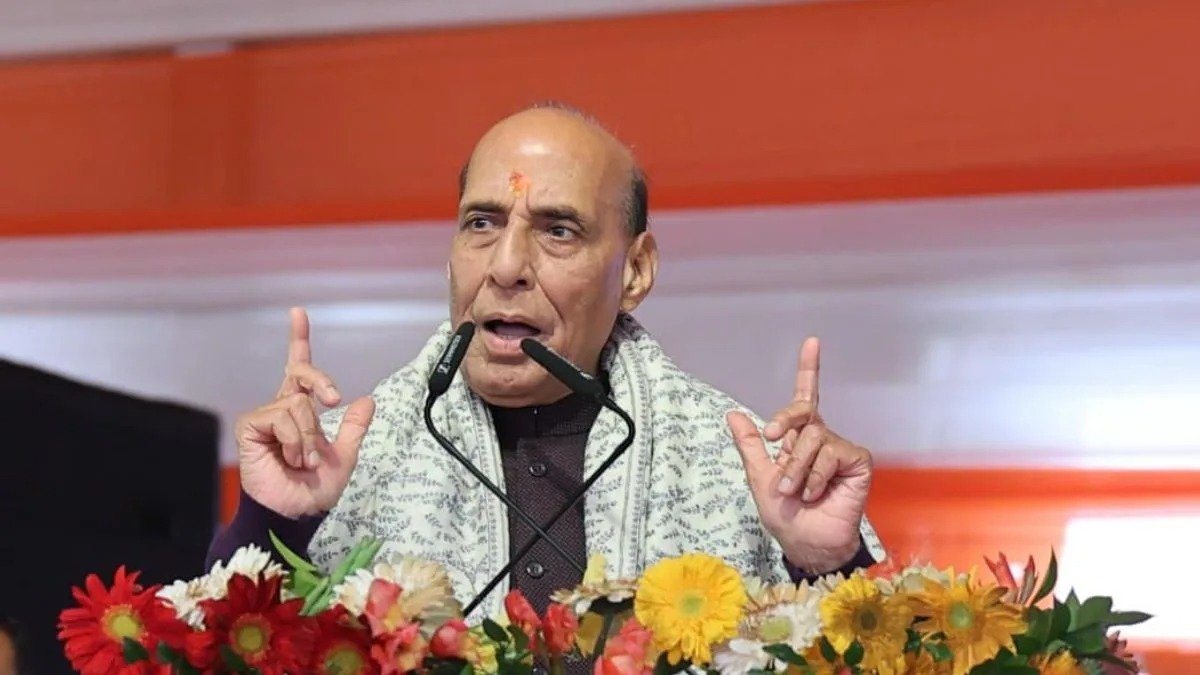
BENGALURU — Addressing defense leaders, aviation executives, and aerospace engineers at Hindustan Aeronautics Limited (HAL), Defence Minister Rajnath Singh urged the nation to bridge civil and military aerospace manufacturing to eliminate development delays and prevent technological obsolescence.
The minister warned that prolonged execution timelines risk rendering indigenous equipment outdated before deployment, as faster innovation cycles overseas create critical operational gaps.
Core Principles for Aerospace Modernization
-
Tackling Project Delays: Singh flagged schedule overruns as a key vulnerability that leads to financial escalation and technology lag, urging realistic project timelines across defense public sector undertakings (DPSUs).
-
Fostering Public-Private Synergy: Rejection of the view that public and private aerospace firms are competitors, framing public-private collaboration as essential for building next-generation defense platforms.
-
Dual-Use Civil-Military Synergy: Stressed that breakthroughs in composite materials, avionics, propulsion, and certification must serve both commercial civil aviation and military operational needs.
-
Next-Gen Warfare Readiness: Urged scientists and test pilots to pioneer indigenous capabilities in artificial intelligence, unmanned systems, electronic warfare, cyber capabilities, and advanced propulsion.
Platforms Inducted at Bengaluru Ceremony
The handover event marked the official delivery of three key indigenously designed aircraft to military and commercial operators:
-
LCA Tejas Twin-Seater Trainer (FOC): Advanced fighter trainer handed over to the Indian Air Force (IAF) to prepare pilots for network-centric air combat operations.
-
HTT-40 Basic Trainer: Indigenous basic trainer aircraft built by HAL to replace foreign reliance and train novice IAF pilots internally.
-
Dhruv Next Generation (Dhruv-NG): Advanced civil variant multi-role helicopter delivered to Pawan Hans Limited, highlighting domestic civil aviation manufacturing capability.
Incremental Path to Self-Reliance
Describing aerospace development as a step-by-step process, Singh emphasized that true Aatmanirbharta (Self-Reliance) in defense requires sustained investment in research and development rather than expecting sudden, single-stage breakthroughs. He expressed confidence that building an integrated civil-military framework will position India as a leading global aerospace exporter over the coming decade.