



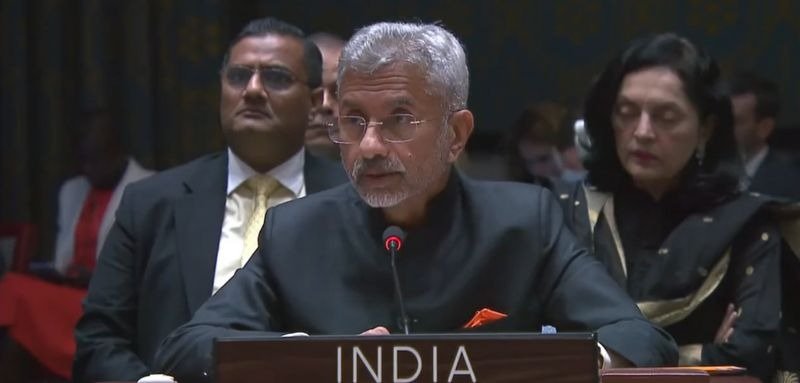
MUNICH (Feb 15, 2026) — External Affairs Minister S. Jaishankar met with G7 counterparts at the 62nd Munich Security Conference to reiterate India’s demand for permanent representation and meaningful reform of the UN Security Council (UNSC).
The high-level discussions occurred against the backdrop of the landmark India-EU Free Trade Agreement (FTA) concluded last month, signaling India’s rising economic and strategic influence.
Global Security and Infrastructure
Speaking at the conference, Jaishankar highlighted India’s growing role as a “net security provider” and its contributions to global stability:
-
Maritime Security: Emphasized India’s role in protecting sea lines and enhancing port security.
-
Connectivity: Highlighted India’s efforts in building resilient submarine cable infrastructure.
-
UN@80 Agenda: Strongly supported the reform initiative launched by the UN Secretary-General to make the council more representative of current multipolar realities.
Economic Diplomacy: The EU and US Factor
Jaishankar noted that India’s strategic autonomy is anchored by its recent trade successes:
-
India-EU FTA: The deal, finalized on January 27, will eliminate tariffs on 99% of Indian exports and 97% of EU exports, covering nearly a quarter of the world’s GDP.
-
US Trade Deal: Mentioned alongside the EU FTA as a pillar of India’s “nimble and dynamic” foreign policy.
Strategic Autonomy in a Multipolar World
Participating in the ‘Delhi Decided’ roundtable, the Minister explained that India’s growth strategy and strategic autonomy remain “steady anchors” as global dynamics shift. The conference, attended by nearly 50 heads of state, including German Chancellor Friedrich Merz, continues through today.